



When a thriving garden takes a turn: The virus threatening the melon patch
Published at
This has been a year to make a gardener proud.
The sweet corn is tall and tasseled. Bush beans are lush and loaded. Kale, collards, and Swiss chard have never looked more vigorous. Cucumbers, zucchini, okra, carrots, and potatoes are producing beautifully. In fact, the garden is doing so well that it might be the envy of the neighborhood.
Unfortunately, there is one corner of the garden that tells a different story.
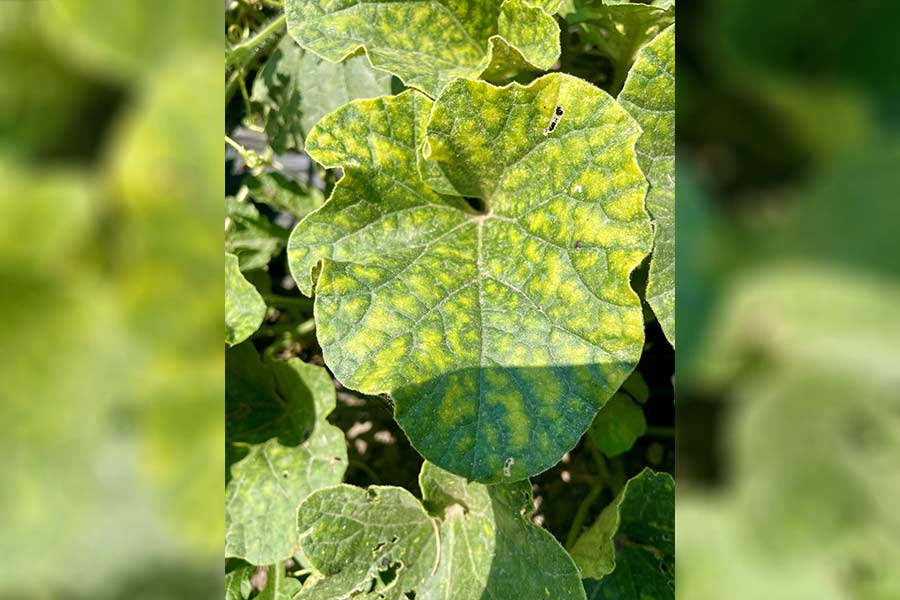
It started in the watermelon plant and has now spread to the cantaloupe. The plants were growing slowly and their leaves developed a mottled yellow appearance. I suspected nutrient deficiency, so I applied fertilizer. When that didn’t help, I followed up with a foliar micronutrient spray. Still no improvement.
My next theory was the fungal disease downy mildew. After applying a fungicide and seeing no response, I was out of ideas. The symptoms simply didn’t fit anything I had dealt with before.
Then I learned about another possibility: Watermelon Mosaic Virus, commonly known as WMV.
A virus with a wide reach
Despite its name, WMV does not affect only watermelons. The virus can infect many crops in the cucurbit family, including cantaloupe, squash, pumpkins, gourds, zucchini, and cucumbers.
WMV is spread primarily by aphids, tiny sap-feeding insects that move from plant to plant. Aphids can acquire the virus while feeding on infected weeds, alfalfa, or other host plants and then transmit it to healthy garden crops.
Recognizing the symptoms
One of the challenges with WMV is that its symptoms can resemble nutrient deficiencies, herbicide injury, or other plant diseases. However, several symptoms are commonly associated with infection:
- Stunted plant growth
- Yellow or light-green mottling on leaves
- Distinct mosaic patterns on foliage
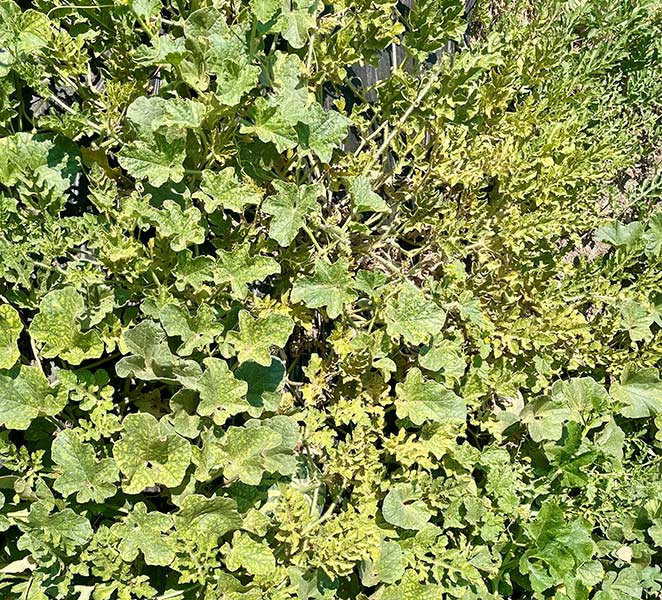
- Leaf distortion or malformation
- Marginal chlorosis, or yellowing around leaf edges
- Reduced fruit size
- Misshapen, mottled, or spotted fruit
Symptoms vary depending on the crop, the virus strain, and environmental conditions. In many cases, symptoms first appear on plants located along field or garden edges, where aphids are most likely to enter. This was true in my case.
Managing watermelon mosaic virus
Unfortunately, there is no cure for a plant once it becomes infected. Management focuses on prevention and reducing sources of infection.
Aphids can acquire the virus within seconds or minutes of feeding on an infected plant and then spread it to healthy plants during subsequent feeding. This rapid transmission presents a challenge for gardeners.
The virus survives between growing seasons in perennial weeds, volunteer plants, and crops such as alfalfa. Mild winters can increase early-season risk by allowing both aphids and virus hosts to survive.
Gardeners can lower their risk by:
- Controlling weeds that can serve as virus reservoirs.
- Rotating crops and avoiding planting cucurbits in the same location year after year.
- Monitoring for aphid activity beginning in early summer.
- Selecting resistant varieties if the virus has been present in the past.
- Removing infected plants to prevent spread.
Lessons learned
One important lesson from my experience is that not every yellow leaf points to a fertility problem and not every diseased-looking plant has a fungal infection. Plant viruses can mimic a variety of other issues, making diagnosis difficult.
Many viruses produce similar mosaic patterns, and visual symptoms alone cannot always confirm which virus is present. For gardeners seeking a definitive diagnosis, submitting plant samples through a diagnostic laboratory is the best option.
As for my garden, most crops are thriving despite the problems in the melon patch. While I may not harvest many watermelons or cantaloupes this year, the experience serves as a reminder that successful gardening is as much about learning from failures as celebrating successes.