



When to control crabgrass in the spring, summer and fall
Published at
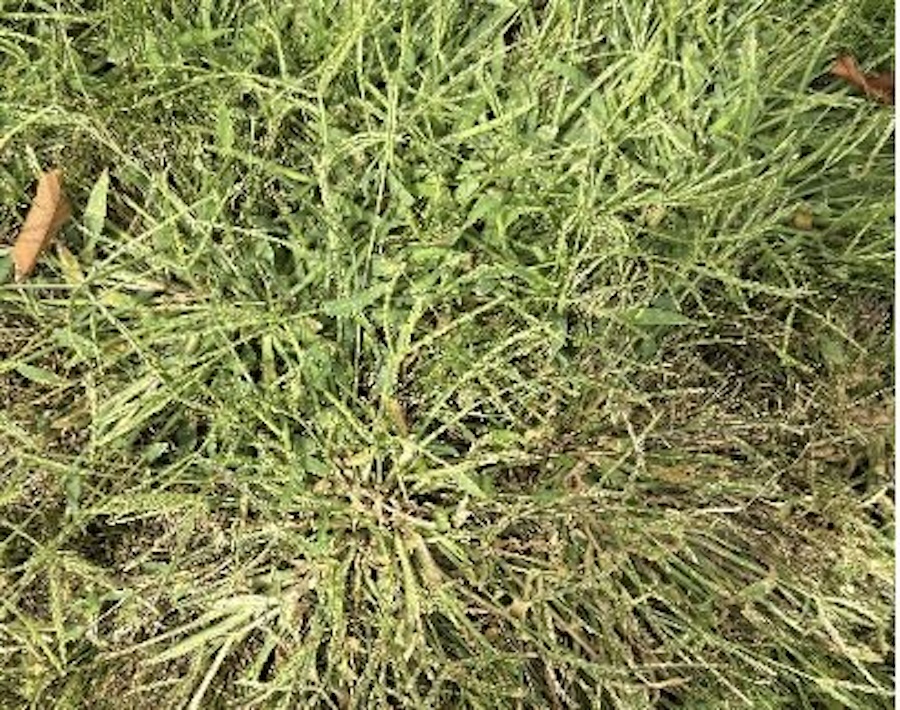
Does it seem like a coarse, spreading grass is taking over parts of your lawn?
By mid to late summer, crabgrass becomes especially noticeable. It is often established in thin or stressed areas of turf, especially along sidewalks, driveways, and other locations where the soil becomes warm and dry.
Large crabgrass is a warm-season annual grass that spreads and forms patches in the lawn. One of the easier ways to identify it is by the noticeable hairs on the leaves and leaf sheaths. The stems can also form roots where the lower nodes touch the soil. As the plant matures it produces seedheads with several narrow branches that spread out from the top, giving them a finger-like appearance.
Large crabgrass germinates from seeds in the spring and grows quickly as temperatures warm. It is well adapted to mowing and can still produce seed even when kept as short as half an inch. A single plant can produce thousands of seeds, which can lead to a large crabgrass problem in future years.
After a hard frost, the plants die and may completely disappear, but the seeds they leave behind can produce another crop of weeds the following year. If you can keep crabgrass from producing new seeds for about three years, the seed bank in the soil can decline significantly, making future crabgrass problems much less likely.
Unfortunately, by the time the large crabgrass plants are evident the easiest opportunity for control has already passed. Crabgrass begins germinating when soil temperatures reach about 55 to 60 ⁰F which normally occurs around March and mid-April, making early spring an important time to prevent new plants form becoming established.
Spring: The Best Time to Prevent Crabgrass
Large crabgrass grows from seed each spring, one of the best ways to control it is to stop those seeds from becoming established in the first place. This is where preemergence herbicides can be useful. Preemergence herbicides work near the soil surface and stop young crabgrass seedlings as they begin to grow. They generally will not kill crabgrass that is already well established, so timing is important!
Instead of only relying on the calendar date, watch soil temperatures. The goal is to have the herbicide applied before soil temperatures consistently reach about 55 to 60 ⁰F and crabgrass begins germinating. It is important to note that air temperature and soil temperature are not he same.
Soil usually warms slower than the air, so one or two warm spring days does not necessarily mean the soil has reached the temperature needed for crabgrass to germinate. Instead, pay attention to the overall warming trend over several days. The exact timing can vary depending on soil moisture, shade and other localized conditions.
Two active ingredients commonly used for crabgrass prevention are Prodiamine and Dithiopyr. Prodiamine needs to be applied before crabgrass germinates and watered into the soil according to the product label. They are typically available as granular but can also be found as a liquid mixture.
Dithiopyr gives you a little more flexibility if you are late with the application. It can control crabgrass shortly after it begins growing, but only while the plants are still very young. Once crabgrass becomes larger and starts producing additional shoots, or tillers, control becomes more difficult.
There is also an important tradeoff if you plan to overseed lawn. A pre-emergence herbicide that stops crabgrass seed can also stop desirable grass seed from growing. If you plan to overseed, check the product label carefully before applying pre-emergence herbicide.
Summer: What if Crabgrass is Already Growing?
If the crabgrass is already established and has produced several tillers, applying a normal pre-emergence herbicide will not get rid of the plants that are already there. For a few plants, good old hand-pulling may be the easiest option. Try and remove them before they produce seed and add to next year’s problem.
If crabgrass is widespread, a postemergence herbicide labeled for crabgrass may be another option. These products usually work best when the plants are still small and actively growing. Some postemergence herbicides are selective and can control crabgrass without harming certain lawn grasses, while nonselective products can damage or kill any grass they contact.
As with any pesticide, always read and follow the label. Make sure the product is labeled for crabgrass and can safely be used on the type of grass growing in your lawn.
Fall: Treat the Lawn, Not Necessarily the Crabgrass
By fall the best approach often shifts from trying to kill crabgrass to figuring out why it became established. Crabgrass will eventually die after a hard frost. If the plants have already produced seed, killing them late in the season may do little to prevent future problems.
Instead look at the areas where crabgrass was most common. Was the lawn thin? Was the soil dry? Was a sprinkler broken or poorly adjusted? Was the soil compacted? These conditions can create open areas where crabgrass has less competition.
Fall is a good time to repair many of these problems. Thin areas can be overseeded when appropriate. Irrigation problems can be corrected, compacted areas may benefit from aeration, and a soil test can help determine whether fertilizer is needed. The goal is to build a dense, healthy lawn that leaves less open space for crabgrass to become established the following spring.
A Simple Crabgrass Control Strategy
Early Spring: Watch soil temperatures and apply pre-emergence herbicide before crabgrass begins germinating.
Summer: Look for crabgrass that escaped spring control and manage plants while they are still small and before they produce seed.
Fall: Repair thin areas and improve the overall health and density of the lawn.
So, to answer the question of when to control crabgrass, the answer is summer, fall, and spring but the goal changes with each season. Summer is the time to control existing plants before they produce seed, fall is the time to strengthen and repair the lawn, and spring is the time to prevent new crabgrass from becoming established.
If you need a plant or weed identified, please reach out to your local UI Extension office for assistance.