



He asked the final question before Charlie Kirk was shot. One year later, he reflects on the ‘horror’ of that day and the healing that followed
Published at
Amelia Hobson, Sarah Murphy and Jordan Thornblad, ABC4
OREM, Utah (ABC4) — On Sept. 10, 2025, Hunter Kozak asked a question to visiting speaker and conservative influencer Charlie Kirk. Just seconds later, Kirk was fatally shot, and the Utah Valley University campus was thrown into chaos.
Kozak was standing feet away.
One year later, Kozak still thinks about that fateful event. He spoke with ABC4.com about the moment of the shooting and how he has dealt with it in the time since.
‘It was flailing, it was horrified’: Initial reaction
Kozak was at the front of the crowd asking a question about gun rights for transgender people when the bullet entered Kirk’s neck, killing him.
While he was there to debate, he says he wasn’t there to argue. He simply wanted to be part of a productive discussion with someone who had different beliefs.
“I have huge disagreements with him on what it means to be an American and what we owe each other, and these really hard conversations that I felt important to draw out,” Kozak said.
He never got the chance.
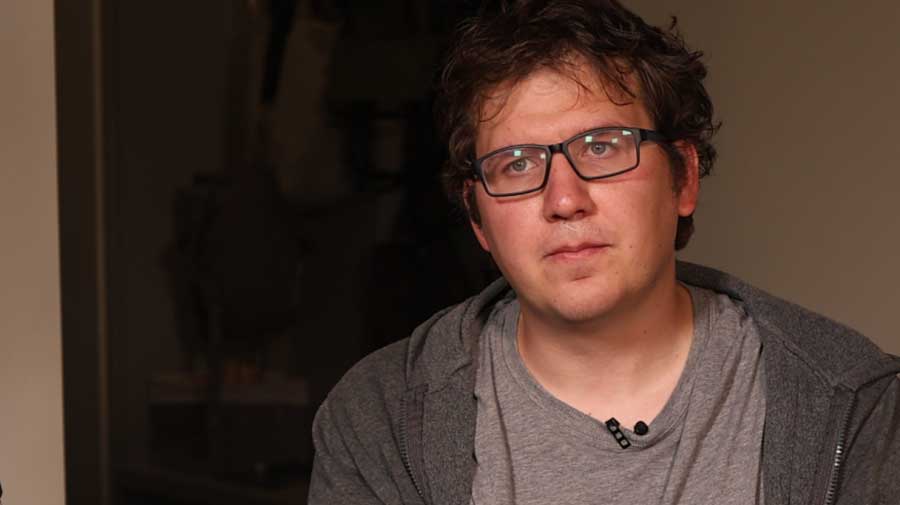
Moments later, a shot rang out over the crowd, striking Kirk in the neck. Kozak says, looking back on that day, he thought he was calm during the shooting.
“I’m like, I know this is an assassination, not a mass shooting, I’m going to be OK. I just need to go down and find my wife and, you know, figure out what to do next — but I’m not in danger,” he said.
However, in the days that followed, he realized that he may not have been as composed as he thought.
“Then I watched a video of my reaction, and it was not calm. It was flailing, it (my reaction) was horrified,” Kozak said. “I think that it’s weird that my brain sort of patched over that response, and it was like: ‘No, you were calm the whole time.’”
He continued, “Maybe I didn’t think that I was in danger, but I do think that that horror was something that I kind of forgot how extreme it was.”
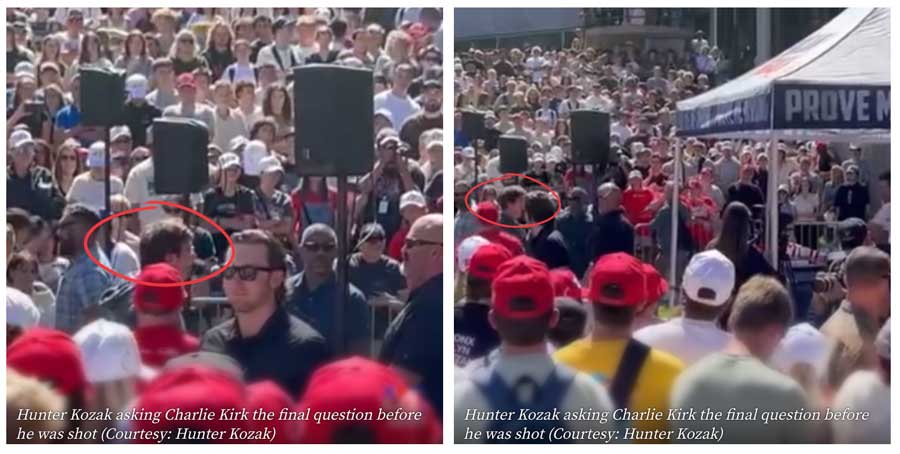
‘My grief was so public’
Something that Kozak could not have predicted was the public attention he received after the shooting.
He said, “I moved houses because someone showed up at my door and didn’t overtly make threats … (but) I did really feel unsafe. And I really tried to push that feeling away, but it is a very persistent feeling that takes a lot of work to sort of fix.”
He added that he has been accused of being a crisis actor by videographers and other political influencers, including one who released a six-hour series.
Kozak said, “I always knew when a new video came out, because I just saw so many death threats in my direct messages all of a sudden, and it really just made me feel on edge.”
‘I was eager to come back’: Returning to campus
For Kozak, the experience left him wondering how to move forward. He had previously left school for several years but felt ready to return to school when the shooting happened.
For some, it may have been enough to leave college again.
“To reconcile with the fact that it’s always been a possibility, that, like, anyone who shows up to a school doesn’t know what’s going to happen. That’s just sort of, unfortunately, the reality when it comes to a lot of schools in America,” Kozak said.
However, he was determined to return.
“I do think there’s like a courage to come back to campus and to come back to school — not just for me, for any student who knows that that’s a possibility now,” he said. “I was very eager to come back as soon as campus was back open, even when classes weren’t open.”
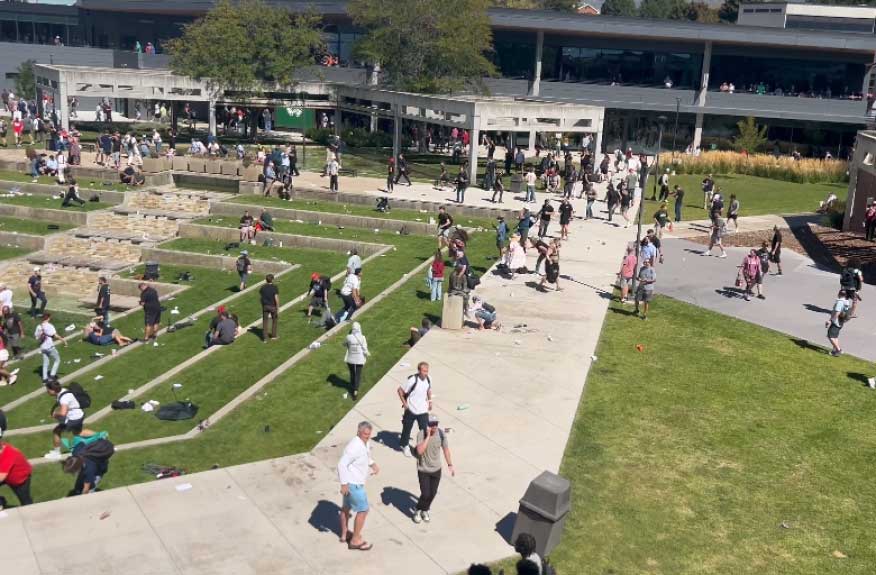
While Kozak did return, it has not been entirely easy to face what happened there.
“I walk through the Hall of Flags just to get to class, and I look to my left, and there’s the courtyard right there. I honestly try to avoid the grassy area,” he said. “But the food court is right there, and I do eat lunch a few times a week, like 50 yards away from the shooting.”
As difficult as it was, Kozak says he wanted to speak about the shooting to spotlight the impact on everyone who witnessed it. However, when he returned to campus, he says many people wanted to avoid having those important conversations.
“It’s also really upsetting to see a lot of people who don’t seem to be bothered, or think that it’s funny — who are just excited that they’re at the heart of something that happened,” he said. “That was a really disappointing reaction that I saw. I don’t think it’s the majority of people, but I did see that those reactions were there.”
He continued, “It’s just really easy to not talk about these sorts of things, because it’s uncomfortable, and it’s hard, and it’s weird, and it brings out a lot of morbid conversation … but I do feel it’s bizarre that something as earth-shattering as this could be swept under the rug.”
Moving past the ‘horror’
Kozak, who experienced Kirk’s death in a more intimate way than many, says it has been healing to talk about what happened and to understand that his grief and horror are shared by the other students who were there on Sept. 10.
“A lot of people have been struck by casualty and horror, and they don’t know what to do with it, and I found a lot of comfort in talking with these people,” he said. “Really, the only way that I was able to move forward was to sort of recognize that I’m not unique in the population.”
He added, “In fact, I feel grateful in some senses, because my grief was so public that like everyone I ever knew reached out to me and I was able to get support from the school.”
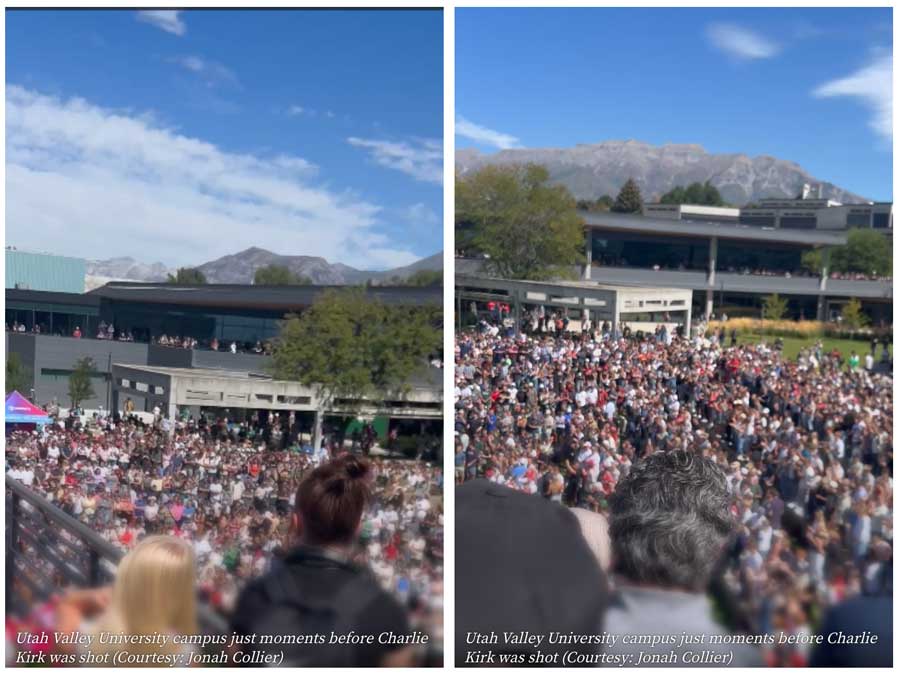
In the days following the shooting, Kozak had several conversations with members of Turning Point USA. While he still differs from many of their members ideologically, he says this tragedy brought them closer together.
“I felt like, at least they were talking about it and at least they wanted to have conversations about how we memorialize him, which is a hard conversation,” he said.
While many students and faculty wanted to move past the shooting, Kozak said one professor gave students time to talk about it, providing all of them an opportunity to heal.
‘I wasn’t the only one who experienced it’: Looking ahead
Now one whole year has passed, and in many ways Kozak has found ways to move forward. He says he hopes to be known as more than the guy who asked a final question of Charlie Kirk.
“There might be some irony that I’m in front of a camera, you know, attaching that to my identity … I wasn’t the only one who experienced it,” he said.
Another hope of his is that people realize the importance of civil discourse and move toward the idea of embracing conversation.
“I believe that we are stuck in these echo chambers. We don’t have enough conversations with each other,” he said, adding, “If you commit violence against each other over and over and over again, until the last man standing decides what to do, our society collapses.”