



From virtual fences to better grazing, U of I center celebrates 25 years
Published at | Updated at
EDITOR’S NOTE: “From the Field” is a weekly feature bringing you the latest agriculture news in eastern Idaho.
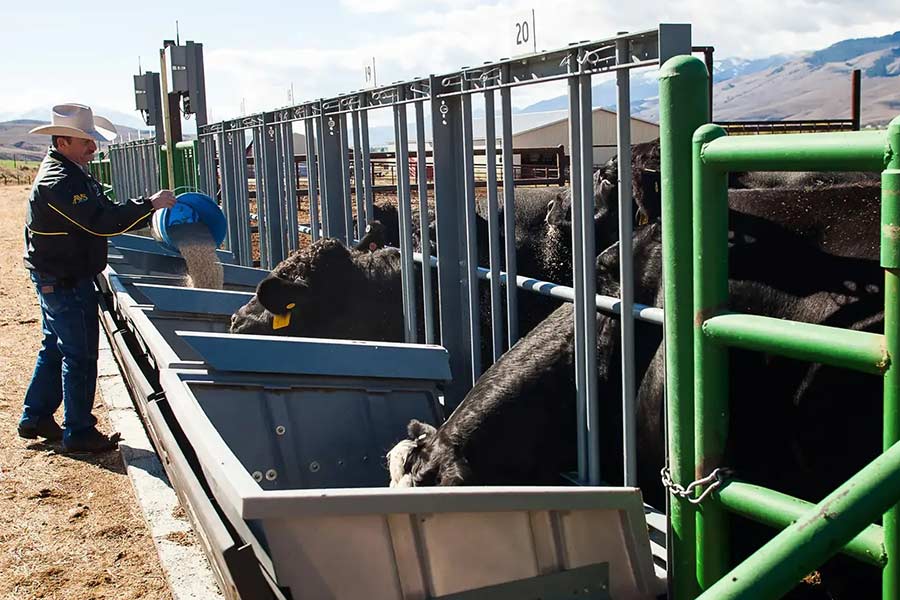
IDAHO FALLS – For 25 years, the University of Idaho’s Nancy M. Cummings Research, Extension and Education Center near Salmon has maintained a cow-calf operation and conducted numerous research projects for the beef cattle industry.
The 1,100-acre spread is one of 10 research facilities owned by the university. It sits on land once owned by a ranching family. Sherrie and Ron Auen began donating the land to U of I in 2001 through their foundation, according to a news release. Sherrie is the daughter of Nancy Cummings, for whom the facility is named. Sherrie was one of multiple guests who visited the site on Tuesday to celebrate its 25th anniversary.
The education center works closely with the Wood River Valley’s Rinker Rock Creek Ranch and the College of Agriculture and Life Sciences to manage its herd and provide research on a variety of topics, including forage, nutrition, feed efficiency, and reproductive and cattle management.
Multiple speakers attended Tuesday’s celebration to address these topics, and tours of the facility were available to the public.
EastIdahoNews.com was unable to attend, but we spoke with Hayden Garfield, the site’s operations manager, ahead of the event on Monday. During a phone conversation, he talked about the variety of classes and research it offers and said, “It’s a really good resource for the state of Idaho.”
“It offers students and producers a really great tool,” Garfield said. “The development of this over the last 25 years has been really special. A lot of people have worked here, and everyone in the community knows this place and has some sort of connection to it. We’ve built on a legacy that has meant a lot to different people.”
Virtual fencing
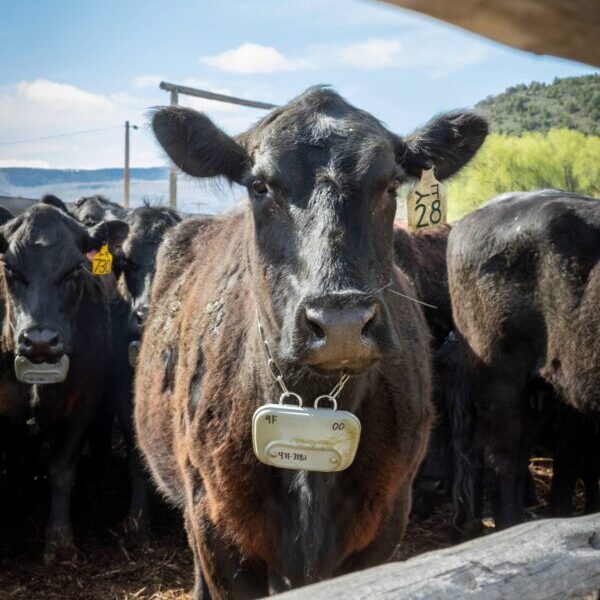
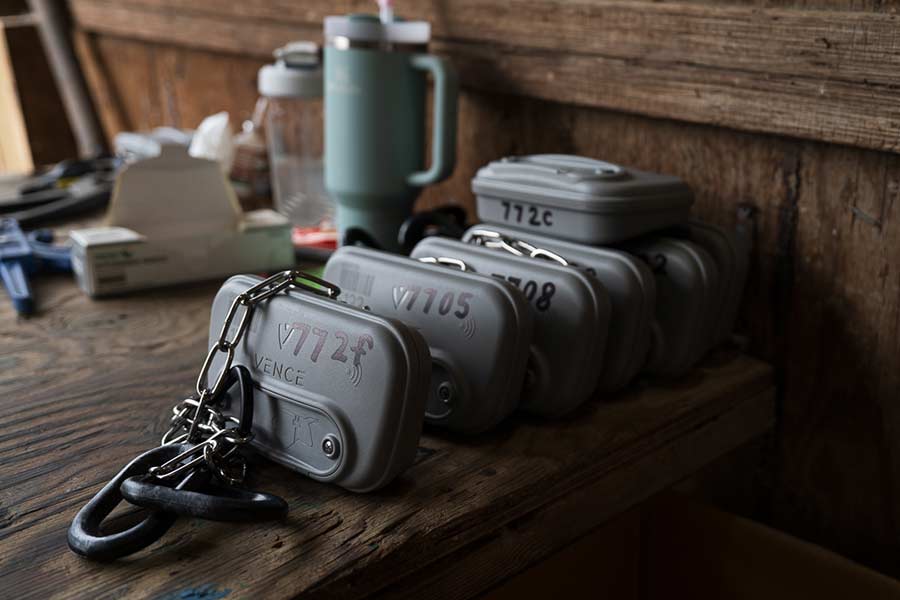
In recent years, virtual fencing has been a widely researched cattle management tool that many ranchers have implemented. It’s a collar that uses GPS technology to help ranchers track their herd. Through an app or computer software, they can draw invisible fence lines within a certain geographic area. Cattle that step outside of that line are electrically shocked.
It’s particularly helpful for ranchers who have grazing allotments on state, federal or public land. Wildfires often result in ranchers being unable to graze for two years. The U.S. Forest Service, U.S. Bureau of Land Management, and other agencies have partnered with ranchers to provide solutions. Virtual fencing has proven to be a win-win management tool for many who have used it.
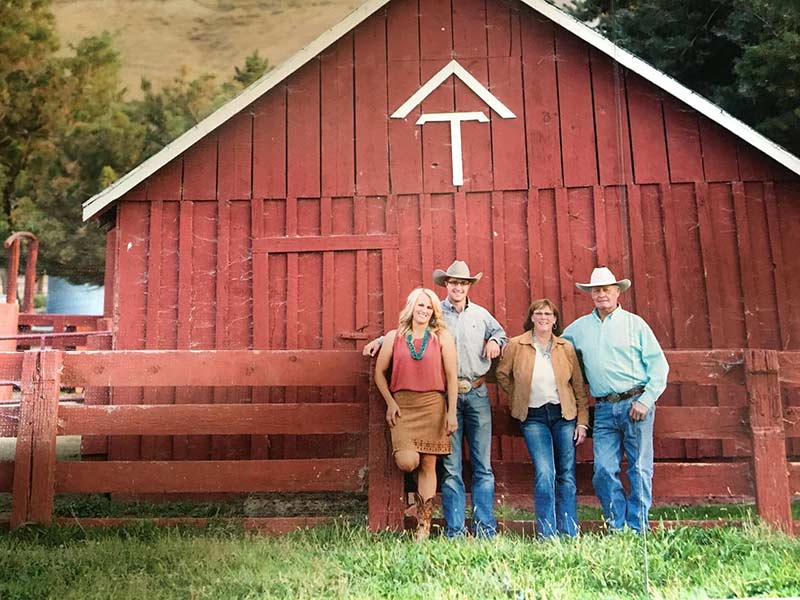
Jessie Jarvis runs a cattle ranch with her husband, Justin, in King Hill, an unincorporated community along the Snake River near Glenns Ferry. They started using the technology in 2024 after two separate wildfires, and it’s allowed them to keep grazing cattle on the unburned areas without interruption.
Two years later, Jessie says those grazing restrictions have been lifted. While their experience with virtual fencing has been positive, she says that barring any future fires, they aren’t planning to use the devices in 2027.
“We’ve utilized this technology once, and if we have to use it again, we’re equipped to do so, and we’re very confident in it. In the past, building a temporary fence was our No. 1 solution. Virtual fencing has since risen to the top in our decision-making,” Jessie says.
Jay Smith, who owns the Jay Lazy S Angus Ranch in Carmen where the U of I research center is located, expresses a similar sentiment. He started using virtual fencing in 2023 in the wake of the Moose Fire. We spoke with him in July and he said it’s been a “game-changer.” He’s inviting landowners, producers and agency partners to tour his ranch on Oct. 2 to highlight its use and the economic realities and opportunities of modern ranch stewardship.
RELATED | Idaho ranchers go high-tech with invisible fences for cattle
Despite the benefits of virtual fencing, Jessie says it still isn’t a perfect solution. While it does make it easier to keep track of cattle, she says cows still stray once in a while, and it’s helpful to have a wire fence in place to help prevent that.
Other challenges include cost. There are multiple brands available to ranchers. Jessie says the brand they use requires an initial investment of $12,000 for a radio tower, which communicates with the collars. They now own the tower free and clear, whether they use it or not. In addition to an annual membership fee of $40, Jessie says each collar costs $50. Each of them runs on a battery, which costs $10 a piece.
Grants are available to ranchers to help offset costs, which has increased interest.
Melinda Ellison has been the lead researcher of virtual fencing at the Nancy M. Cummings building. She was not available for comment Tuesday, but Garfield says grad students working under her tutelage have used the collars on cattle at neighboring ranches.
The research has focused on accuracy to make it effective for smaller pasture sizes.
Garfield says post-wildfire research at Rinker Rock Creek Ranch, focusing on proper grazing, has had promising results.
“A lot of the weeds are staying out. The native grasses are coming back faster and stronger than if there hadn’t been appropriate grazing after a fire,” he says.
As the facility celebrates 25 years, Garfield says the goal is to continue serving as a resource and providing opportunities for students and ranchers.
“We have relationships with big producers across the state, including the Idaho Cattle Association. It plays a major role in the industry,” says Garfield. “One of the things I’ve been working on is reinvigorating the board of advisors to make sure that our research is relevant to Idaho producers.”
WATCH OUR INTERVIEW WITH JESSIE JARVIS IN THE VIDEO ABOVE.
AG AT-A-GLANCE
Meet the 4-H champions from the Eastern Idaho State Fair
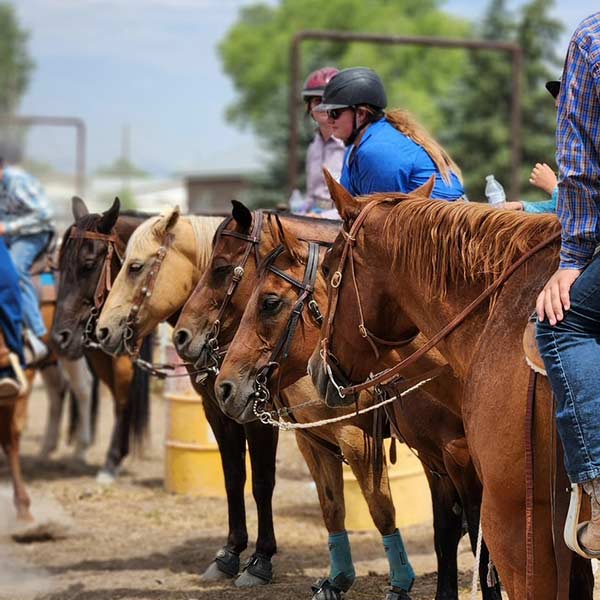
BLACKFOOT – Hundreds of people participated in 4-H horse and livestock shows at the Eastern Idaho State Fair.
The University of Idaho’s 4-H Extension Office in Franklin County reports that 1,320 people were registered to participate.
RELATED | After a summer of hard work, 4-H kids gear up for the Eastern Idaho State Fair
The fair was held from Sept. 4 through Sept. 12. Here are the winners from each event.
Beef
Showmanship
Grand – Tymber Billman (Jefferson County)
Reserve – Chyloh Billman (Jefferson County)
Quality
Grand – Charli Nash (Power County)
Reserve – Aunnika Beutler (Franklin County)
Sheep
Showmanship
Grand – Samantha Schrenk (Oneida County)
Reserve – Tenaj Skinner (Franklin County)
Quality
Grand – Halle Wade (Franklin County)
Reserve – Sarah Jo Wells (Bear Lake County)
Breeding Sheep
Flock
Grand – Kaylee Pratt (Bingham County)
Reserve – Kaylee Pratt (Bingham County)
Ewe
Grand – Halle Wade (Franklin County)
Reserve – Kaylee Pratt (Bingham County)
Ram
Grand – Kaylee Pratt (Bingham County)
Reserve – Brooklyn Hinckley (Jefferson County)
Swine
Showmanship
Grand – Sophi Romriell (Bonneville County)
Reserve – Halle Wade (Franklin County)
Quality
Grand – Kallie Hanson (Jefferson County)
Reserve – Halle Wade (Franklin County)
Market Rabbit
Showmanship
Grand – Cynthia Squires (Jefferson County)
Reserve – Kinley Sykes (Fremont County)
Quality
Grand – Lexy Nelson (Bingham County)
Reserve – Remmington Terry (Fremont County)
Breeding Rabbit
Showmanship
Grand – Cynthia Squires (Jefferson County)
Reserve – Amberlin Eby (Lemhi County)
Quality
Grand – Royce Lyon (Bingham County)
Reserve – Abigail Hansen (Lemhi County)
Dairy Cattle
Showmanship
Grand – Kyzer Swan (Bingham County)
Reserve – Emma Burnett (Bingham County)
Heifer Calf
Grand – Emma Burnett (Bingham County)
Reserve – Boden Allen (Jefferson County)
Yearling
Grand – Kyzer Swan (Bingham County)
Reserve – Jozee Dial (Bingham County)
Old Cows
Grand – Sarah Powell (Madison County)
Reserve – Emma Burnett (Bingham County)
Breeding Goat
Junior Does
Grand – Tripp Odiaga (Bingham County)
Reserve – Sophi Romriell (Bonneville County)
Yearling Does
Grand – Megan Butikofer (Bonneville County)
Reserve – Gwyn Lovell (Jefferson County)
Senior Does
Grand – Keylee Harris (Jefferson County)
Reserve – Tessaundra Christiansen (Bingham County)
Meat Goat
Showmanship
Grand – MaCall Ashby (Franklin County)
Reserve – Sophi Romriell (Bonneville County)
Quality
Grand – Sophi Romriell (Bonneville County)
Reserve – Halle Wade (Franklin County)
Poultry
Showmanship
Grand – Cynthia Squires (Jefferson County)
Quality
Grand – Shianne Durrant (Jefferson County)
Dog
Showmanship
Grand – Saige Cox (Oneida County)
Reserve – Harper Montesano (Teton County)
Rally
Grand – Emily Jossi (Jefferson County)
Reserve – Lexie Kinghorn (Jefferson County)
Obedience
Grand – Lexie Kinghorn (Jefferson County)
Reserve – Ella Ozburn (Caribou County)
Working Ranch Horse
Dummy Roping – Rustin Gordan (Franklin County)
Ranch Roping – Unit 2 – Hesston Harris (Jefferson County)
Ranch Roping – Unit 3 – Brooke Frazier (Bonneville County)
Stationing – Unit 1 – Andi Kinghorn (Lemhi County)
Stationing Unit 2 – Ryker Shurtz (Bonneville County)
Stationing Unit 3 – Blake Barfuss (Caribou County)
Team Sorting – Blake Barfuss, Gracie Christensen, Ike Jensen (Caribou County)
Horse
Showmanship
Senior – Abigail Hansen (Lemhi County)
Intermediate – Charlotte Reaves (Lemhi County)
Junior – Isabelle Beck (Jefferson County)
Bareback
Senior – Tristan Montesano (Teton County)
Intermediate – Addie Wright-Clark (Teton County)
Junior – Harper Montesano (Teton County)
Pony – Abbie Butikofer (Bonneville County)
Equitation
Senior – Joscelynn Waters (Bingham County)
Intermediate – Charlotte Reaves (Lemhi County)
Junior – Isabelle Beck (Jefferson County)
Pony – Abbie Butikofer (Bonneville County)
Walk Trot – Oakley Barnard (Bonneville County)
Snafflebit Hackamore Training
1st Year – Shelby Sorensen (Oneida County)
2nd/3rd Year – Hannah Hales (Bingham County)
Horsemanship – Chloe Wilhelm (Bannock County)
Reining – Joscelynn Waters (Bingham County)
English Equitation
Senior – Abigail Hansen (Lemhi County)
Intermediate – Charlotte Reaves (Lemhi County)
Junior – Avanti Ellis (Bonneville County)
Youth Jumper – Ashtyn Davis (Bonneville County)
Trail
Senior – Jack Miller (Jefferson County)
Intermediate – Andi Kinghorn (Lemhi County)
Junior – Casten Carter (Bingham County)
Single Pleasure Driving 14 hands and over – Ethan Reed (Bonneville County)
Single Pleasure Driving 14 hands and under
Intermediate/Senior – Andi Anderson (Jefferson County)
Junior – Amberlin Eby (Lemhi County)
Single Cone Driving – Alice Wilson (Jefferson County)
Single Utility Driving – Abigail Hansen (Lemhi County)
Team Pleasure Driving – Hadlee Bramwell (Bonneville County)
Team Cone Driving – Ethan Reed (Bonneville County)
If you have a From the Field story idea, send it to rett@eastidahonews.com. Remember to use ‘From the Field’ in the subject line.
IN CASE YOU MISSED IT…
- Trump gives feds 90 days to consider removing endangered species protections for wolves
- Two tomato viruses that ruined your crop this year
- U of I researchers look for ways to stretch water supply and help Idaho farmers navigate drought
- Fresh produce sold by Idaho company recalled for salmonella risks. What to know