



Some Idaho officials say proposed nuclear waste shipments could threaten Eastern Snake Plain Aquifer
Published at | Updated at
Clark Corbin, Idaho Capital Sun
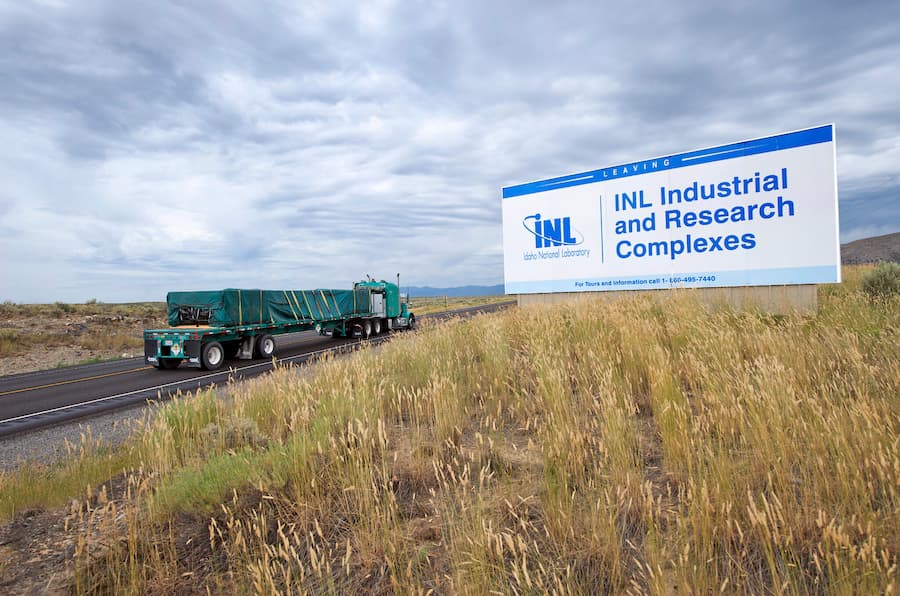
Editor’s Note: This is the third and final installment of a three-part Idaho Capital Sun series examining a proposal to bring a new Nuclear Lifecycle Innovation Campus to Idaho. Part one focused on Gov. Brad Little’s role in negotiations and his priorities for Idaho. Part two focused on Idaho state legislators who support bringing the project to the state.
Accepting a deal with the U.S. Department of Energy to bring a new Nuclear Lifecycle Innovation Campus to Idaho could force the state to accept more than 30,000 tons of spent nuclear fuel and radioactive waste, a retired nuclear manager and a current state legislator told the Idaho Capital Sun.
RELATED | State legislators make the case for a Nuclear Lifecycle Innovation Campus in Idaho
“When I read the state’s proposal it was like, wait a second. This is kind of a bait and switch,” said Joel Case, a retired federal project manager who worked for the U.S. Department of Energy and at Idaho National Laboratory.
In July, Department of Energy officials announced Idaho was one of five states (the list has since grown to six) selected as a finalist to host a new Nuclear Lifecycle Innovation Campus.
Hosting a campus could create thousands of jobs and attract millions or billions of dollars in investment and revenue, Department of Energy officials and supporters say.
But the deal comes with a catch. The states selected to host an innovation campus must agree to accept shipments of spent nuclear fuel and radioactive waste from other states, according to a memorandum of understanding Idaho Gov. Brad Little signed in July.
State officials fought for years to keep out-of-state nuclear waste from entering Idaho
Case has a master’s degree in nuclear engineering, came to Idaho in 1981 and retired in 2022. He held various jobs during his career, and a big part of his work involved implementing the 1995 Settlement Agreement that was reached between Idaho, the Department of Energy and the U.S. Navy.
The U.S. has about 97,000 metric tons of spent nuclear fuel, a Department of Energy official told the Sun last week. If three states are selected as innovation campus sites and Idaho is one of them, Case said that could mean that about 33,000 metric tons of spent commercial fuel could be shipped to Idaho if all three states split the waste evenly.
“We don’t need to accept 33,000 metric tons of commercial fuel,” Case said. “That was the whole idea of the Settlement Agreement (with the federal government) that precludes this state from becoming the de facto disposal and storage site for commercial nuclear fuel.”
Case was referencing the 1995 Settlement Agreement that the late former Gov. Phil Batt, a Republican, signed after Idaho sued the federal government to prevent the state from becoming the country’s nuclear waste dumping ground. That agreement, which is commonly referred to as the Batt Agreement, limits the amount of spent nuclear fuel that can be shipped to Idaho and establishes timelines for cleaning up and removing the waste that is here.
Case says Idaho officials can continue to support Idaho National Laboratory and its work without accepting the shipments of thousands of tons of spent nuclear fuel that would come from the innovation campus.
In these discussions, Case thinks Idaho should leverage the Settlement Agreement and not accept all the spent nuclear fuel.
“I wouldn’t trust the government, and I used to work for them,” Case said. “We made lots of promises, and even some of the Settlement Agreement milestones we haven’t hit.”
Case said it is unclear exactly what Idaho would receive in terms of benefits from an innovation campus, and he said the memorandum of understanding the state signed does not promise any federal funding.
Case said Idaho would need new facilities to complete the work of an innovation campus, and it is not clear who would pay for those facilities.
Idaho National Laboratory officials declined to comment for the Idaho Capital Sun’s series on the proposed new Nuclear Lifecycle Innovation Campus.
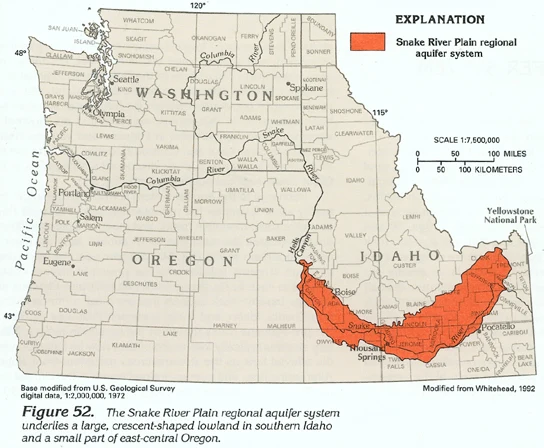
On Sept. 23, Idaho Gov. Brad Little said storing spent nuclear fuel and nuclear waste above the Eastern Snake Plain Aquifer was “a nonstarter.” The governor also said officials have not identified a site yet in Idaho where the spent fuel and radioactive waste would be stored.
The Eastern Snake Plain Aquifer is considered the lifeblood of Idaho. It provides drinking water for Idaho families and irrigation water for Idaho farmers.
Boise legislator said protecting Idaho from nuclear waste is bipartisan issue
Idaho state Rep. Monica Church, D-Boise, said Idahoans fought for decades to win guarantees from the federal government about nuclear waste storage and disposal, and the state should not give those protections up based on vague promises of jobs and revenue made by the federal government.
Church is the granddaughter of the late former Idaho Gov. Cecil Andrus, a Democrat who sued the federal government in 1991 and threatened to use the Idaho State Police to block shipments of nuclear waste from coming into Idaho.
“Cec Adrus was famous for saying the Idaho economy would collapse the first time somebody found radiation in an Idaho potato,” Church said. “The Settlement Agreement has protected us from doing things that could jeopardize the quality of our water. It’s also the most Idaho thing I can think of. We have a mechanism to hold sovereignty over the federal government. I don’t know of anything more Idaho than having a tool in your toolbelt to stick it to the feds.”
Church said protecting Idaho’s people, water and environment from nuclear waste has been a bipartisan issue for decades.
Andrus’s Republican successor, Batt, continued Andrus’ fight and signed the 1995 Settlement Agreement with the federal government.
The agreement includes major deadlines in 2035. Little, Church and other state officials told the Idaho Capital Sun the U.S. Department of Energy is not on track to meet those deadlines.
Church also said the innovation campus deal could require Idaho to accept about 33,000 tons of spent nuclear fuel. She said it would be “bonkers” for any Idaho official to throw out or weaken the 1995 Settlement Agreement’s protections.
Idaho state Sen. Dave Lent, a Republican who supports bringing a Nuclear Lifecycle Innovation Campus to Idaho and believes Idaho National Laboratory could do the work safely, said the amount of spent nuclear fuel coming to Idaho could correspond to one football field covered 30 feet high.
“If you look at all of the aspects, and that includes the workforce, the location, facilities and expertise, we are a standout (potential host site) there,” Lent said in an interview. “Our challenge is going to be helping our citizenry understand what high-level waste is and how it can be handled safely.”
Retired Idaho Supreme Court justice says state should leverage nuclear waste protections in 1995 Settlement Agreement
Jim Jones, who is a retired Idaho Supreme Court chief justice and former state attorney general, said a Nuclear Lifecycle Innovation Campus could work, be undertaken safely and provide many benefits to Idahoans.
But Jones said he is cornered about the rapid pace at which the project appears to be moving. For example, the Request for Information Response that Little signed in March references an “ambitious schedule in months rather than decades” to bring the initial capabilities of a Nuclear Lifecycle Innovation Campus online in 2027.
Jones has concerns about whether Idahoans’ health, the environment, electric utility customers and water users will be protected if the deal is rushed or one-sided.
“In my book, there are more questions than there are answers,” Jones said. “We are talking about the East Snake River Plain, which has a fractured underbelly with all that basalt. It’s close to the Yellowstone Caldera, and it is earthquake prone. These are some of the technical answers that I think that have to be answered before we can truly understand what we are getting into.”
Jones also doesn’t want a sense or urgency or a desire to reap financial benefits to cause Idaho elected officials to weaken the 1995 Settlement Agreement.
“That agreement is unique in the county,” Jones said. “It is the only binding agreement of its kind the Department of Energy has entered into with regard to the nuclear waste issue, and it gives the state some substantial leverage.”
He said the Settlement Agreement should be left in place because it legally protects Idaho from becoming “a permanent waste repository” and would “prevent any claims of federal preemption with regard to data center issues or the acquisition of additional water” needed to carry out the project.
If Idaho is serious about bringing a Nuclear Lifecycle Innovation Campus to the state, Jones said state officials immediately should begin conducting a series of public hearings and public comment sessions across the state, where officials would take questions, describe the plan in detail and lay out guarantees to protect Idaho’s people, aquifer and environment.
Idaho Capital Sun is part of States Newsroom, a nonprofit news network supported by grants and a coalition of donors as a 501c(3) public charity. Idaho Capital Sun maintains editorial independence. Contact Editor Christina Lords for questions: info@idahocapitalsun.com.