When does a bad movie become so bad it’s good?
Published at | Updated at
There are bad movies, and then there are bad movies.
I realize that sentence makes absolutely no sense, but stick with me.
Some movies are just bad. They’re boring, poorly made, the story doesn’t work, or you just don’t care about the characters. You look at your watch 17 times and start wondering if you could sneak out without the people you’re with noticing.
Then there are movies that are also bad, but somehow they cross an invisible line and become incredibly entertaining.
They’re so bad they’re good. I have no idea where that line actually lies.
I do, however, know one movie that crossed it for me.
Not the 1973 version that has developed a pretty devoted following over the years. I’m talking about the 2006 Nicolas Cage version.
If you’ve seen it, there’s a decent chance you’re already smiling.

A very bad, but great Friday night
I saw “The Wicker Man” when I was in college. That summer, a group of my friends and I had developed a Friday night tradition. We went to the movies. That’s it. That was the tradition.
We didn’t wait for something we were dying to see. We didn’t check Rotten Tomatoes. Every Friday we’d head to the theater and see whatever new movie had opened that week.
Looking back, it was a pretty great summer.
When “The Wicker Man” came out, we were actually interested in seeing it. This wasn’t one of those situations where we’d heard the movie was terrible and went hoping to make fun of it. It looked like an interesting thriller and we were ready for something creepy.
Then the movie started and immediately it was apparent this was not a good flick.
It didn’t take long for us to start laughing pretty hard and once it did, it never stopped.
We laughed harder during “The Wicker Man” than we had at any movie we’d seen that summer.
There was just one problem. “The Wicker Man” is not a comedy. In fact it’s trying very hard not to be a comedy.
There are scenes meant to be unsettling that had us crying. Dialogue that I’m sure was supposed to be intense became instantly quotable. And the further the movie went, the more unbelievable the whole experience became.
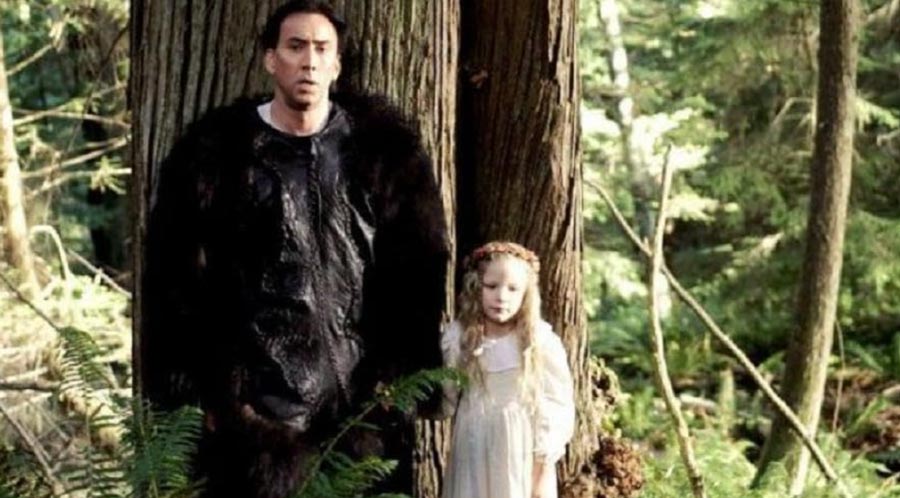
By the time Nicolas Cage was running around in a bear suit — yes, that happens — we were gone.
I walked out of the theater knowing I’d just seen a terrible movie. But I loved it because it was so bad.
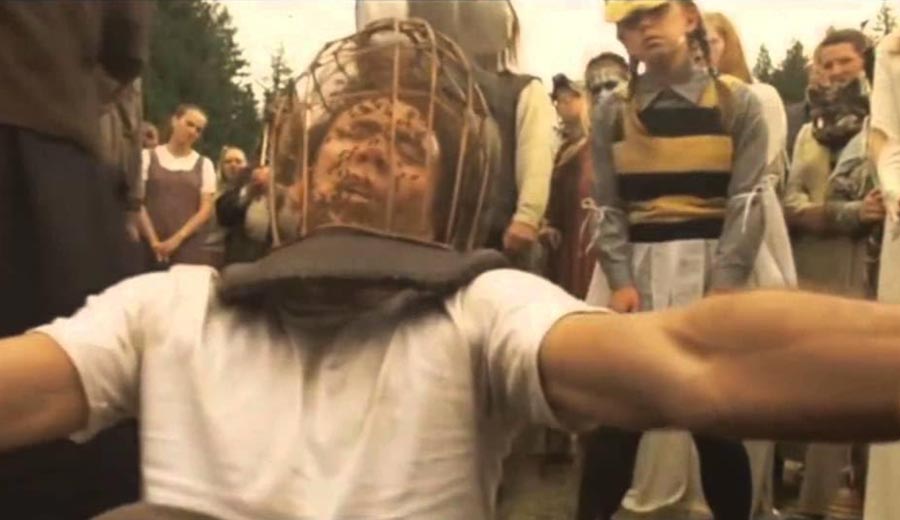
Nearly 20 years later, my friends and I still quote “The Wicker Man.” Someone can say, “The bees. The bees” and we’ll all lose it.
I’ve tried explaining some of these moments to other people, but it doesn’t work.
“You don’t understand. Nicolas Cage kicks a woman while wearing a bear costume.”
Then they stare at me. Which is fair.
So, what makes bad become good?
It has made me wonder what exactly makes a movie cross that line. Why is one bad movie painful to sit through while another becomes something you want to show your friends?
I think part of it is sincerity.
There are movies that seem to know they’re ridiculous. They’re winking at the audience the entire time, almost begging to become the next cult classic.
Those usually don’t work for me.
There’s something special about a movie making a completely bizarre choice with total confidence. Nobody seems to realize how funny it is except the people watching.
But even that doesn’t completely explain it.
I’ve seen plenty of sincere, terrible movies that were still just terrible.
It’s not really about the movie
Maybe the difference isn’t always the movie. Maybe it’s who you’re watching it with.
I have a hard time believing I would feel the same way about “The Wicker Man” if I’d stumbled across it alone one night. Maybe I’d laugh at a few scenes, but I’m not sure I even would have made it to the end. I may have just turned it off after 45 minutes and found something else.
Instead, I saw it in a theater full of my friends during a summer when going to the movies every Friday was simply part of our lives.
The laughter became contagious. Every strange choice made the next one funnier. We weren’t just watching the movie anymore. We were experiencing this bizarre thing together. Not to mention, our laughter became contagious, and everyone in the theater was laughing out loud by the time Nic Cage had gone full bear.
And that’s when a bad movie became a great memory.
I think that’s why some of these movies stick around.
People have their own versions of “The Wicker Man.” Maybe it’s a cheesy horror movie you watched at a sleepover. Maybe it’s an action movie you and your siblings have been making fun of for 30 years. Maybe it’s something you watched with your spouse that was so ridiculous you still quote it whenever a similar situation comes up.
Try recommending that movie to someone outside the group, and they may stop returning phone calls. I get it. They weren’t there.
We spend a lot of time talking about what makes a movie good. We talk about performances, writing, directing, and all the other things that go into making something worth watching.
But sometimes the movies we remember have less to do with how good they were and more to do with where we were, what was happening in our lives, who was sitting next to us, and if Nicholas Cage threw a child into a lake.
I still don’t know exactly when a bad movie becomes so bad it’s good.
What I do know, however, is that somewhere in 2006, Nicolas Cage put on a bear suit, my friends and I completely lost it, and a terrible movie became something we’ve been laughing about for almost 20 years.
So, if you ask me if I like the movie “The Wicker Man,” I’ll probably tell you that I love it, because it’s so terrible.