



The belted kingfisher feeds on east Idaho’s big bugs
Published at
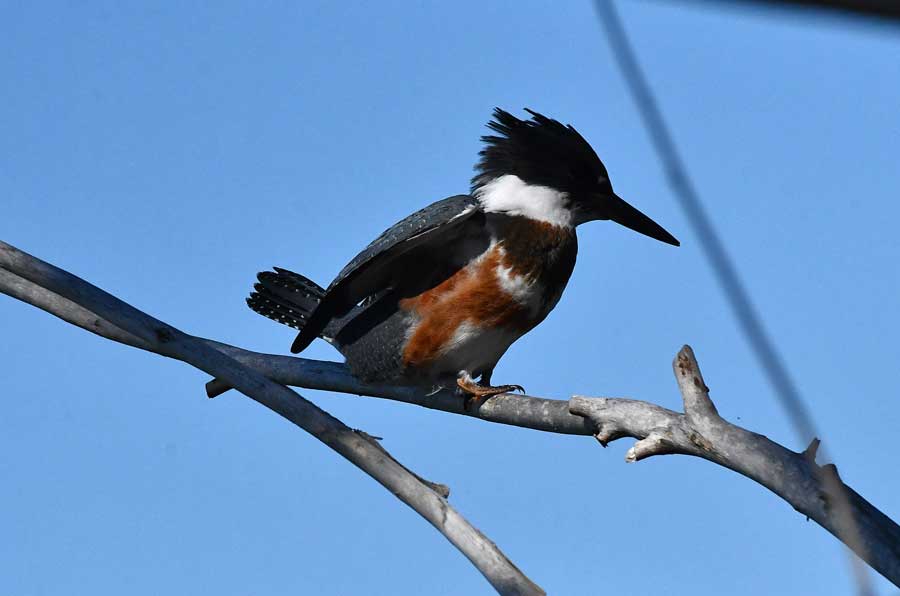
HAMER — While driving past a pond at Camas National Wildlife Refuge recently, I noticed a bird diving into the water and then flying back to its perch. I recognized it as a belted kingfisher, a bird well adapted to catching small fish.
However, I knew the pond did not have fish in it, due to our dry weather most of the summer, and because its water comes from a well. Still, I parked as close to the kingfisher’s perch as it would allow me to.
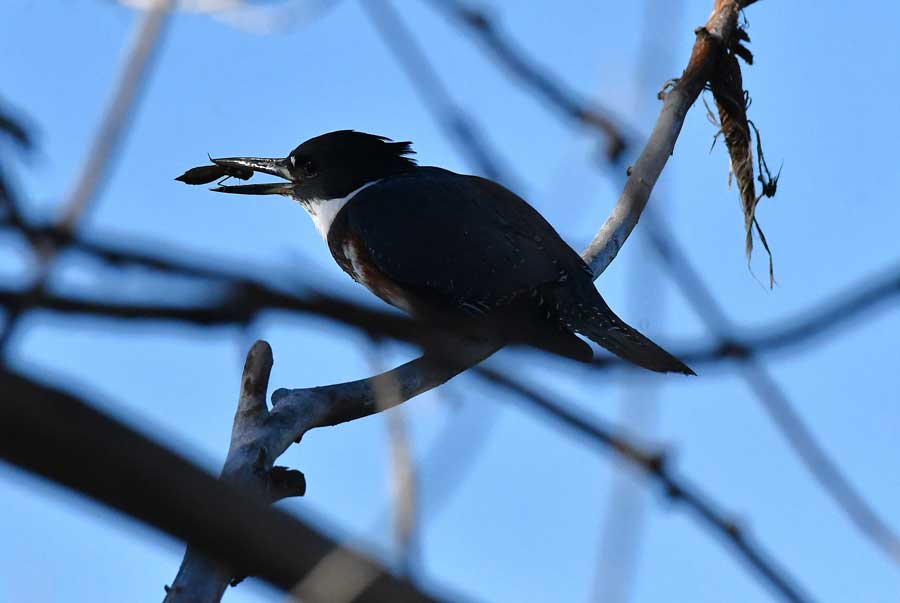
On its third diving attempt, the kingfisher came back with a large dragonfly nymph in its bill and then swallowed it whole. Then on its fifth dive, it captured another and downed the hapless insect as it flew back to its perch.
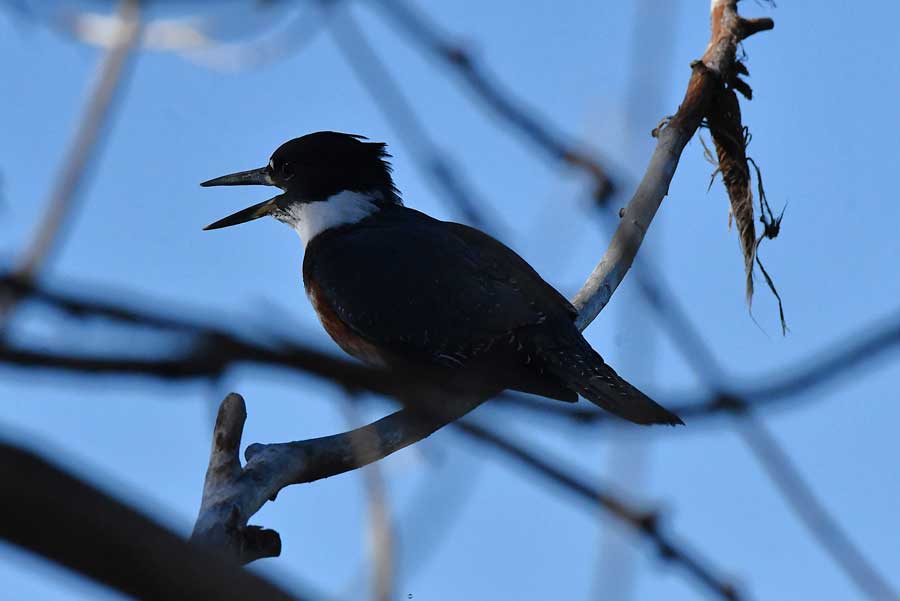
But the insect appeared to get caught in its throat. As the bird tried to get the bug to go down, it reminded me of hooded mergansers eating crayfish. The mergansers will remove all the pinchers and legs before swallowing crayfish. I watched the kingfisher for an hour as it caught six of the large nymphs for a nice brunch.
When I went back to Camas the next day, the kingfisher was gone. I’m thinking it probably went to Mud Lake so it could get small fish. The slippery minnows would be a lot easier to swallow and would probably taste better.
Belted kingfishers have always been interesting birds for me to watch. And given the chance, I can spend hours trying to capture them on film as they dive into the water for most of their food. They basically will eat anything that swims, crawls, runs or flies — as long as it is small enough to swallow whole.
Adults swallow their prey whole, digest what can be digested, and then cough up pellets of the bones and shells that cannot be digested. One of their favorite perches for hunting is a power line that runs across a body of water.
Unlike most birds, the female kingfishers are more colorful than the males. While the female has a red belt around her belly, the male does not have any red at all. Both are very recognizable for their crested head and their blue-and-white coloring. The kingfisher at Camas was a mature female with a beautiful red belt.
Kingfishers nest in tunnels built in banks, usually along rivers or streams, sometimes even having a nest with bank swallows. These tunnels can be anywhere from a foot to 6 feet long, with them slanted upward. This is to protect the nest from flooding during heavy rain.
While the male usually starts digging the tunnels, both male and female work on them for up to three weeks before they are finished. These birds are usually solitary, except during their breeding and nesting season.
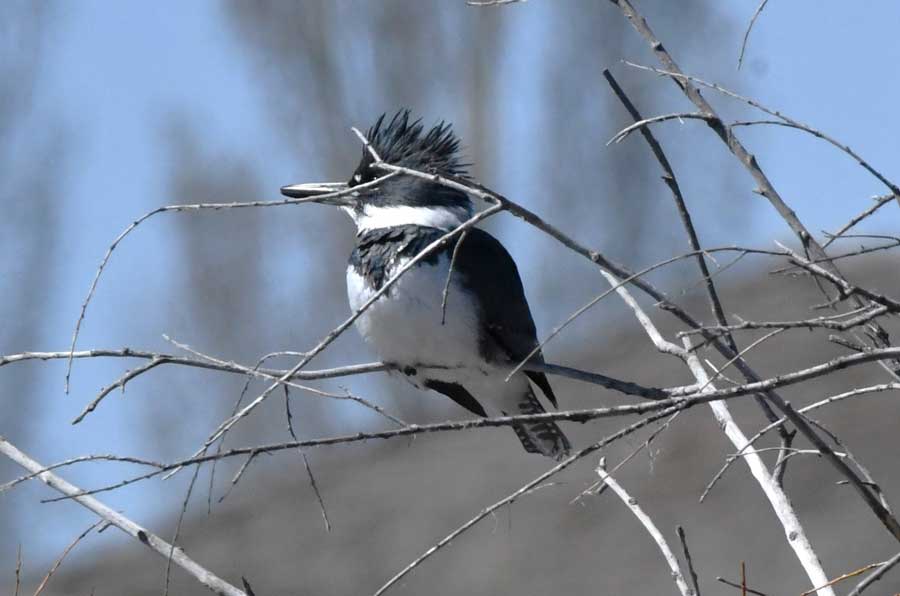
As you find them, they will usually have a favorite perch, and you can almost guarantee that they will use it often. If you want to observe or photograph them, learn where that perch is, park near it and enjoy their activities.
Belted kingfishers migrate only when their food source waters freeze over. In southeast Idaho, we have enough warm sloughs and open water for them to forage on small fish. The Henrys Fork and South Fork of the Snake River, and many of the small sloughs and streams that run into them, produce enough food for the birds to stay here year-round. Now is a good time to enjoy them.
Have a great week. I am looking forward to the predicted cool-down and rain, which should trigger some big bird migrations.

Living the Wildlife is brought to you by Yellowstone Teton Territory. Experience 7,500 square miles of untamed wilderness in Eastern Idaho's Yellowstone Teton Territory. Where majestic peaks meet endless adventure, your perfect outdoor escape is waiting. Start planning at YellowstoneTeton.com.