




Only Democratic legislator in eastern Idaho challenged by former county commissioner
Published at
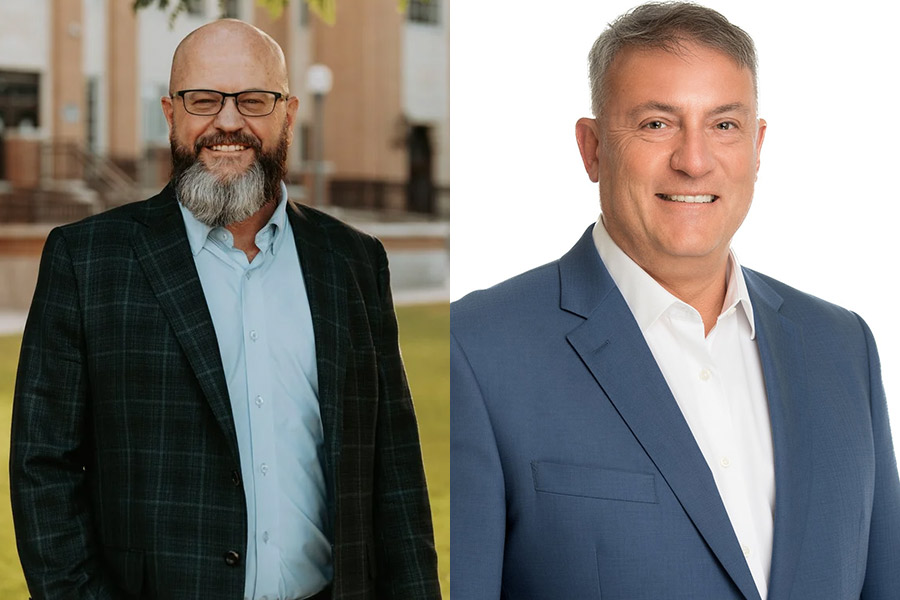
POCATELLO – The only Democrat incumbent representing an eastern Idaho legislative district is running for reelection against a former Bannock County commissioner.
Democratic Sen. James Ruchti is seeking to get reelected by his constituents, who voted him into office in 2022, while Republican challenger John Crowder is running to replace him. Ruchti previously served in the Idaho House of Representatives from 2006 to 2010 and from 2020 to 2022, while Crowder previously served as a Republican Bannock County Commissioner from 2023 to 2025.
District 29 is a small district in terms of land area, encompassing the majority of Pocatello, but its representatives and senator represent over 53,264 residents.
Before the 2024 election, Ruchti served alongside fellow Democrat Nate Roberts, who was the District 29B representative, before he lost to Rep. Tanya Burgoyne. And with Democratic candidate Mary Shea losing the race for District 29A to incumbent Republican Rep. Dustin Manwaring, Ruchti was the last Democratic legislator standing in eastern Idaho.
EastIdahoNews.com sent the same eight questions to Ruchti and Crowder. Their responses, listed below, were required to be 250 words or less, and were not edited.
Election Day is May 19.
Tell us about yourself — include information about your family, career, education, volunteer work, and any prior experience in public office.
Ruchti: I am a fifth-generation Idahoan, a Pocatello native, a husband, a father, a veteran, a small business owner, and an attorney. I have spent a lifetime committed to this community, and I love this place. My wife, Wendy, and I have been married since 1993. We raised our two sons, Spencer and Drew, here in Idaho. Wendy is an educator and professor at Idaho State University. Our family understands firsthand how important strong public schools and good opportunities are to Idaho families. I graduated from Pocatello High School and the United States Military Academy at West Point. I served five years in the U.S. Army as a military intelligence officer, including service overseas. After leaving the military, I earned my law degree from the University of Idaho. Today, I am a trial attorney and partner in a Pocatello law firm. My community involvement has included serving as president of the Idaho Trial Lawyers Association and on advisory committees supporting education and the legal profession. I previously served in the Idaho House of Representatives from 2006 to 2010 and from 2020 to 2022. Since 2022, I have represented District 29 in the Idaho Senate, where I serve as Assistant Minority Leader. My military service taught me that leadership means putting service above self. That principle continues to guide my work for Pocatello.
Crowder: I was born in Anchorage, Alaska, and grew up in the Interior in a small village, hunting, fishing, and riding snowmobiles. My love of the outdoors led me to settle in Idaho.
Upon graduating from high school, I received an appointment to the U.S. Coast Guard Academy and, began serving as a cadet in 1976. One of the highlights of my time at the Academy was participating in Op Sail 76 aboard the USCCGC Eagle.
In 1978 I transferred to SUNY Maritime College, from which I graduated in January of 1981 with a degree in Marine Transportation / Economics. That month I began navigating supertankers for ARCO Marine, working primarily on crude oil tankers bringing oil from Valdez, Alaska to the lower 48 and other ports.
In 1987 I moved from the ships to the shoreside, working as a Chartering Manager for ARCO Marine. During my time there I conceived of and helped found a new subsidiary, ARCO Marine Fuels, Inc.
I was recruited by American President Lines and rose through the ranks to lead multiple departments with a budget of over $300 million, and a staff of 130 people located in several countries and in the U.S. I also obtained a MS in Procurement & Contract Management and studied contract law.
I’ve owned several small businesses including a private school, a consulting business, and an online news site.
I served two years as a Bannock County Commissioner where I focused on increasing government efficiency and lowering property taxes.
Why are you seeking political office within your community? Briefly explain your political platform.
Crowder: The main issue that I am concerned about is our ever-rising taxes.
Combined with inflation, increasing tax bills hurt everyone. Young families starting out struggle to support their growing families and seniors on fixed incomes face the threat of losing their homes to property taxes.
I am in favor of the immediate elimination of the regressive grocery tax. I encourage reducing, and ultimately phasing out, property taxes by redirecting excess income and sales taxes toward that goal, much as we did with the school levy buydowns.
After following the legislature closely for the last few years, I made the decision to run for the Idaho Senate because I realized that I could do more to help local residents by serving in Boise.
I am pro-life, pro-2nd Amendment, pro-parental rights and support our heritage of hunting, fishing, and recreating in the outdoors. We need to continue to have access to our public lands for these activities.
I am pro-law enforcement and appreciate what they do to keep us safe, but I am also concerned about the growth of the surveillance state and the misuse of camera systems that we’ve seen throughout the nation, even in Idaho.
I was a strong supporter of our veterans as a commissioner and will never forget the debt that they’re owed, as they fought to preserve our freedoms.
I believe that government closest to the people should be given deference, and that land use decisions are best made by those in the communities to be impacted.
Ruchti: I am seeking reelection because I believe Idaho should work for all of us, not just those with the most money or political influence. Growing up in Pocatello, I benefited from strong public schools, a supportive community, and opportunities that helped me build a successful life. I want those same opportunities to exist for my children, their generation, and every family in Idaho. Unfortunately, the Idaho Legislature has lost sight of its priorities. Instead of addressing the rising cost of living, improving public education, and protecting access to healthcare, legislative leadership has created a budget crisis through billions in tax cuts that disproportionately benefit the wealthy and corporations. My priorities are straightforward: make Idaho more affordable for working families, properly fund our public schools, protect Medicaid and access to healthcare, defend our public lands, and ensure taxpayer dollars are spent responsibly. That means repealing the grocery tax, providing meaningful property tax relief, expanding affordable housing options, and demanding accountability for how taxpayers money is being spent. I also believe government should respect individual freedom, including the right to make personal healthcare decisions and the right of Idaho voters to participate in the initiative process. My focus has always been on listening to Pocatello residents, finding practical solutions, and working across party lines to deliver results. We need a Legislature focused on solving real problems, not manufacturing political fights.
With rising housing, fuel, and food costs facing Idahoans, can the state government help bring relief to Idaho citizens? Is it the role of the Idaho Legislature to help deal with these issues?
Ruchti: Absolutely on both counts. Making Idaho affordable for working families should be one of the Legislature’s highest priorities in times like these. Every week, Idahoans feel the pinch at the grocery store and gas pump. Every month, families struggle to make their rent or mortgage payments. Yet the Legislature continues to give massive tax breaks to wealthy individuals and corporations while leaving ordinary Idahoans to pay the bills. I believe we should start by eliminating Idaho’s sales tax on groceries. Families shouldn’t be taxed for putting food on the table. We also need meaningful property tax relief, including restoring the value of the homeowner’s exemption so it keeps pace with rising home values. On housing, we should work with local governments to remove unnecessary barriers to residential development, improve infrastructure, and encourage the construction of homes working families can actually afford. We should also take a hard look at corporate tax exemptions, particularly those benefiting massive data centers. Idaho families and small businesses should not be subsidizing large corporations through higher utility bills or lost tax revenue. The Legislature cannot control every price in the economy, but it absolutely controls our tax policies, housing regulations, and public investments. Government should be making life easier for hardworking Idahoans, not asking them to shoulder more of the burden while special interests receive another tax break.
Crowder: Yes, the legislature can bring immediate financial relief to Idaho families by eliminating the grocery tax.
Given the incredible growth that Idaho is experiencing, we are seeing income and sales tax revenue being generated beyond that required for modest government growth. Taking this excess and buying down property taxes would provide tremendous relief to Idahoans and bring economic prosperity to all.
How will you best represent the views of your constituents – even those with differing political views? How do partisan politics play into your role as an elected leader?
Crowder: As a commissioner, I made it a practice to meet with people with differing views, and I will remain open to hearing arguments from all sides.
I’m a Republican because I believe that their platform will best bring prosperity to Idahoans. However, I’ve worked with those in the other party when our goals have aligned in the past. I think that it’s important to listen to different ideas. No one side has a monopoly on good ideas.
Ruchti: I represent everyone in District 29, not just the people who voted for me. I learned at West Point that good leadership begins with listening, treating people with respect, and putting the mission ahead of personal differences. I have carried those lessons into the Idaho Legislature. Throughout my service, I have worked with Republicans and Democrats to advance legislation on issues like consumer protection, veterans’ benefits, public safety, and property tax relief. Good ideas do not belong exclusively to either political party. I also believe constituents deserve access to their elected officials. That’s why I hold town halls, participate in public discussions, provide regular legislative updates, and make myself available to people who disagree with me. My job is to listen, explain my decisions, and represent the interests of the people of Pocatello. There are issues where reasonable people will disagree, and I respect that. But I will always defend our public schools, individual freedoms, and the right of Idahoans to have a meaningful voice in their government.
Partisanship becomes a problem when winning a political argument matters more than improving people’s lives. Idahoans expect us to balance budgets, keep our communities safe, and create opportunities for our children. Those responsibilities are bigger than any party. I am an Idahoan and an American first and foremost.
What parts of the Legislative budget could use more funding? Where are places in the budget where cuts could be made?
Ruchti: Idaho’s budget crisis is self-inflicted. We have a revenue problem, not a spending problem. Over the last five years, the Legislature has enacted billions of dollars in income tax cuts. Now, we’re being told there isn’t enough money for public education, healthcare, and essential services. That’s not responsible budgeting. It’s a failure to prioritize. We need to invest more in our public schools, including teacher retention, school facilities, and special education. Higher education and workforce training also deserve greater support, particularly institutions like Idaho State University that are critical to our local economy. We must protect Medicaid, rural healthcare, mental health services, and programs that help seniors and Idahoans with disabilities live independently. As for cuts, I would start with the $50 million private school voucher tax credit program. It diverts taxpayer money away from public priorities without the transparency and accountability taxpayers deserve. I support repealing that program and reinvesting those dollars in public schools. We should also review corporate tax exemptions, including giveaways to large data centers, and eliminate subsidies that fail to deliver measurable benefits to Idahoans. I served in the Legislature during the Great Recession. I saw the long-term damage caused by cutting essential services to the bone. We cannot cut our way to prosperity. We need honest budgeting that puts working families, public education, and Idaho’s future first.
Crowder: I don’t know of any parts of the legislative budget that could use more funding. I think that we need to look a lot more closely at departmental expenditures and ensure that spending decisions are supported by the duties delegated to government by the U.S. and Idaho Constitutions.
In 2026, Idaho suffered a historic drought, leaving eastern Idaho’s reservoirs at an all-time low. As a result, crop yields were significantly impacted. What specific strategy or legislation would you support to protect groundwater and surface water resources, and what is your timeline for measurable improvements?”
Crowder: With the important role that agriculture plays in Idaho, water is of critical importance.
I am in favor of increasing water storage capacity, including raising the height of dams and creating new reservoirs.
I oppose the destruction of existing dams.
Ruchti: Water is essential to eastern Idaho’s agricultural economy and the livelihoods of the families and communities that depend on it. We need to treat water conservation and infrastructure as essential investments, not optional expenses. I support strengthening Idaho’s existing aquifer recharge programs, particularly in the Eastern Snake Plain Aquifer, while investing in modern irrigation infrastructure, water measurement, and conservation technologies. Idaho has already established a goal of recharging an average of 350,000 acre-feet annually into the Eastern Snake Plain Aquifer. We should provide the funding and infrastructure necessary to achieve that goal while protecting existing water rights. During the 2027 legislative session, I would support dedicated funding for recharge projects, irrigation modernization, and improved groundwater monitoring. I would also push for greater transparency regarding industrial water consumption, especially from large data centers. I don’t profess to be an expert in this area, so I lean on those with expertise both inside and outside the Legislature. We cannot afford to wait until the next drought to act.
One of the biggest issues on the November ballot is Proposition 1, a citizen-led ballot initiative that would repeal Idaho’s abortion ban. Do you support Proposition 1? Why or why not?
Ruchti: Yes, I support Proposition 1. I believe deeply personal healthcare decisions should be made by women, their families, their faith, and their doctors, not politicians in Boise. Whatever your personal beliefs about abortion, we should all be able to agree that women experiencing medical emergencies deserve timely, appropriate healthcare without government interference. Idaho’s current abortion laws have created confusion and uncertainty for doctors and patients. Women facing serious pregnancy complications should not have to wait until their conditions become life-threatening to receive treatment. I have consistently advocated for reproductive healthcare laws based on compassion, medical science, and respect for individual freedom. Proposition 1 is not perfect, but it offers a necessary correction to Idaho’s current law. It would restore access to abortion before fetal viability and protect access to medically necessary care afterward in qualifying emergencies. It also protects other important reproductive healthcare decisions. The Legislature has had multiple opportunities to fix our draconian laws and has repeatedly failed to do so. Now Idaho voters have an opportunity to act. I trust Idaho women and their doctors to make these deeply personal decisions. I will vote yes on Proposition 1, and whether it passes or fails, I will continue working to ensure Idaho families can access the healthcare they need without unnecessary government interference.
Crowder: I oppose Proposition 1, which is a radical departure from Idaho’s historic position of protecting life. The current law protects the lives of both mothers and babies.
Prop 1 would allow abortion on demand through almost an entire pregnancy, would remove the requirement that only medical doctors perform abortions, allow for minors to receive abortions without parental knowledge, and would remove the duty to save an unborn child where possible. It is far too extreme for Idaho, and I stand in strong opposition to it.
Idaho House Joint Resolution 4 (HJR 4) is a constitutional amendment on the November ballot that would give the legislature exclusive authority to legalize or decriminalize marijuana, narcotics, and psychoactive substances. It would also ban citizen initiatives that would allow voters to directly have a say on the issue. Do you support the passage of HJR 4? Why or why not?
Crowder: While I like the idea of initiatives in theory, we’ve seen how out-of-state, big money interests have been using them to push an extreme, progressive agenda. They attempted ranked choice voting two years ago, which was soundly defeated by voters, and are now using it to deceptively promote an extreme abortion agenda. They’ll use it in two years to try and decriminalize drugs if we don’t take steps to stop them from doing so now. For those reasons, I support the passage of HJR 4.
Ruchti: No. I strongly oppose HJR 4. This amendment is about much more than marijuana. It is about whether Idaho voters should have the right to make decisions about the laws that govern their lives. For generations, Idahoans have had the constitutional right to bring citizen initiatives to the ballot when their Legislature refuses to act. That right is an important check on government power. HJR 4 would take that power away from voters on an entire category of issues and give exclusive authority to the Legislature. I fundamentally disagree with that approach. Whether you support marijuana legalization, medical marijuana, or keeping our current laws, you should be concerned whenever politicians attempt to limit your voice in government. I also believe Idaho needs a serious, fact-based conversation about marijuana policy. Our neighboring states collect tax revenue from marijuana sales while Idaho taxpayers shoulder the costs associated with enforcement and prosecution. Any conversation about legalization must also address public safety, impaired driving, and protecting children. Those are legitimate policy questions worthy of public debate. But we should not amend our Constitution to prevent Idahoans from participating in that debate. I trust Idaho voters. I believe their voices matter, and I will continue fighting to protect the citizen initiative process. Our Constitution should protect the people’s rights, not protect politicians from the people.