



Tesla set to wind down production of Cybertruck
Published at
Chris Isidore, CNN
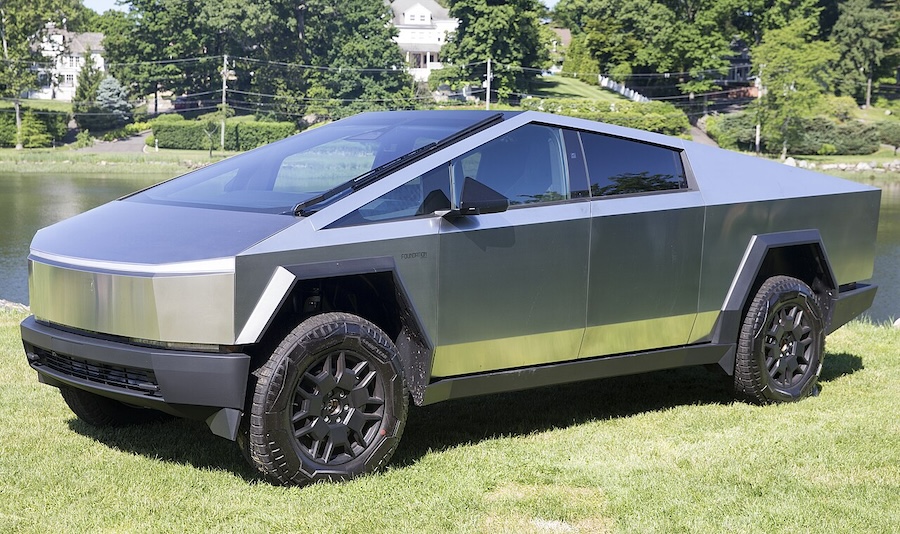
(CNN) — It looks like the end of the road for the Cybertruck.
Elon Musk said Friday that Tesla will wind down production of the vehicle at its factory in Austin, Texas — the only plant that makes the polarizing truck.
The change will start “around the middle of next year to make room for increased Cybercab production,” Musk, Tesla’s CEO, posted on his social media platform X.
It wasn’t immediately clear if Tesla plans to switch Cybertruck production to another factory or phase it out entirely, though the Cybertruck’s lead engineer Wes Morrill appeared to suggest that the vehicle had reached its end.
“Cybertruck was an incredible technology development platform and lives on through Cybercab,” he posted on X.
The announcement comes at the end of a bruising week for Musk, who has often described the Cybertruck as his favorite vehicle. On Tuesday, he saw the nearly $500 million in campaign contributions he made in the US midterm elections go for naught amid a resounding defeat for Republican candidates.
The subsequent sell-off in AI stocks battered shares of Tesla (TSLA) and SpaceX (SPCX), his two public companies, both of which fell more than 12% in the first two days of trading since the midterms. That has decreased Musk’s net worth by $113 billion, according to Bloomberg’s Billionaires Index, although he is still by far the richest person on the planet.
Fans of Tesla and Musk loved the Cybertruck’s distinctive design. But its social media critics thought otherwise, referring to it as “dumpster chic,” and the vehicle was ultimately an underperformer.
At Tesla’s 2023 shareholder meeting, Musk said that his “reasonable guess” was that Tesla would be making 500,000 Cybertrucks a year. While Tesla has never broken out its sales of the Cybertruck separately, the company has reported sales of “other models” this year at fewer than 37,000. That metric is for cars other than its best-selling Model 3 and Model Y, and includes sales of Tesla’s discontinued Model S and Model X.
Tesla has one other auto plant in the United States, in California. Musk halted production of his two most expensive models, the Model S and Model X, at that plant to make room for production of the human robots, Optimus, the company intends to sell.
Musk has made clear that the future of Tesla will be providing rides in the company’s still nascent robotaxi service and humanoid robots, not selling electric vehicles. But both ambitious plans have thus far proven to be far more promise than reality.
Musk has said that Tesla would soon be making its Cybercab — a small vehicle with room for only two people and no steering wheel, accelerator or break pedals — in greater number than all its other vehicles combined. He also promised that the company’s robotaxi service would be providing fully-autonomous rides to half the country by the end of last year.
However, the service is currently only available in seven cities — four in Texas and three in Florida – which is behind competing services like Alphabet-unit Waymo. Tesla has yet to break out the profits or revenue from the service in its quarterly report, suggesting it may be losing money. And it has proven difficult to get regulatory approval from local governments to allow self-driving vehicles on the roads.
Humanoid robots are also not yet available for sale. Musk said on a recent earnings call that Tesla is still working on some of the technology, such as getting the robots’ hands to work.