



Idaho and feds clash over water with high stakes for state law, nuclear ambition
Published at | Updated at
Mark Dee, Idaho Statesman
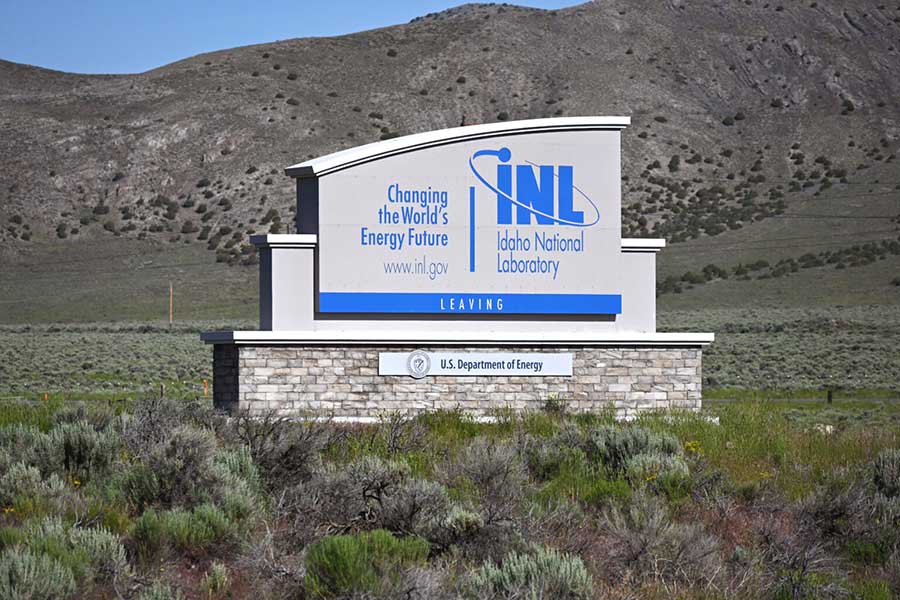
BOISE(Idaho Statesman) — Idaho and the Trump Administration are locking horns over who controls the flow of water to the Idaho National Laboratory in a case that pits America’s nuclear ambition against the bedrock rules of Western water policy — and the state sovereignty that governs it.
The Department of Justice in September sued Idaho to override the state’s power to curtail groundwater access at the massive federal laboratory in rural Butte County, which the case describes as the “backbone of nuclear innovation in the United States.”
Work there depends on water to cool reactors, store spent fuel and test new technologies, in addition to regular domestic uses. The lab has rights to some 35,000 acre-feet of water per year — about 11.4 billion gallons. But in dry years, when conflict arises, the state controls the spigot.
In the eyes of the Idaho Department of Water Resources, the federal government is just another water user — and, in a state where claims routinely date to the 19th century, it’s a relative newcomer. Idaho’s control over its own resources is an old rule, too. The Desert Lands Act of 1877 gave the state “plenary” — that is, complete and exclusive — control over non-navigable water, including groundwater. Idaho does that through the doctrine of prior appropriation: “first in time, first in right.”
Earlier this year, with the state forecasting a 181,000-acre-foot shortfall on the Eastern Snake River Plain aquifer water supply area, the state gave the INL a choice: Sign on to a mitigation plan with a water user group, or see your water curtailed in favor of older users.
The federal government did, and avoided curtailment, though questions remain over whether it’s even allowed to do so under Idaho law.
In bringing the suit, the Justice Department aims to leapfrog that issue altogether in favor of a Constitutional question: Is the federal government just like any other water user in Idaho, subject to state authority? Or, do the laws grant it immunity from state administration, allowing the INL to carry on its work with the water it needs?
In more concrete terms, it asks who gets priority during a drought: A farm with roots dating back to the 1890s? Or more recent America’s nuclear energy ambitions?
It’s a question both sides knew was coming. In 1990, the state and the Department of Energy signed an agreement over water rights. In the document, though, they agreed to disagree on how the water would be administered, and by whom. The document specifically “does not address this issue”: “Each party reserves the right to litigate the issue of administration, if and when the need arises.”
For the federal government, the need has arisen.
The U.S. argument is anchored in the Supremacy Clause of the U.S. Constitution, which gives federal laws precedence over state ones when the two conflict. That extends to federal facilities like the INL, the DOJ argues. Without direct authorization from Congress, the claim states, Idaho cannot “regulate, burden or control” any federal installation or restrict any federal mandates, and pulling necessary water access would do all three.
At INL, a state curtailment order “threatens national security and nuclear safety,” the claim reads.
Work at the site powers the country’s nuclear-propelled Navy, and has for more than 70 years. The lab hosts the Naval Nuclear Propulsion Program, which oversees design, testing, operation, maintenance, refueling and, ultimately, disposition of spent fuel for the reactors that serve the nuclear fleet.
The military also has significant plans for the site, including hosting the refueling program for its aircraft carriers at INL through the 2030s, according to the federal complaint.
Curtailment also “interferes with the operation of congressionally mandated programs,” including nuclear energy research, a priority of President Donald Trump’s administration.
“Curtailment of INL’s water right would disrupt this national nuclear energy momentum,” the claim states.
‘No special treatment’
Idaho Attorney General Raúl Labrador disagrees.
A 1952 law called the McCarran Amendment addresses this very issue, carving out an exemption to federal immunity where water is concerned, he said in Idaho’s counterclaim.
Through the amendment, “Congress sought to prevent (the United States) from receiving the protection of state water law on one hand while flouting it with impunity on the other,” the counterclaim reads.
By that logic, not only does the Idaho Department of Water Resources have authority to regulate Idaho’s water, but it’s obligated to do so. If it didn’t curtail INL’s water, it would effectively allow the federal government to steal the resource from people with stronger claims.
“Water is the lifeblood of Idaho, and my office will protect the water rights of Idahoans who depend on it,” Labrador said in a statement included in court filings. “Our sovereign authority to administer those rights has been established for more than 100 years, and it applies to every water user in this state, including the federal government.
“The federal government gets no special treatment under Idaho law. We will work with federal agencies to meet their needs, but we will not sacrifice the water rights of Idaho farmers, ranchers and families to do it.”
What’s next? Pray for snow.
The case is far from over.
These days, the two sides are still trying to determine which court system — state or federal — will adjudicate the claim.
In the meantime, Idaho heads into the 2027 water year on precarious footing. Coming off a low snowpack in 2026, climatologists are hoping for an El Niño pattern to bring heavy precipitation this winter — though historically that’s tough to call.
“We’re really sweating out the risk that the jet stream moves too far south,” David Hoekema, a hydrologist with the Idaho Department of Water Resources and the chair of the Idaho Water Supply Committee, told the Idaho Statesman in September. “If that happens, we’re going to see one of the most catastrophic droughts we’ve seen in recent times.”