



Idaho parents who got school-choice tax credit earned average of $178,000 per year, report shows
Published at | Updated at
Clark Corbin, Idaho Capital Sun
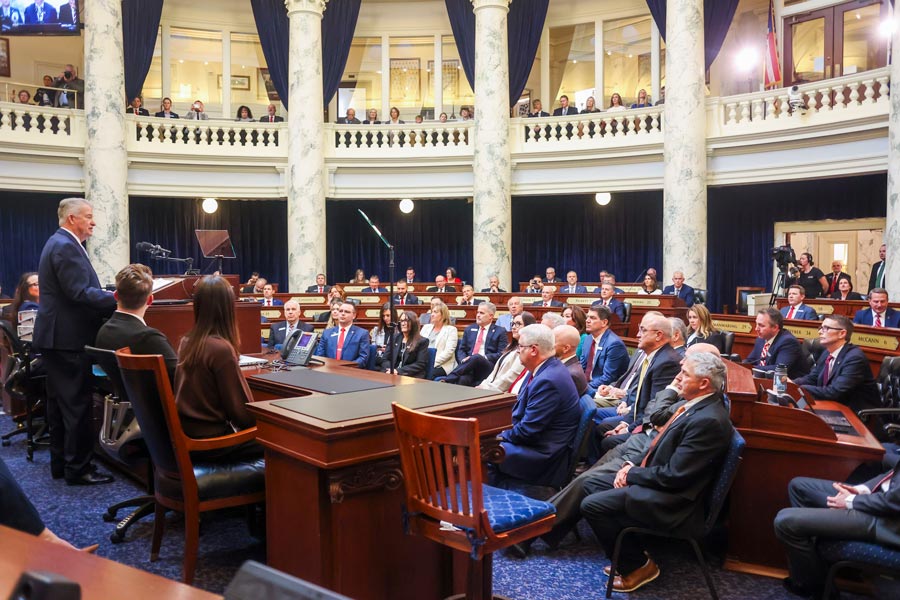
BOISE (Idaho Capital Sun) — The average parent who received one of Idaho’s new private education tax credits made significantly more money than the average Idahoan and most of their children already attended private school before receiving the credit, according to a new report released Friday by the Idaho State Tax Commission.
Parents who received the Idaho Parental Choice Tax Credit had an average adjusted gross income of $178,000 a year, which is more than double the income of an average Idaho family, the Idaho State Tax Commission’s Parental Choice Tax Credit Program Comprehensive Report found. (The U.S. Census Bureau reports Idaho’s median household income is $84,234)
The report was the first major state-analysis published on the $50 million new tax credit, which the Idaho Legislature created and Gov. Brad Little signed into law in 2025.
The tax credit was one of the most discussed bills of 2025, and critics said it marked a major shift in education policy by making state funding available for private school tuition and expenses outside of the state’s K-12 public school system.
In Friday’s new report, the Idaho State Tax Commission reported that 55% of the 6,875 Idaho parents who received one of the tax credits earned more than 300% of the federal poverty level on their 2024 tax returns.
That compares to 45% of parents who were at or below 300% of the federal poverty level, which is the income level legislators said they would prioritize when they created the tax credit.
In conjunction with the release of the report, Little issued a statement saying that transparency and accountability around the tax credit are important.
“Transparency and accountability are important to ensuring the Parental Choice Tax Credit works as intended and serves Idaho families well,” Little said Friday. “The Legislature called for transparency, and my administration went above and beyond to provide as much information and data as possible while protecting taxpayers’ personal information. This report gives policymakers and the public a clearer picture of the program and provides the best available data to evaluate its effectiveness, identify opportunities for improvement, and ensure it continues to serve Idahoans well.”
Other reaction to the report and the tax credit was mixed.
Democrats renewed their calls to repeal the tax credit, or at least change the requirements so high income earners cannot benefit from the program.
“Idahoans were sold a lie about this voucher scheme,” Idaho House Minority Leader Ilana Rubel, D-Boise, said in a written statement. “We were told this program would help low-income children leave public schools for supposedly better-performing private schools. Instead, more than half of the families awarded tax credits are above the income threshold Republicans promised to prioritize, and nearly three-quarters of students have never attended an Idaho public school.”
But the conservative Mountain States Policy Center, which backed the tax credit, said the report shows the tax credit is “a monumental success.”
“The Idaho Tax Commission has released its first in-depth report on year one of the state’s new parental choice tax credit, and the overwhelming evidence shows it has been a monumental success,” Mountain States Policy Center officials wrote Friday.
Where did the money for the education tax credit go?
Two-thirds of the parents who applied for the tax credit lived in Idaho’s three biggest counties, the report shows. Of the 6,875 parents who applied for the tax credit, 4,527, or 66%, lived in Ada, Canyon or Kootenai counties.
By comparison, there were just 48 applications from parents in eastern Idaho’s Bingham County and 31 applications from parents in southern Idaho’s Cassia County, the report shows.
Almost one-fourth of the tax credit money spent for tuition at private schools went to just five Idaho private schools, the report shows.
The five private schools where parents used the tax credits most are Cole Valley Christian School in Meridian, The Ambrose School in Meridian, Bishop Kelly High School in Boise, Nampa Christian School and Logos Classical Christian School in Moscow. Altogether, parents reported using almost $10.9 million in tax credits at those schools combined, or about 22% of the total money awarded.
“It’s hard enough for working parents to make ends meet without being asked to subsidize private school tuition for families who are better off than they are,” Sen. Janie Ward-Engelking, a Boise Democrat and retired teacher, said in a written statement Friday. “I want someone to explain to a rural parent why their child’s school can’t afford another teacher, but the state can afford to help a well-off family pay private school tuition. That’s a pretty lousy deal for rural Idaho.”
How does the Idaho Parental Choice Tax Credit work?
The tax credit was created by the Idaho Legislature passing House Bill 93 in 2025.
The tax credit provides up to $5,000 for qualifying expenses outside the public school system, including tuition and fees at a private school.
The tax credit provides up to $50 million annually in tax credits, minus administrative costs.
After analyzing the tax credit program, the Idaho State Tax Commission reported that 6,875 parents received a tax credit, supporting a total of 12,216 Idaho students (some parents who received a tax credit had more than one student).
Among those 12,216 students, only 25.3% reported ever attending a public school previously. Just 4.3% of the students reported attending public school for the entire 2025 school year.
Among those 12,216 students who benefited from a tax credit, less than 1%, or 600 students, had a disability.
The overwhelming majority of the money for the tax credit has so far been spent on private school tuition, the report shows. More than 93.5% of funds went to tuition at private schools, while 2.8% of the funds have been spent on curricula materials, the report found. The remaining funds were split among tutoring, transportation, textbooks, prep courses and college placement, standardized tests and exams.