



Lyda Southard was married seven times — and was Idaho’s first serial killer
Published at | Updated at
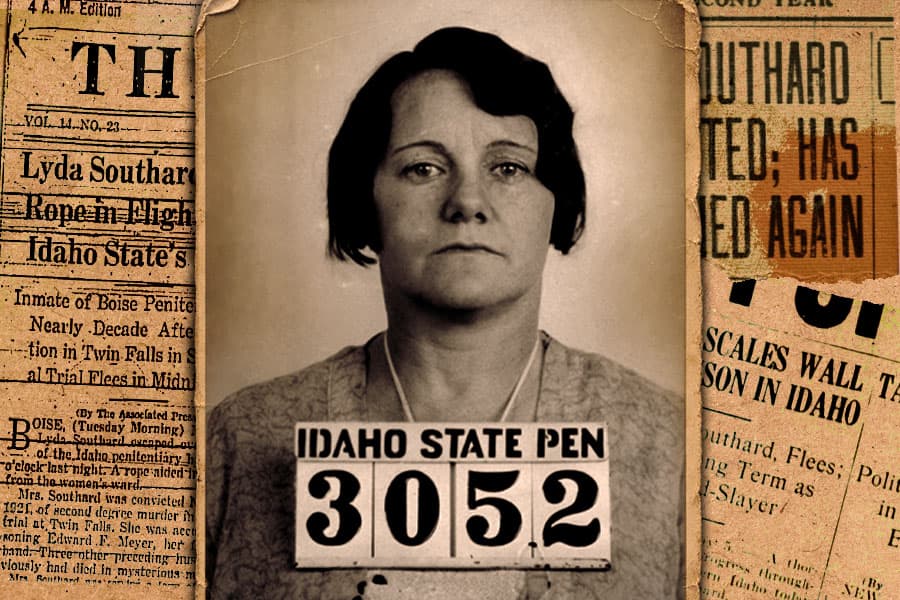
TWIN FALLS — The “most sensational murder trial that has ever come up for trial in Southern Idaho” was about to get underway in Twin Falls in 1921.
The story on Lyda Southard (maiden name Trueblood), who was charged with poisoning her fourth husband, was featured in our weekly Looking Back column, which looks back on what life was like during different periods in east Idaho history.
Southard’s fourth husband dies
Southard was charged with murdering her fourth husband, Edward F. Meyer, in Twin Falls. The Idaho Falls Post Register reported that the couple had only been married for one month when he became sick.
After a meal at I.B. Perrine’s ranch house, the couple, along with ranch hand Bill Squires, all got sick. The Post Register said Lyda and Squires recovered, but Meyer’s illness landed him in the hospital.
Doctors eventually had him on the mend, but after a visit from his wife, his health took a sharp turn. Meyer died Sept. 7, 1920.
“Suspicious townsfolk began to gossip about how she showed no emotion when Ed died,” the Post Register wrote.
As suspicions grew, County Prosecutor Frank Stephan and Sheriff E.R. Sherman instructed Deputy Virgil “Val” Ormsby to find proof that Meyer was murdered. And by this time, Southard had vanished from Twin Falls.
At some point, Orsmby visited a house that Southard used to live in. When he asked the new homeowners if any kind of poison had been left when Southard moved out, the new owners took Orsmby to the cellar. He discovered a wooden barrel with a foot-high stack of flypaper that contained arsenic.
Ed Meyer’s body was exhumed secretly from his grave in Twin Falls Cemetery on the night of April 2, 1921, the Post Register reported. His body was found to contain enough arsenic to kill five men.
But Meyer was not Southard’s only victim. Sheriff’s Deputy Ormsby said investigations had shown poison in the stomach of three other former husbands, a brother-in-law and daughter, although another report said the daughter didn’t have poison in her stomach.
“Orders were given to exhume all those thought to be Lyda’s victims, including her daughter,” the Post Register wrote. “The men’s corpses all contained arsenic, but little Loraine’s body had none. Prosecutors contended she had been starved to death.”
Ormsby left Twin Falls with a warrant for Southard’s arrest.
Southard escorted from Hawaii back to Idaho
Ormsby and his wife travelled to Honolulu, where Southard was living with her fifth husband, Paul Vincent Southard, a naval petty officer, stationed in Honolulu. The Ormsbys and Southard left Hawaii and arrived in San Francisco on June 7, 1921, en route to Twin Falls.
“Mrs. Southard shielded her face from photographers and declined to talk to newspaper men who boarded the boat,” an article from The Pocatello Tribune reads. “Upon debarking, she put on tinted glasses and was heavily veiled.”
In San Francisco, Southard was taken to the city jail. She reportedly preferred to stay at the jail instead of a hotel because she didn’t “want to be bothered by newspaper men.”
The Ormsbys said she showed “no unrest of mind” and “occasioned them no trouble.” They said she also avoided any reference to the charges against her.
Southard’s then-husband received permission to travel to Twin Falls to attend the trial, but he did not accompany his wife when she was escorted back to Idaho.
The trial gets underway, Southard testifies
The trial was underway in early October 1921. The case attracted attention nationwide, and it was expected to be a “long drawn-out” trial.
A few weeks later, on Oct. 25, 1921, 29-year-old Southard was called to the witness stand to tell her story of the death of her fourth husband.
“The calling of the defendant to the witness chair came as an almost complete surprise,” a newspaper clipping states.
“Call your next witness,” the court directed. “At a word from counsel, Mrs. Southard got up and walked to the witness stand. A buzz of conversation broke out among the spectators as she took her seat.”
Southard said Meyer had been sick. She admitted buying two packages of insect exterminator at the Fisher Drug Company store and denied purchasing more than that amount. She said her husband was taken to the Twin Falls County Hospital at her orders and that he was “noticeably ill during the trip.”
When asked if she had ever administered poison to Meyer, she said, “I did not — no, I didn’t.”
Verdict reached
Southard was found guilty of murder in the second degree. She was sentenced to 10 years to life imprisonment in the state penitentiary in Boise.
Eleven of the 12 jurors believed Southard should have been given a first-degree murder charge.
“(The 11 jurors) finally ‘compromised’ with the one obdurate juryman who stood out for an acquittal by agreeing to the return of a second-degree murder verdict,” a newspaper clipping reads.
“With her eyes shifting from the jurors to the clerk of the district court, Mrs. Southard, the woman who lost her battle for freedom, listened without emotion to the verdict,” the Sandpoint Pend Oreille Review wrote.
The Grangeville Idaho County Free Press said Southard’s fifth husband, who had “heralded her innocence with confidence from the day he arrived in Twin Falls,” sat there “chilled and numbed with fear that his wife and companion of but a few months would be (given) the dreaded punishment.”
Southard’s parents and siblings were not present when the verdict was read.
“Mrs. Southard, apparently unconcerned about the fate she faces, chatted for a brief time with her husband and then retired to her cell in the Twin Falls ‘roof garden’ jail,” the newspaper said.
The Grangeville Idaho County Free Press said the evidence produced at the trial pointed to Southard being a “hardened criminal” who used “the life insurance of her victims.”
On Nov. 26, 1921, following Southard’s conviction, it was announced that Southard’s husband would be divorcing his wife.
Southard escapes, finds love on the lam
A decade later, on May 8, 1931, the Twin Falls Daily News reported that Southard had escaped over a 16-foot prison wall with the help of an improvised ladder on May 4, 1931, two hours before midnight. The prison posted a $500 reward for Southard’s arrest.
An inmate told the warden that Southard previously told her in a “random conversation” that she would take poison before being recaptured.
The information, the warden said, confirmed his belief that other women inmates knew of her plan to escape. It was believed she escaped with former Idaho prisoner David Minton.
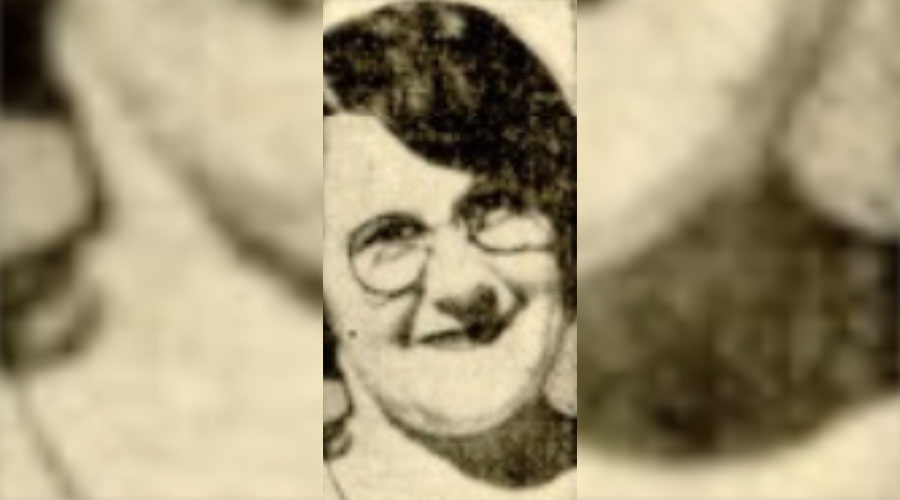
Fifteen months later, on Aug. 4, 1932, Southard was arrested in Topeka, Kansas, on a tip provided by Minton. Minton allegedly confessed to helping her escape. He was waiting in the local county jail for his trial.
“She was welcomed at the train by dozens of Boise residents, who knew of her mainly through the many news stories which have been written about her in the dozen years of her career,” The Associated Press wrote in an article published by the Idaho Falls Post Register.
While on the run, she married her sixth husband, Harry Whitlock, in Denver. At some point, his mother died, and Southard denied having anything to do with her mother-in-law’s death.
According to a newspaper article, it’s believed that Harry already had a son named Ben Whitlock, who Southard referred to as a “little boy.” She mentioned he had two ulcerated teeth and they had them pulled, then went for a trip to the mountains when he became sick. It’s not clear if he died.
Southard denied that she had asked Whitlock to secure a joint insurance policy.
“I certainly did not,” she said.
And as to whether he had any insurance, she replied, “No.” But then added, “There was insurance on the little boy.”
Southard declared that she never felt guilty of any crimes and was “genuinely relieved” to return to prison.
What happened to Southard?
Southard’s 7 husbands

- Robert Dooley (March 17, 1912 – October 12, 1915)
- William G. McHaffle (June 1917-October 1, 1918)
- Harlen C. Lewis (March 1919-July 1919)
- Edward F. Meyer (August 1920-September 7, 1920)
- Paul V. Southard (?, divorced)
- Harry Whitlock (March 1932-?, divorced)
- Hal Shaw (possibly divorced)
Southard — who is considered Idaho’s first serial killer — was released from prison in October 1941. She was granted a conditional pardon with the provision it would become a full pardon if her behavior warranted.
“It was suggested she live with her sister and attempt in no way to exploit her past adventures,” a clipping in the Rocky Mountain News states.
After being released from prison, reports said Southard joined a church in Nyssa, Oregon, where she was living with a sister. She said she had found “the finer things of life in the comradeship and neighborly spirit of the people.”
Southard received a full pardon in 1943.
Southard, who earned the nicknames “Lady Bluebeard,” “The Black Widow” and “Flypaper Lyda,” was asked in an interview if she would ever marry again.
“No, I will not. I have not met any man who would interest me,” she replied. “My life now is with the Lord. Religion is my whole life now.”
However, other reports state that she ended up marrying her seventh husband, Hal Shaw, a wealthy man in Salt Lake City. But, once Shaw’s adult children found out who Lyda was, a divorce soon followed.
Anna Elizabeth “Lyda” Trueblood Dooley McHaffie Lewis Meyer Southard Whitlock Shaw died at the age of 65 from a heart attack on Feb. 5, 1958. Reports said she was carrying groceries to the home of her last employer, a bachelor in Salt Lake City, when she died.
Her body was taken to Twin Falls, where an informal funeral and 2 a.m. burial in Sunset Memorial Park took place. She was buried under the name Anna Shaw, according to Find a Grave.
“Her body was rumored to be hairless, a side effect from prolonged exposure to arsenic,” the Post Register wrote. “While Lyda proclaimed her innocence through the years, her body gave up her secrets, betraying her in the end.”