



Idaho has seen ‘relatively few’ measles cases, but it may just be ‘lucky so far’
Published at
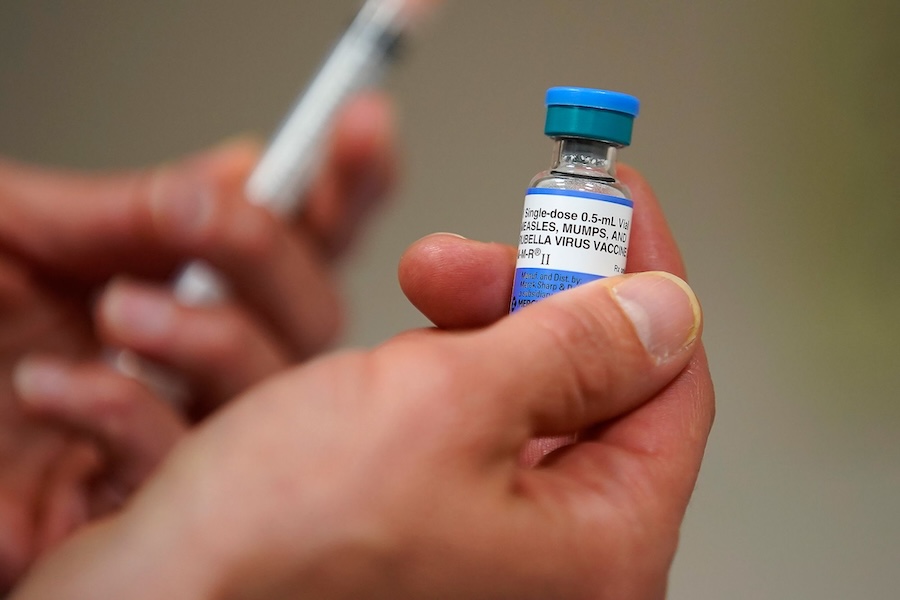
POCATELLO — Could Idaho see a measles resurgence? With low vaccination rates, it may only be a matter of time.
On Nov. 16, the Idaho Immunization Coalition put out a news release announcing that the United States had lost its measles-free status, meaning that “the disease is once again considered fully back in the (U.S.).” While the country experiences this resurgence in measles, Idaho has seen relatively few reported cases in comparison, but this may mostly be a matter of luck.
And if that luck were to run out, the Gem State could be in danger.
“If at some point we start getting people who are passing through well-connected social networks in Idaho that have measles, we would be in big trouble,” said Ian Troesoyer, a nurse practitioner for Southeast Idaho Public Health, who also previously worked for the department as an epidemiologist.
In the United States, there have been six deaths attributed to measles in 2026 so far, according to the Centers for Disease Control and Prevention (CDC).
The state of Utah has seen one of the country’s most significant outbreaks, with 536 cases reported by the CDC.
But in Idaho, only ten cases have been reported in 2026, and only 14 in 2025, according to GetHealthy.gov’s “Tracking Measles in Idaho” page. The tracker only begins reporting cases in August of last year.
Out of these cases, nine have been reported in eastern Idaho, all District 6, which is Eastern Idaho Public Health.
“In our district, we’ve been pretty lucky, and we’ve only had a few cases that have been able to keep within the household,” said Esmy Quintero, clinical services program manager for Eastern Idaho Public Health.
Troesoyer said that some of the factors that could play into Idaho having such few cases could be its low population density and lack of an international airport. But chance plays a major role too.
“I don’t think Idaho has had relatively few cases because we’re doing something special and right that Utah should copy. I think we’ve gotten lucky,” Troesoyer said.
And Troesoyer explained that a measles outbreak making its way into Idaho would only require “happening to have someone pass through your social circle that is infectious at that moment.” And he sees Idaho as being at a “significant risk” of this happening.
“Idaho is at significant risk because of the national ongoing measles outbreak, the significant number of measles cases that are at our southern border in Utah, and the fact that Idaho has the lowest vaccination rate for measles of any state in the union for kindergartners.”
According to the CDC, 96% of the people who have contracted measles in 2026 have been unvaccinated or had an unknown vaccination status. And out of those cases, 17% of children under the age of five have been hospitalized.
If Idaho were to see a significant outbreak of measles, it could have devastating consequences. Troesoyer sees it as possible that it could strain healthcare resources, pointing out that, “southeastern Idaho has a limited number of pediatric hospital beds.”
Troesoyer presented a hypothetical example of a child who got into a traumatic car accident that would otherwise be treated at Portneuf Medical Center.
“Instead, do they need to get life-flighted down to Utah … and then that causes an important delay in care that causes a bad outcome? We just don’t want to unnecessarily have people getting hospitalized for measles or getting sick with measles,” Troesoyer said.
Troesoyer acknowledged that every medication has its risks, but he also pointed out that in all of the vaccine doses that have been administered around the world, it’s hard to trace a single death to the vaccine, whereas deaths caused by measles are well-documented.
“It’s not like every person who gets (measles) is dying, but 17% of (children under five) getting hospitalized, and six deaths, and it disproportionately affects young people? Yeah, I’m getting my kids vaccinated. That’s a way bigger risk than anything from the vaccine,” Troesoyer said.
Both Troesoyer and Quintero see it as upsetting that the United States has lost its measles-free status, as defined by the Pan American Health Organization. But Quintero doesn’t find it surprising.
“With all the outbreaks that have been occurring, it was bound to happen,” Quintero said.
However, losing this status is not a “total defeat” for public health in America, Troesoyer said. If enough people were to receive the vaccine, it could be regained.
“We’re committed to trying to keep the people who pay our checks, the people who have to follow the rules and pay their taxes, we’re here to serve you, and we want to make sure we do the best job earning your trust, and helping to protect our communities because we care about these places,” Troesoyer said.