



U.S. Forest Service ‘bigfoot files’ are less than meets the eye
Published at | Updated at
Emry Dinman, The Spokesman-Review
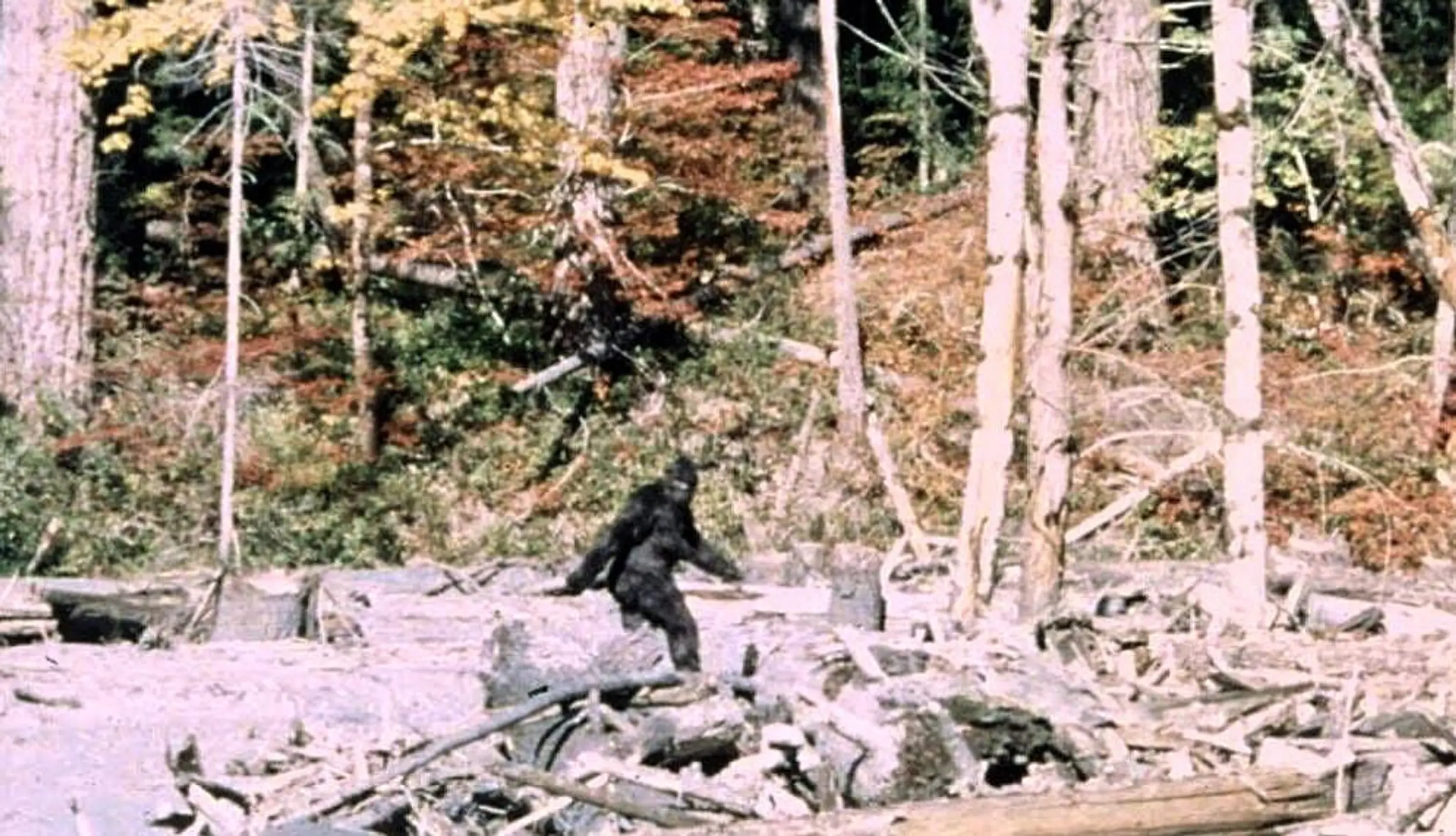
SPOKANE, Washington (The Spokesman-Review) — A lot of ink has been spilled in recent days about the federal government’s October release of bigfoot files, all centered on the Northwest United States, including one account not far from Spokane.
“Bigfoot Left a Paper Trail That Everyone Can See Now,” proclaimed the New York Times. “Bigfoot Believers Get Boost From an Unlikely Ally: The U.S. Forest Service,” announced the Washington Post in a story republished by The Spokesman-Review. Some viral bigfoot believers glommed onto the sensational headlines, arguing that the U.S. government has now all but admitted to having proof of the wood ape, quietly releasing “decades” of never-before-seen documents to prime the public for a historic and hairy mea culpa.
Hardly.
On Oct. 15, the U.S. Forest Service released three files to its “reading room,” a landing page for frequently requested and released records, which the agency maintains hoping to spare its clerks from redundant Freedom of Information Act requests. They are “decades” of files in only the strictest sense.
One of them is a 2003 newspaper clipping from the Clark Fork Valley Press, which described large humanlike footprints reportedly discovered by an 8-year-old near Plains, Montana.
Another is a circa-1980s essay from amateur historian Leo T. Kinney, recounting various historical “gems” about the area surrounding Petty Creek in Montana. In between stories about the local timber industry and feral Texas longhorns, Kinney squeezes in a personal account of an elk hunt in which he returned to collect a carcass but found nothing but a set of bipedal footprints.
It’s not clear why either of these files were even in the “possession” of the United State Forest Service, such that the agency would release them in a public records request. While the agency provided a statement about the release, it did not clarify why these files were included and did not respond to a follow-up inquiry.
The last file, on the other hand, has a clear provenance. After all, Paul Freeman, an Airway Heights resident who died in 2003, was a watershed patroller with the Forest Service in 1982 when he claimed to have discovered three sets of large footprints in the Mill Creek watershed of the Blue Mountains. Outside of Roger Patterson and Bob Gimlin, who produced the famous 1967 film depicting a blurry, longarmed bigfoot strolling at a distance, Freeman is among the most famous bigfoot hunters in the world.
The Forest Service’s release is no revelation, however. The Freeman story was well documented four decades ago, as were the contemporary conclusions of the U.S. Forest Service and most other independent researchers: The footprints were a hoax.
Soon after the discovery, Freeman returned with the late Grover Krantz, a famous bigfoot-hunting anthropology professor at Washington State University, and the late Rodney “Hot Rod” Johnson, a Forest Service wildlife biologist, the latter of whom had been tasked by the federal agency to investigate whether the big tracks belonged to a sasquatch.
Krantz, an expert on the bone structure of primates, said he found indentations in the footprints – the dermal ridges and pattern of furrows – that he believed could not have been faked. The area was inaccessible to the broader public, Krantz would go on to argue, and the stride and depth of the prints indicated a roughly 8-foot-tall creature that weighed upwards of 700 pounds.
Johnson, who made the famous plaster casts of the footprints most often associated with Freeman’s discovery, was less optimistic in his report to the Forest Service.
The tracks were at three different locations. By the time Johnson was finished documenting the first two, he didn’t bother visiting the third. He believed he had seen enough.
“Based on several things, it is my opinion that the tracks observed at Site ‘A’ and Site ‘B’ along Low Creek were made by something other than a 300 pound plus two footed being,” Johnson wrote in his report, pointing to eight pieces of evidence.
First, the stride didn’t change regardless of slope. All tracks were almost exactly four feet apart, but an animal’s stride should shorten or lengthen when going uphill or down.
In muddy areas, the tracks didn’t reach the bottom of the mud.
“In fact, we were sinking in deeper with boots on at the same locations,” Johnson noted.
The tracks also seemed to appear and disappear suddenly. With one exception, there was no evidence of a creature continuing along the path of the footprints once the tracks ended.
Toeprints appeared in the casts in areas of the foot that would have been worn smooth and calloused, nor was there other evidence of callouses where they should have appeared.
At the second site the group explored, “it appeared that the fine forest litter (needles, etc.) had been brushed aside prior to making of the track,” Johnson noted. “It was obvious that the litter had been displaced sideways from the track area in an unnatural manner.”
The small toes of the footprint lacked a clear pad at the tips, which Johnson said should have been evident. There was also no evidence of the heels or toes even slightly slipping on steep slopes, even where the ground was wet, which Johnson believed would have been inevitable for a heavy creature.
Finally, Johnson noted that in several cases the “foot” appeared to have been rocked side to side to form the print, with toe print marks on the side of the footprints. Joel Hardin, a tracking expert with the U.S. Border Patrol, had also joined the group to examine the alleged cryptid prints. He elaborated in a memo to the Forest Service that “on hard surfaced areas or debris covered areas of the trail,” the tracks “were ground into or squirmed into the surface in order to be readily visible.”
Johnson, who told The Spokesman-Review two decades later that he still tried to keep an open mind about sasquatch, did allow some doubt in his report.
“If the tracks were faked, someone went to a great deal of trouble and detail,” Johnson acknowledged. “The ‘print’ marks on the foot would have to be very hard to duplicate … I would almost suspect a cast made of an actual foot would have had to be used to make the ‘fake’ feet.”
“If this were the case, though, the other creases in the foot would have shown,” he added.
Hardin agreed with Krantz that it was notable that the watershed was largely inaccessible to the public. That fact pointed Hardin in a different direction.
“My opinion is that the tracks were a very clever attempt to perpetrate a hoax, involving your office or agency, in order to lend authenticity or credibility to the general public,” Hardin wrote. “Who made the tracks – my opinion, someone with normal access to the area …”
Bigfoot believers were not deterred. Some believed there was a coverup.
“One rumor was we had a whole room of hair and other evidence – which we don’t,’’ Johnson told The Spokesman-Review in an interview for Freeman’s 2003 obituary. “A lot of people were serious believers.”
“Our job wasn’t to try to discount them,” Johnson added. “We were just trying to keep people out of the watershed. There were 20 or 30 people up there packing rifles hoping to shoot one to prove they exist.’’
Krantz – who suggested using a helicopter with an infrared sensor to search the mountains at night – received severe criticism until he died in 2002. Reporters hounded Freeman, as did his supervisors at the Forest Service until he eventually quit. He never gave up on the hunt for bigfoot, however, returning to Walla Walla in 1984 to continue his pursuit.
“It always hurts to be ridiculed,’’ said Loren Coleman, an adjunct associate professor at the University of Southern Maine who was also Freeman’s friend and colleague, in a 2003 interview. “He would retreat in the woods to find evidence. Because he knew the woods so well, he had an incredible amount of luck finding the footprints.’’
Too much luck, some argued. Each spring he would bring new plaster casts to show reporters at the Walla Walla Union-Bulletin. He produced hair samples, handprints – even a purported butt-print.
Freeman also made a video in the mid-1990s of what he said was a distant bigfoot as it crested a far ridge. But on the day he made that video, Johnson said another Forest Service employee saw Freeman and his son driving up to the Mill Creek watershed.
But in his video, Freeman claimed he was alone while picking mushrooms when the bigfoot stepped out of the woods.
“Therefore, I think the person in the monkey suit was his son,’’ Johnson said at the time.
Hardin later wrote a book about tracking called, dryly, “Tracker,” which includes a chapter about Freeman’s tracks and a later incident where Freeman claimed to have seen a family of bigfoot.
“Local sheriff’s deputies, searching the scene of the sighting, discredited this report and confronted Freeman,” Hardin wrote. “He admitted to authorities that he had not only made up the story but had constructed some ‘feet’ to make tracks as evidence to validate his sighting and had done so in previous events.”
In a statement, the U.S. Department of Agriculture, which oversees the Forest Service, emphasized that the released files do not “indicate any new agency activity or conclusions regarding Bigfoot.”
“Stories of Bigfoot, Sasquatch, and other legendary beings have long been part of the cultural fabric of many regions, reflecting a rich tradition of folklore, oral history, and storytelling that surrounds our public lands,” the statement added. “While The Forest Service does not endorse or make any claims regarding the existence of such creatures, we appreciate the public’s enthusiasm for exploring and learning about our public lands.”
Big feet everywhere
Bigfoot is a uniquely Western U.S. phenomena, the name likely originating from a 1958 discovery of large, 16-inch footprints in Humboldt County, California. But the native peoples of nearly every region of the world have legends of a similar creature.
The Himalayan Yeti, the Australian Yowie, the Chinese Yeran. Elsewhere in the U.S., variations abound, including the Skunk Ape of the Florida Everglades, the Fouke Monster of Arkansas, the Missouri Momo and the Ohio Grassman. Washington has sasquatch, the Salish word for a woodland “wild man.’’
Bigfoot is everywhere in Washington for those who look. One doesn’t have to go far in Spokane: there’s Bigfoot Records and Bigfoot Pub & Eatery, Bigfoot Carpet Cleaning to the north, and just across the Idaho border, Bigfoot Technical Services and even a Bigfoot Counseling. Dozens of similarly named diners, cafes and shops dot the Washington coast.
Sasquatch is no less common. In Spokane, Sasquatch Stove and Chimney sport the name. Spokane’s community colleges sport Skitch the Sasquatch as their mascot; the Seattle SuperSonic’s was simply “Squatch” before it relocated to Oklahoma in 2008. The Sasquatch! Music Festival was held annually in the Gorge Amphitheatre from 2002 until 2018.
Aside from the Cascade mountains, there is perhaps no more iconic branding for a Washington business than the wood ape and his derivatives.
Reported sightings of the actual creature are rarer, but not vanishingly so. In 1974, the Spokane Daily Chronicle published that a 12-year-old had told sheriff’s deputies that he had even spotted sasquatch just north of Spokane, in the Forest Hills area.
The creature was 11 feet tall and covered with brown hair, with “slouchy shoulders and long arms.”
Deputies speculated whether “a TV program this week about such animals had anything to do with the alleged Sasquatch sighting.”
Modern accounts of bigfoot sightings, hearings and smellings dot the state, including a 2019 account from Moses Lake resident Rick Graser, who told the Columbia Basin Herald he had heard the distinct whoop of a sasquatch while fishing on the Quinault Indian Reservation on the Washington coast.
William Bisson, vice president of the annual Metaline Falls Bigfoot Festival, worked as a teenager for the U.S. Forest Service in the Gifford Pinchot National Forest, where he heard howls and screams that didn’t seem to belong to any known animal. At 17, while out hunting in Eastern Washington, he came across what he believes were tracks belonging to bigfoot.
“I didn’t really tell anybody,” he said. “And then it came out in the Davenport Times, about 8 miles west of where I was hunting, a couple of real estate guys were looking at some land sales and had come across bigfoot tracks in the snow.”
The fervor in recent days following reports of the federal government’s bigfoot files – which Bisson admits he hadn’t read yet – may drive a few more people to attend the festival next summer, but the size and curiosity of the bigfoot community has proven rather steady over the years, Bisson said.
The community holds diverse beliefs about what bigfoot truly is, Bisson notes, ranging from a space alien to a spiritual or even demonic being, to folks, like Bisson, who believe the creature is fundamentally an animal.
Bisson characterizes himself as a cautious believer – the creature is real, he believes, but not every piece of evidence is airtight.
He points to Charles Stuart, also known as Snake the Bigfoot Hunter, a dark-bearded man with bleached shoulder-length hair and a wide-brim hat, who claims to have found the remarkably well preserved carcass of a sasquatch in 2024 that he has displayed, previously for a fee and this summer for free, at the New York State Fair.
He has also claimed to have submitted a DNA sample from the carcass for testing, and has said that a report from Cornell University proves the creature contained a mix of DNA from real hominid species such as Neanderthals and Denisovans; Cornell has disputed any involvement with the supposed report, prompting Stuart to tell the New York Post the university was “FLAT OUT LYING.”
“It’s just another carnival sideshow,” Bisson said, comparing it to Jake the Alligator Man, a sideshow at Marsh’s Free Museum in Long Beach, Washington. Bisson grew up on a farm and around nature, and he’s familiar with how a carcass decomposes – Dack, as Stuart has dubbed his alleged sasquatch, doesn’t pass the decomposition sniff test.
“But you can’t discredit everything that you see,” Bisson said. Despite decadeslong efforts to discredit the Patterson-Gimlin film, including the recent “Capturing Bigfoot” documentary in which Patterson’s son and widow claim it was a hoax, Bisson isn’t convinced.
“I have met Mr. Gimlin,” Bisson said. “He’s never given me any reason not to believe him … I think he was very honest.”
While the scientific community almost universally dismisses bigfoot as a myth, Bisson believes that cryptozoology – the study of creatures most consider to be myth – remains marginal exactly because it struggles to attract substantive research.
“In the world of cryptozoology, there never has been a real study of it,” Bisson argues.