From potato fields to faster payments: How stablecoins could change the way businesses get paid
Published at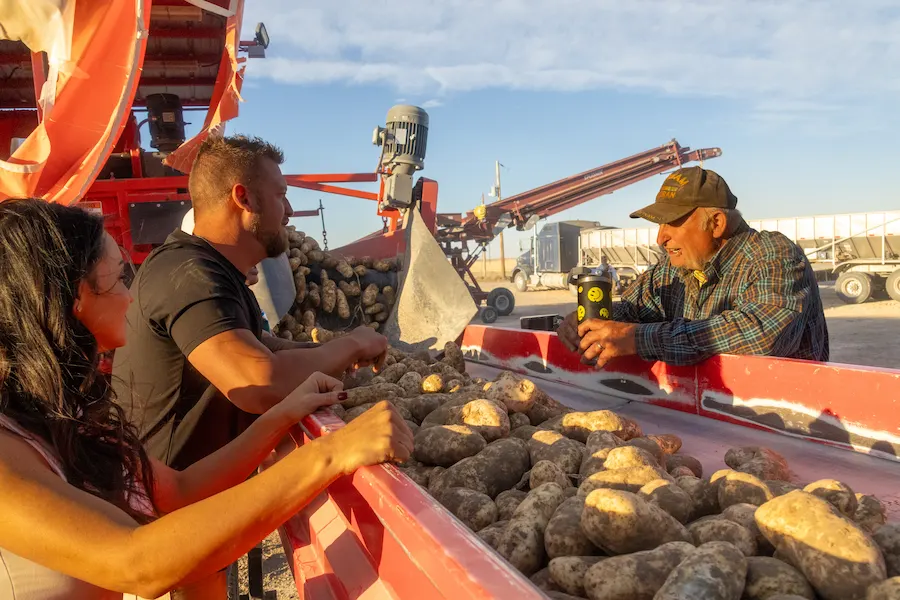

This article is brought to you by SpudPay, which was founded in Southeast Idaho by two entrepreneurs with different backgrounds, decades of professional experience, a shared vision, and a simple belief: moving money shouldn’t be one of the hardest parts of doing business.
For most businesses today, sending a message takes seconds. An order can be placed instantly. A truck can be tracked across the country in real time.
But getting paid can still take days.
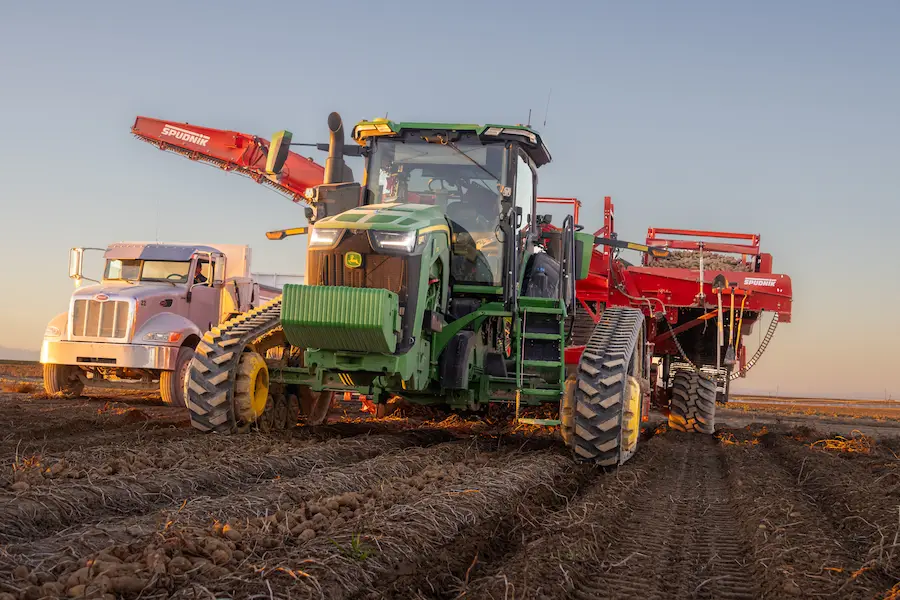
For fifth-generation Idaho potato farmer Cody Holm, that disconnect wasn’t something he discovered while researching an opportunity in financial technology, he experienced it firsthand.
Holm grew up in agriculture, where large amounts of money move every day between farmers, processors, trucking companies, equipment dealers, suppliers and buyers. His experience eventually expanded beyond farming into other agriculture-related businesses, including heavy equipment and trucking.
Across those businesses, one problem continued to surface: the work could be finished long before the money arrived.
The crop is delivered. The haul is complete. The equipment is sold or repaired. The invoice is approved. And the business is still waiting to get paid.
That experience eventually led Holm and co-founder Shantay Ames to create SpudPay, an Idaho-based financial technology company focused on modernizing business payments.
A payment problem hiding in plain sight
The speed of traditional business payments can seem out of place in an economy where nearly everything else happens in real time.
For businesses operating on tight margins or managing significant operating expenses, the difference between receiving money quickly and waiting several days can matter — particularly in industries like agriculture.
Farmers may spend significant amounts on seed, fertilizer, chemicals, fuel, labor and equipment months before receiving payment for the crop those expenses helped produce. Meanwhile, trucking companies must cover fuel and payroll while waiting for invoices to clear, equipment dealers carry costly inventory, and processors and suppliers face many of the same cash-flow pressures.
When payments take days to settle, the business carries that delay.
After several years of using cryptocurrency and stablecoins, Holm knew money didn’t have to move as slowly as the business payments he was accustomed to. His experience with both gave him a unique perspective: the speed and efficiency he had seen with stablecoins could potentially solve a problem he had experienced firsthand throughout his career in agriculture and business.
What exactly is a stablecoin?
The word “stablecoin” may sound like cryptocurrency jargon, but the concept is relatively simple.
A stablecoin is a digital asset designed to maintain a stable value, typically tied to the U.S. dollar. In practical terms, a dollar-backed stablecoin can function somewhat like a digital dollar that moves using blockchain technology.
That distinction is important.
Cryptocurrency is often associated with assets whose prices can rise and fall dramatically. Dollar-backed stablecoins are designed for a different purpose, maintaining a stable dollar value while allowing that value to move across modern blockchain networks.
Those networks can operate differently from traditional payment systems, creating opportunities for money to move more efficiently and outside some of the operating-hour limitations associated with conventional banking infrastructure.
For businesses, however, the technology itself may be the least interesting part. A business owner doesn’t need to understand every detail of blockchain technology any more than they need to understand the infrastructure behind an ACH payment. What matters is whether it solves a real problem — whether payments move faster, funds are available sooner and the process is easier to manage.
Bringing new technology to traditional industries

Holm teamed up with Ames, who brought years of experience in operations, program management and developing solutions around the needs of the people using them. Together, they set out to bridge two very different worlds: emerging financial technology and traditional industries.
SpudPay is a business payment platform that connects traditional banking and regulated payment infrastructure with stablecoin technology.
The experience is designed to feel familiar to business owners, whether they’re sending, receiving or requesting a payment or keeping track of transactions. The more complicated technology happens behind the scenes.
That approach reflects a larger question facing the financial technology industry as stablecoins become more widely used: Does adopting new financial infrastructure require businesses to change the way they operate, or can the technology adapt to them?
SpudPay is betting on the latter.
Why start with agriculture?

Agriculture was a natural starting point because it is where Holm experienced the payment problem himself.
It is also an industry where cash flow can have an immediate effect on day-to-day operations.
Faster settlement can give a business quicker access to money it has already earned. For a small business, that can mean having funds available sooner for payroll, fuel, inventory, equipment or the next operating expense.
But the problem isn’t unique to farming. Construction companies can finish jobs while invoices remain unpaid, trucking companies deliver freight before receiving settlement, manufacturers ship products before receiving funds, and equipment businesses carry costly inventory while payments move through traditional banking systems.
These industries are built around physical work, real assets and real-world commerce — and many still rely on payment infrastructure developed long before instant digital transactions became commonplace.
More than moving money
SpudPay also includes tools that support the business processes surrounding a payment. With transaction reporting, payment records and QuickBooks integration built into the platform, businesses can more easily track their money and keep their accounting records up to date.
SpudPay Rewards adds another benefit: users earn rewards on their account balance while keeping their funds available to use. Unlike funds placed in a traditional CD, the money isn’t locked away for a set period, allowing users to continue using it for payments, expenses or other needs. Behind the scenes, the reserves backing the dollar-backed stablecoins generate earnings, allowing SpudPay to share a portion of that value with its users through rewards.
It’s another example of SpudPay’s approach to modern payment infrastructure: the technology behind it can be sophisticated without making the experience more complicated for the people using it.
From a potato field to a payment platform
There is a reason the company is called SpudPay.
The name is a reminder of where the idea started.
It wasn’t a payment problem identified on a whiteboard in a technology hub. It came from firsthand experience in agriculture and the industries surrounding it.
That background continues to influence how Holm and Ames are building the company.
As stablecoins and blockchain-based payment infrastructure become a larger part of the financial system, some of their most practical uses may ultimately be found far away from the places normally associated with cryptocurrency.
They may be found in a potato field.
Inside a truck cab.
At an equipment dealership.
On a construction site.
Or on the desk of a small-business owner wondering why a job finished days ago still hasn’t turned into money available in the bank.
For Holm, that’s where the opportunity begins.
The work moves fast. The money should too.