


Inkom woman graduates from taxidermy school, launches new business
Published at | Updated at
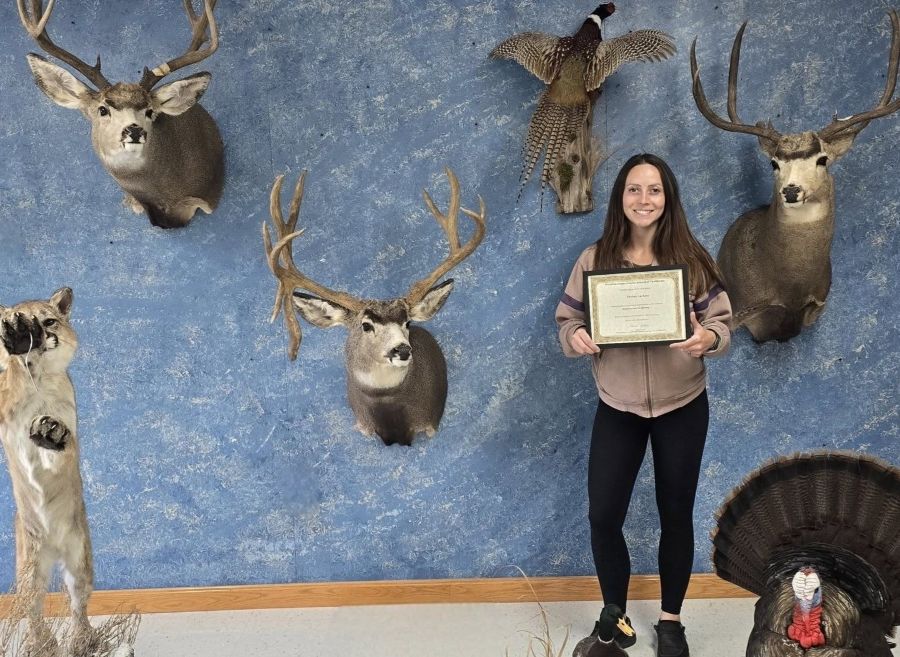
INKOM — After graduating from the Western Pennsylvania School of Taxidermy just weeks ago, Chelsey Larkins of Inkom is starting her own business with the launch of her new business, Rapid Creek Taxidermy.
Larkins, a wife and mother and already a successful entrepreneur with her dog training company, Cross-Hat K9, decided to pursue taxidermy after realizing there were few local options for quality wildlife mounts. The idea sparked when her nephew shot a pheasant on their property last year and wanted it mounted.
“There are not very many taxidermists around here,” she said. “So, I thought, maybe I should go to taxidermy school. I decided to go for it.”
Larkins began her journey by shadowing a local taxidermist and watching instructional videos online. Then she and her dog Meatloaf packed up the car for a 30-hour road trip to Punxsutawney, Pennsylvania, where she started the 6-week intensive hands-on training program in what is traditionally a male-dominated field.
“The trip went very smoothly. It was quite the experience,” she said.
During the course, she learned to mount a pheasant, a mallard duck, three deer, a cougar and a turkey. The school provided some animals, while others were provided by her husband, Riley, a local horse trainer, farrier and avid hunter. She returned home with the completed mounts in a rented U-Haul to show as examples of her work.
The taxidermy process, she explained, is much more involved than many people realize. It starts with carefully skinning the animal and preserving the hide through tanning. Oily specimens such as waterfowl, bears, beaver and mink must be thoroughly degreased to prevent future problems such as odor, discoloration and structural breakdown. The bones, organs and structural tissues must be removed.
While some might find the process gross or unsettling, Larkins said she isn’t fazed by it.
“I think the whole process is fascinating,” she said.
From there, a synthetic form is then prepared—sometimes modified with clay to sculpt detailed features like facial muscles and ears. The skin is fitted over the form, sewn in place, and left to dry completely before final touch-ups and paint are applied to restore lifelike color and detail.
“To start, I’ll be focusing on birds and shoulder mounts,” she said. “I plan to have my shop up and running by this winter. In the meantime, I’m growing my business by booking some deer and getting the capes sent to the tannery, since turnaround times can be three to six months.”
Larkins said she won’t be offering fish or reptile mounts and has no plans to work on exotic game animals.
“Although I think it’d be really cool to do a zebra someday,” she added.
For more information or to book services, contact Larkins at 208-530-3160, email rapidcreektaxidermy@gmail.com or follow Rapid Creek Taxidermy on Facebook.