


South Bannock County to see major changes to ambulance service next summer
Published at

McCAMMON — Big changes are coming to ambulance services in south Bannock County, as county leaders roll out a new approach they say will deliver faster, more advanced care to rural communities long served by volunteers.
At a special ambulance district meeting held on Dec. 11 at the new McCammon Fire Station, Bannock County officials announced plans to withdraw ambulances from Inkom, Lava Hot Springs, and Downey, and instead operate a single, centrally based ambulance service in McCammon featuring a full-time Advanced Life Support (ALS) unit staffed 24/7 by paramedics.
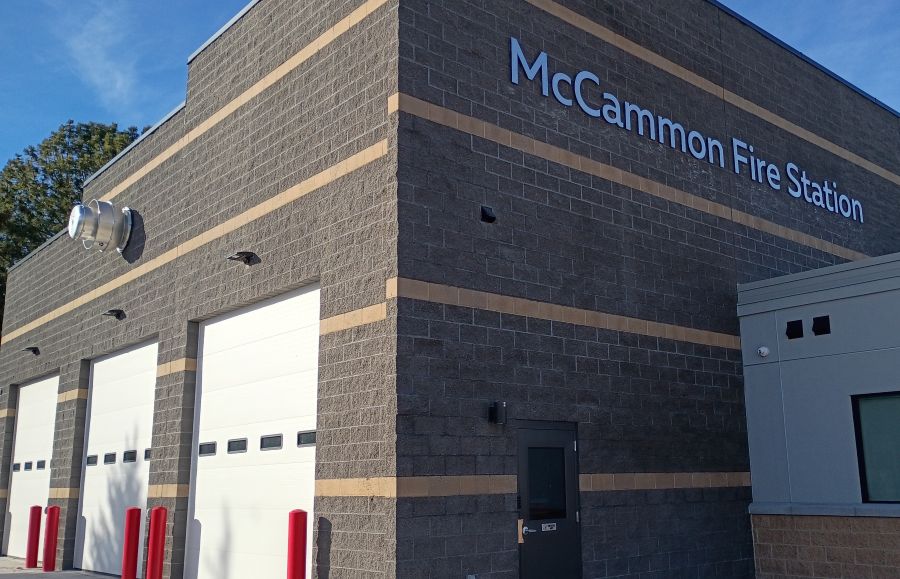
The new staffed ambulance will be based at the McCammon Fire Station, which opened in May 2025, and is expected to begin service in July 2026. It will serve Inkom, McCammon, Lava Hot Springs, Arimo, Downey and Swan Lake.
County officials say the move is intended to address the increasing lack of volunteer-staffed ambulances, leaving large portions of rural Bannock County without immediate emergency response.
How the ambulance service works now
For over 40 years, Bannock County has contracted with the City of Pocatello to provide ambulance services through an intergovernmental agreement.
That system includes three full-time ALS ambulances staffed by paramedics that operate out of Pocatello fire stations, and three volunteer Basic Life Support (BLS) ambulances based in Inkom, Lava Hot Springs, and Downey.
BLS ambulances can provide CPR, oxygen, and use automated defibrillators, but they do not carry paramedics and cannot deliver advanced care such as IV medications, cardiac monitoring or advanced trauma treatment.
RELATED: You might need an ambulance, but your state might not see it as ‘essential’
“Our plan for some time has been to have a full-time advanced life support response from McCammon,” Ryan O’Hearn, director of the Bannock County Ambulance District and Pocatello’s fire chief told EastIdahoNews.com. “The county invested in building that station specifically to improve emergency response in south county.”
Why the county says change is necessary
County officials say the biggest problem is volunteer availability. Nationwide, volunteer fire and EMS agencies are struggling to recruit and retain volunteers, and Bannock County is no exception.
According to data shared by O’hearn, the volunteer ambulances are able to respond to calls in their own coverage areas only a fraction of the time. Inkom: available just 18.7% of the time, Lava Hot Springs: 52.7% and Downey: 83.7%
At the time O’Hearn presented his data, the Inkom ambulance had been unavailable for three days, and both Lava Hot Springs and Downey ambulances were also out of service.
“When those ambulances aren’t staffed, any emergency in south county requires a response from Pocatello,” O’Hearn said. “That delays care to rural residents and also stretches resources in the city. We are trying to mitigate this by having a full-time staff in McCammon.”
According to O’Hearn, even when volunteers are available, it often takes 13 minutes or more for them to leave work or home, get to the ambulance station and begin responding. A full-time ALS crew, by contrast, can be on the road in about 90 seconds.
Paramedics can administer emergency medications, start IVs, monitor heart rhythms, and treat strokes, heart attacks, and major trauma on scene meaning patients will receive advanced care immediately not after a second unit arrives.
Concerns about coverage and distance
“One criticism raised is that an ambulance based in McCammon would not be able to respond to Lava Hot Springs or Downey as quickly as the current volunteer ambulances,” said O’Hearn.
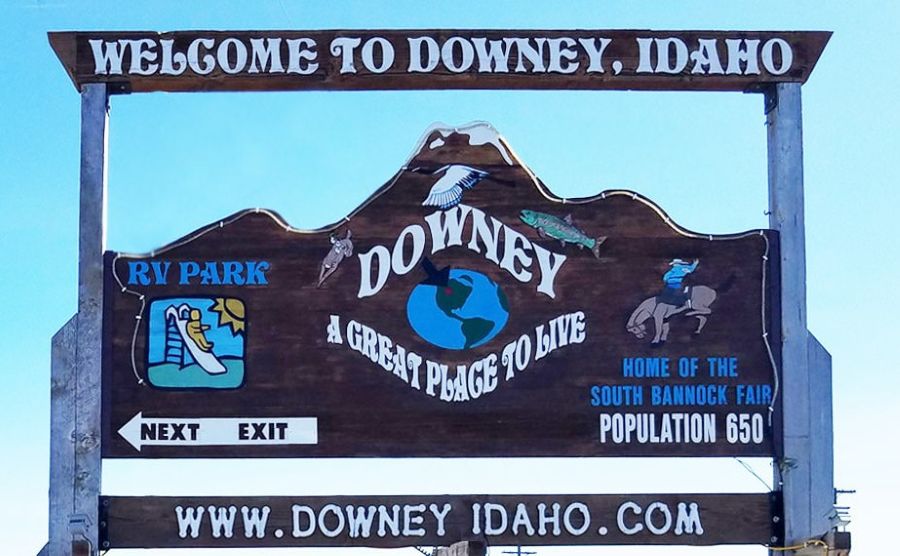
According to O’Hearn’s data, the current 90th-percentile total response time for the Downey Ambulance to incidents in the Downey area is 26 minutes and 30 seconds. Modeling shows an ambulance based in McCammon would be able to respond in 25 minutes and 30 seconds.
For Lava Hot Springs, the current total response time for the Lava Ambulance is 27 minutes and 17 seconds. Modeling shows an ambulance in McCammon would have a total response time of 15 minutes and 52 seconds in the Lava area.
Some responses by the Downey Ambulance fall below the 90th percentile and would be faster than a unit responding from McCammon. However, while the Downey unit may be faster for some incidents, concerns remain about unit availability due to out-of-service times and the challenge of getting advanced-level services to those areas quickly.
The county compared current response times to projected times from McCammon and found that the centralized ambulance would often be faster overall, especially because it would always be staffed.
O’Hearn acknowledged that a volunteer ambulance might reach a scene slightly faster in some cases, but said availability remains the biggest challenge, saying, “A faster ambulance that isn’t staffed doesn’t help anyone.”
Another concern is if two major calls occur at the same time in south county. While simultaneous call are rare, Pocatello-based ambulances would still provide backup when needed.
The cost of change
The full-time ALS system is expected to cost about $633,000 annually to operate. The ambulance district’s total annual budget is approximately $4.7 million.
County leaders say the upgrade will be funded through existing ambulance district levies, without a tax increase. Federal funding helped build the McCammon Fire Station, and grants will assist with staffing and equipment.
Commissioner Jeff Hough, the only commissioner who attended the meeting, told the group he understands that change is hard, but said the goal is fairness and safety, and ensuring every community has the same level of emergency care.
What this means for volunteer EMTs
Volunteers will continue to serve their communities through July 2026 as the transition takes place.
County officials emphasized that they value volunteer EMTs but acknowledged that the county cannot afford to operate two full EMS systems at once.
At the meeting O’Hearn and Hough both expressed their appreciation to the volunteers who serve their communities emphasizing that it’s not a reflection on their service.
To address this aspect, the county plans to form a workgroup with volunteer teams to explore additional options, such as Quick Response Units (QRUs) — smaller medical response vehicles that could assist paramedics on scene.
Community reaction
While some residents support the move to a full-time Advanced Life Support ambulance, others have questions and don’t like the idea of losing a community-based service and worry about what will be lost in the transition.
Concerned citizen Steve Johnson has many questions, saying, “The staffing issue in south county has been going on for years. What have the commission and fire chief done to address this before now? The county is increasing the ambulance district budget to add this ambulance. Why don’t they increase the budget and hire full-time non-fire EMTs/paramedics to staff the south county ambulances?”
Johnson also questions why the commissioners allow the fire chief to serve as the Ambulance District Director calling it a clear conflict of interest.
“The commissioners have failed to do their due diligence or fiduciary responsibility in overseeing the ambulance district and instead have bowed to the city fire department union,” Johnson said.
Robyn Abramson, a longtime Inkom resident, said she agrees that having a full-time ALS ambulance in south Bannock County is a positive step, but she remains concerned about removing ambulances from individual towns.
“We have worked very hard to get coverage in our areas. Numerous people have volunteered their time out of love for the communities.
The people in Downey will be very vulnerable as the distance to respond there is great,” Abramson said.
“They say the issue is funding. Maybe the raises they gave themselves would have been better spent taking care of the taxpayers in south Bannock County,” Abramson added.
Abramson encouraged residents to share their concerns directly with the county commissioners.
A south county paramedic and volunteer ambulance driver, who asked not to be named, echoed those concerns, saying, “I’m excited about the ALS but concerned about the logistics. Volunteers do this because they love their communities. This feels like a slap in the face.”
The paramedic also noted that major medical emergencies often require more than two responders.
“When you have a serious code, it’s not a two-person job,” they said. “Sometimes you need six or seven people.”
They suggested exploring seasonal coverage options such as a floating ambulance, noting that ambulance calls increase in Lava Hot Springs during the summer tourist season and in Inkom during the winter ski season at Pebble Creek.

What happens next
The meeting concluded with Inkom Fire Chief Johnny Ketner offering to lead a committee to study possible supplemental service options.
O’Hearn said discussions with volunteers, residents and local officials will continue as the transition moves forward.
“We are open to ideas,” O’Hearn said. “Our goal is to provide the best possible emergency care within the budget we have.”
He emphasized that the county still plans to move forward with full-time Advanced Life Support coverage based out of McCammon by next summer, while remaining open to adjustments that could improve service across rural communities.