



Path to purpose: combining movement and structure in the garden
Published at | Updated at
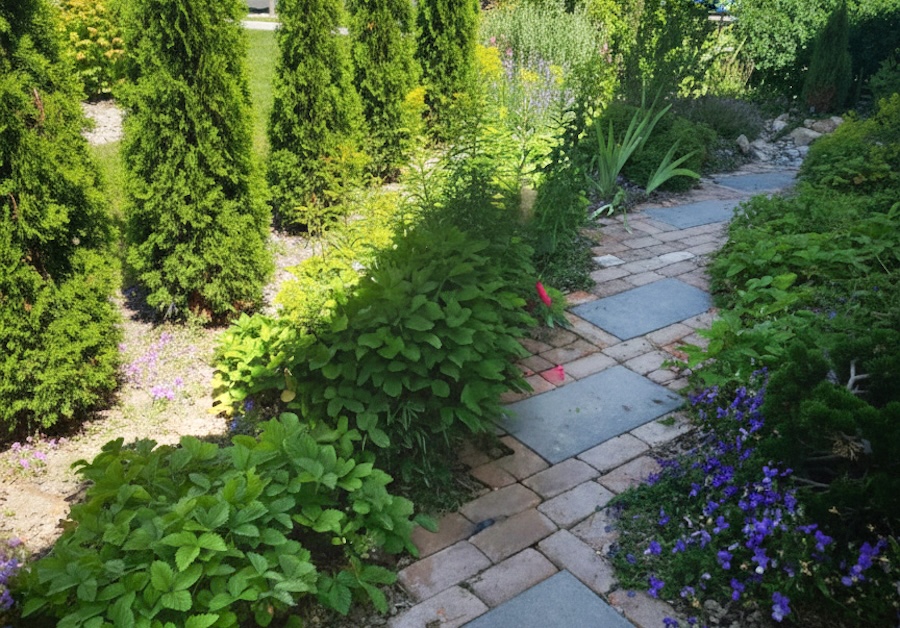
Editor’s Note: In this series on the principles of landscape design we will be focusing on correcting common design flaws while accounting for East Idaho’s climate. Each week until February, we will take a detailed look at a couple of principles and how you can apply them to your property, elevating its aesthetic.
In this article we will be going over Line and Transition in hardscapes as well as Shape and Form in garden layout and plant material. Let’s describe these principles.
Line
Line defines the edges of planting beds and the paths that move us through the garden. Transition is how smoothly we move between different lines, or areas, creating flow and when needed, even abrupt stops. Form describes the 3D structure of plants (like upright, or weeping), while Shape can be the basic geometric shape of the plant, it’s leaf, or flower depending on if we are thinking about the landscape level design or an individual flower bed design. We generally use Form and Shape when referring to plant material, but pairing these with hardscaping (the non-living material in the landscape) is also important.
Using these well can define your whole garden’s style. In the picture below you notice the obvious line created by the curved path, accented by the boarder plant. The low mounded form of the shrubs in the gravel match with the gently curve of the path. There is unity across the shapes of the small leaves of the shrubs, the gravel below, and the aggregate exposed cement of the path.
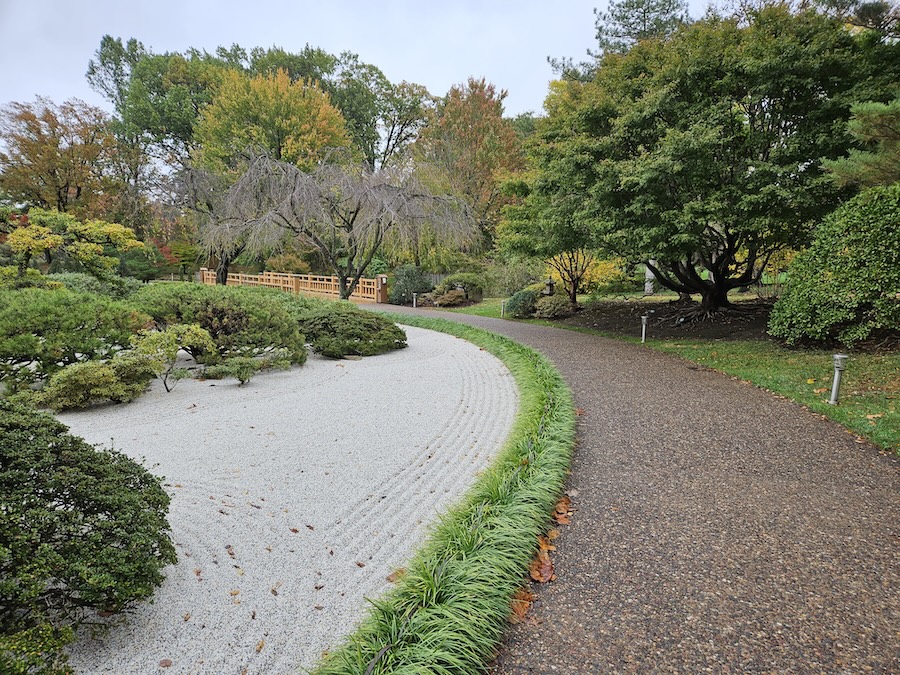
This is something I only noticed when I picked this picture for the article and had time to look at it carefully as I wrote some captions for it. To intentionally use all your senses in an experience is to be a connoisseur. I don’t think yard and garden work is well spent just to have something strictly practical or just to be cutesy.
Gardens can elicit emotion and can give zest to a scene- like a music score for a film. A well-designed landscape can actually direct people to certain areas without them necessarily noticing and can enliven all our senses if we are intentional.
Lines are a big driver in this. Lines guide the movement of the eye through a landscape; they influence how garden beds and pathways flow together.
Different types of lines evoke various emotional responses: straight lines convey formality and directness, while curved lines create a gentler, more natural feel. Jagged lines, on the other hand, can be exciting or distracting. When designing garden beds and walkways or selecting hardscape elements like fences, paving and structures it’s important to consider the impact of lines. Visualize how the straight line of a fence or the gentle curve of a walkway will interact with the existing lines of your house, terrain, or existing shrubs and trees.
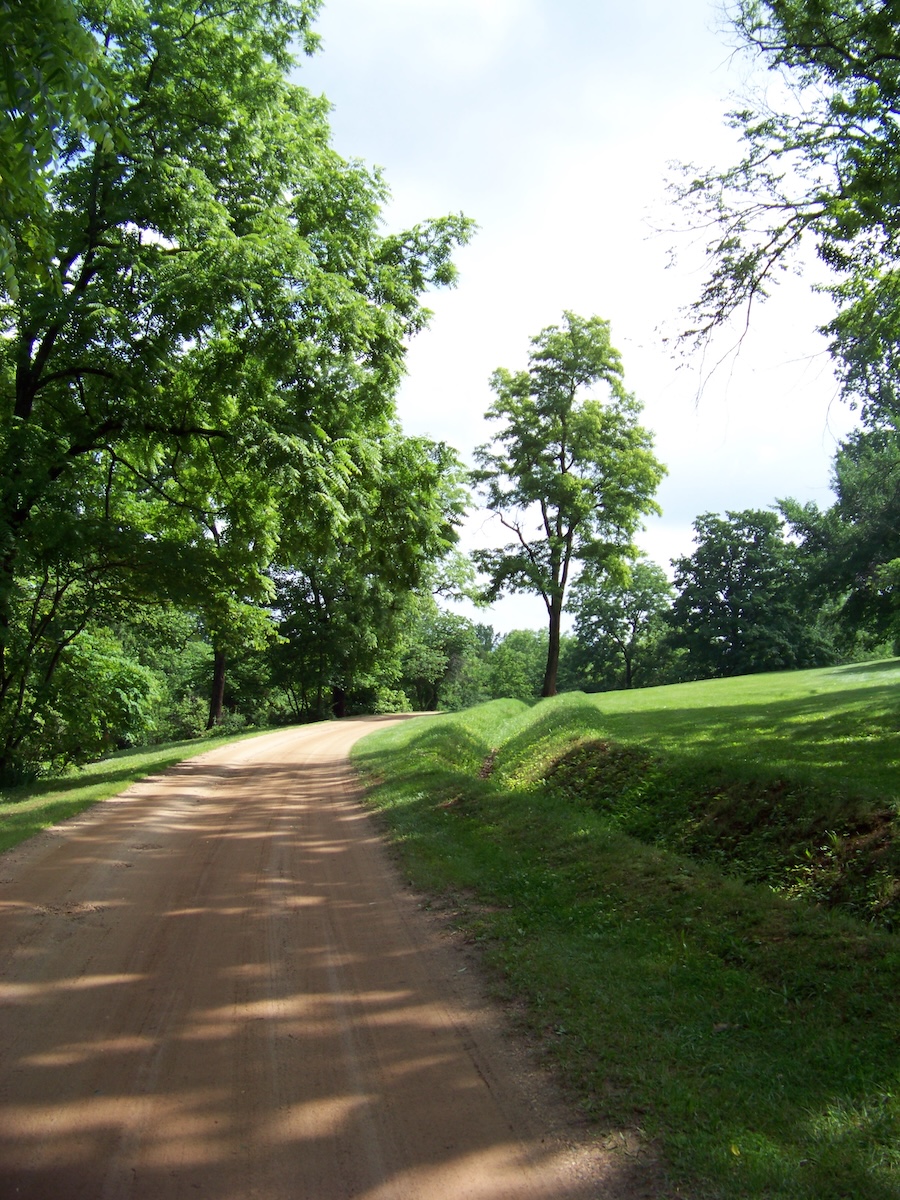
Here is the common problem: Abrupt changes, such as from a large flat lawn to a stark straight sidewalk are just, well, ‘meh’. It doesn’t give a sense of purpose or feeling of movement or hospitality. The solution is to use purposeful curving, like a meandering path through the garden and around the side yard. Or a gentle arc that complements whatever topographic features you might have to slow movement through the space and create a relaxed feel. Not to say you should avoid straight lines. I see as many examples of excessively squiggly lines as rigid, austere straight lines. Neither instance has much of any design sense.
Transition
Transition refers to the process of moving from one space to another. The way we transition depends on the relative scales of the spaces involved.
When two areas with significantly different scales—such as transitioning from a small, confined space like a side yard to a large, open backyard—we can make more abrupt transitions.
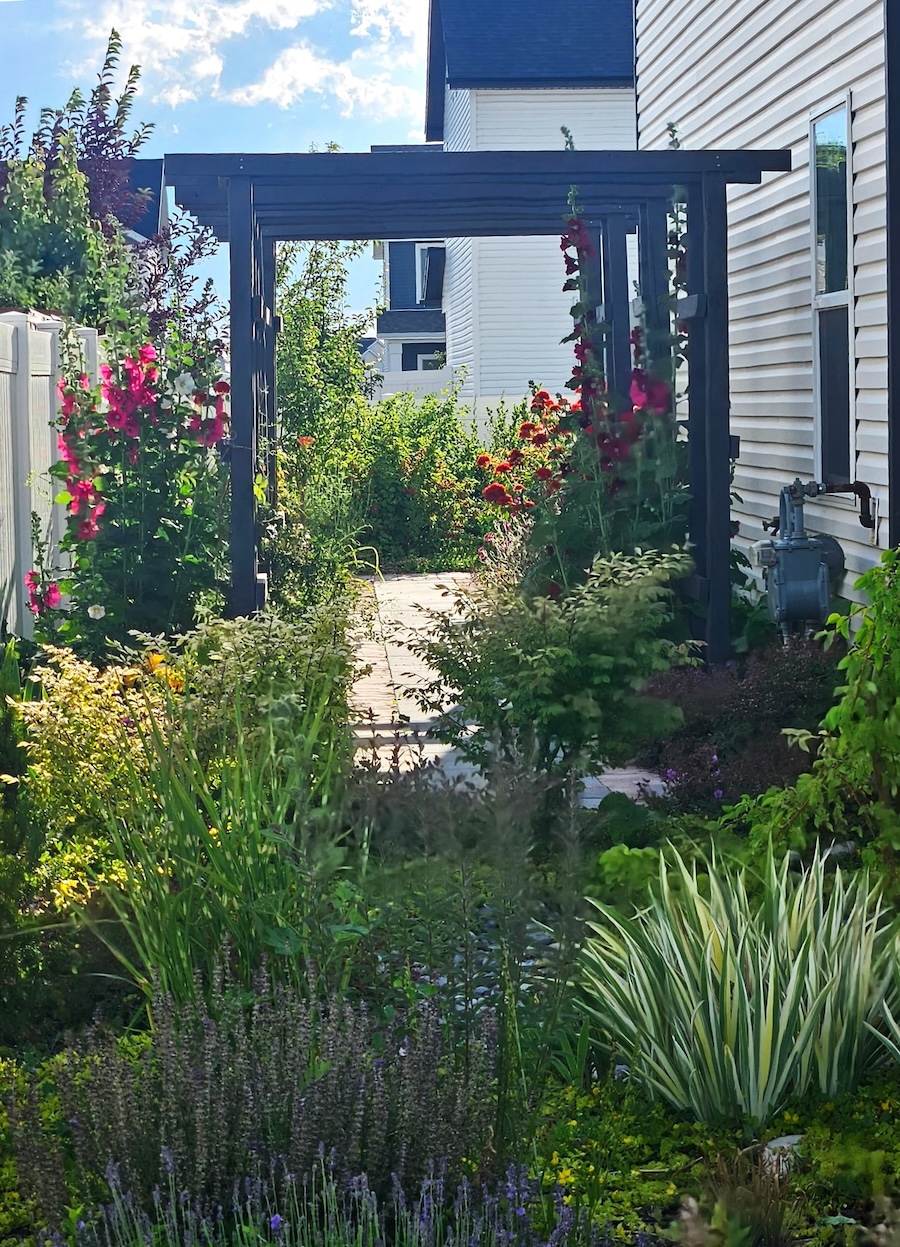
These stark changes are often marked by a portal, such as a gate, arbor, door, hedge, or a change in path material. This portal signals that we are entering a new “room” and helps soften the transition between the two spaces. Effective transitions can enhance the depth of a planting design or be used to frame or highlight a focal point.
When moving between areas that are similar in scale, it’s more fitting to create a seamless change to maintain rhythm and harmony. This means altering only one element at a time and doing so slowly.
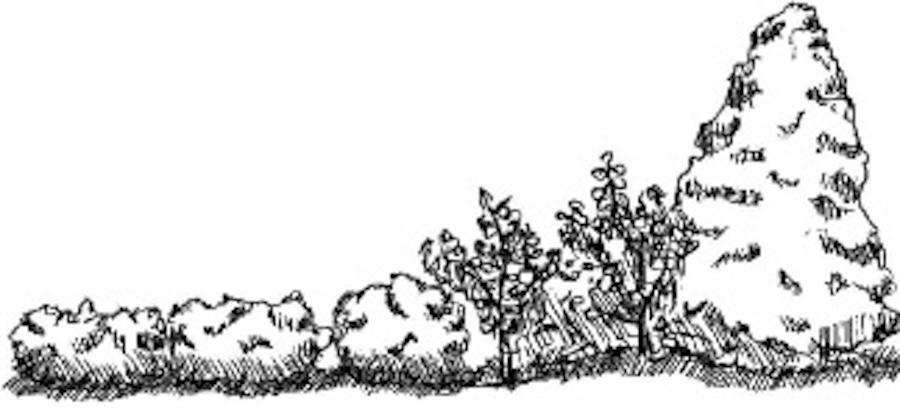
For instance, you can create a gradual flow from under a tree canopy to a small patio area by planting taller shrubs that gradually step down to smaller shrubs, then to herbaceous plants, and finally to ground cover. Transitions can occur with textures, forms and colors as well.
To achieve smooth transition from the edge of a path to the planting bed you can feather the edges—gradually moving from the pathway material to low-growing groundcovers with fine-textured leaves before reaching taller perennials.
Shape
Shape uses vertical and horizontal outlines (including shadows and foliage shapes) to create a cohesive structural foundation.
Shape is one of the most important parts of designing a landscape. The outlines of flowerbeds, ponds, and buildings need to work together to create a beautiful and cohesive outdoor space. This creates a base for arranging three-dimensional elements that bring the whole design together. Vertical shapes, like tall plants or structures, are also essential because they add interesting lines and create a sense of height. When planning the design, it’s important to think about how lights cast shadows, the materials used for things like pathways and walls, and the shapes of flowers and leaves. All of these elements come together to create a successful landscape that looks great and feels inviting.
Form
Form refers to three-dimensional objects like hedges, rock formations, and outdoor fireplaces. It adds “visual weight” and volume to the landscape. Form also describes the relationships of these objects to each other. For example, existing structures such as the house, walkways and driveways create cubes, triangles or irregular shapes, as do plants, slopes and other natural elements.
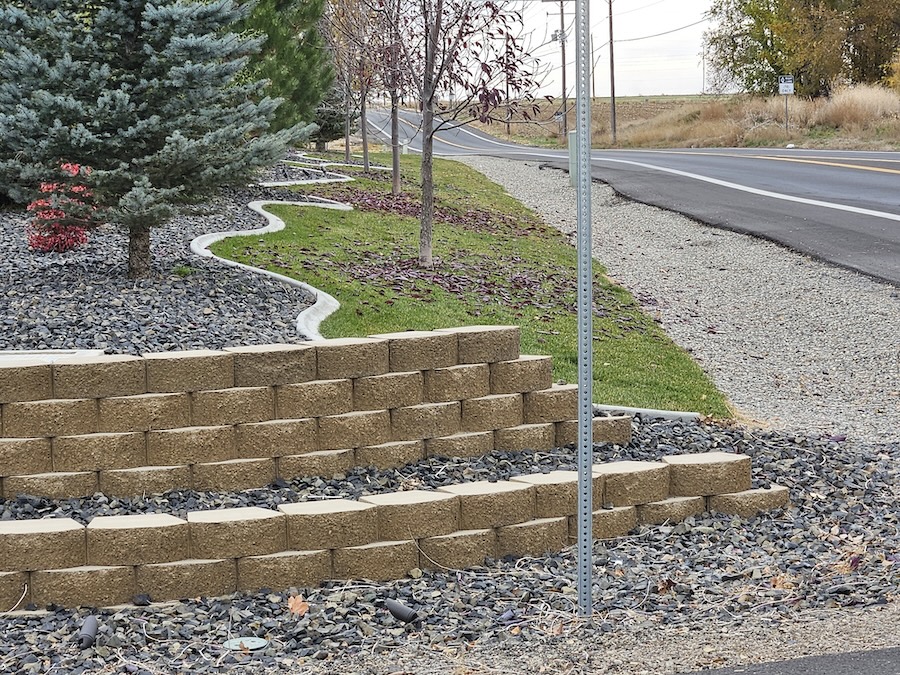
Different forms evoke different feelings or emotions. Rectangular forms like retaining walls create order and clear boundaries between outdoor rooms, they feel orderly and formal. Rounded forms soften harsh architectural angles. Circles and triangles are strong, and irregular shapes are casual and natural.
Plants also have individual form. Plant forms include pyramidal, rounded, oval, columnar, vase and flat or spreading. When plants are placed into groups, they take on a new form as a group. Two different plants with unique forms may produce the same group form. Often, the form of plant groupings is more important than individual plant form.
The common problem is this: using abrupt, straight paths and relying too heavily on rounded forms in shrubbery results in a dull and monotonous appearance that lacks structure. If you visit any commercial property in your town, you’ll likely notice this poor design followed by quick and fast maintenance. The solution to avoid this in your residential space is to incorporate curving, soft lines for pathways and to feather the edges for a smooth transition. Additionally, it’s important to introduce a variety of shapes in the plants—such as upright forms (like fastigiate junipers and ornamental grasses), horizontal arrangements (like tiered shrubs), and weeping forms—to create strong structural interest that will endure throughout the East Idaho seasons. And of course, caring maintenance and proper pruning of your shrubs.
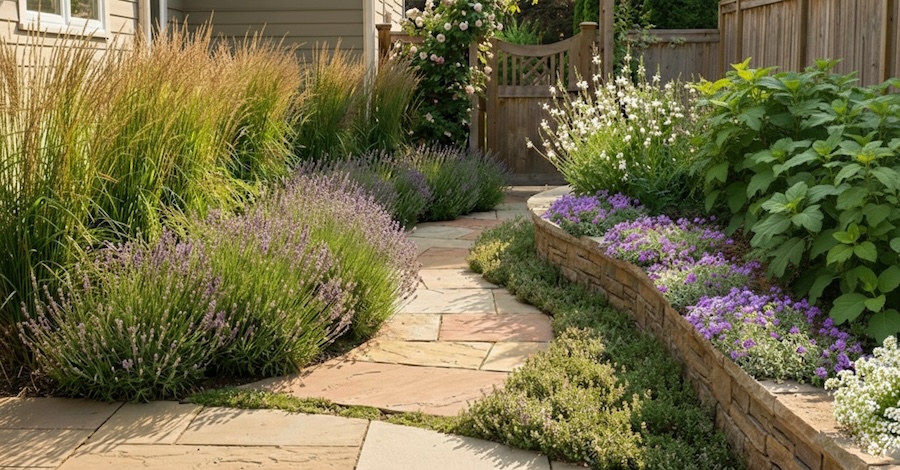
In the picture above, you will notice how the small break in the stone instantly directs most traffic to the front of the house. It’s so small and insignificant it doesn’t “really” hold you back, but it does. Visually and physiologically once you literally cross that line you realize that you are entering a space that is increasingly more private than the space you came from.
A successful design takes into account the existing structures and natural features of the site to create a cohesive landscape. Using the principles of line and transition, as well as form and shape, you can effectively organize your yard into a well-designed space. These principles provide a solid foundation for your design and assist you in choosing plant materials and hardscape elements that harmonize together and with the surrounding environment.