



Barn owls show up after snowstorm
Published at | Updated at
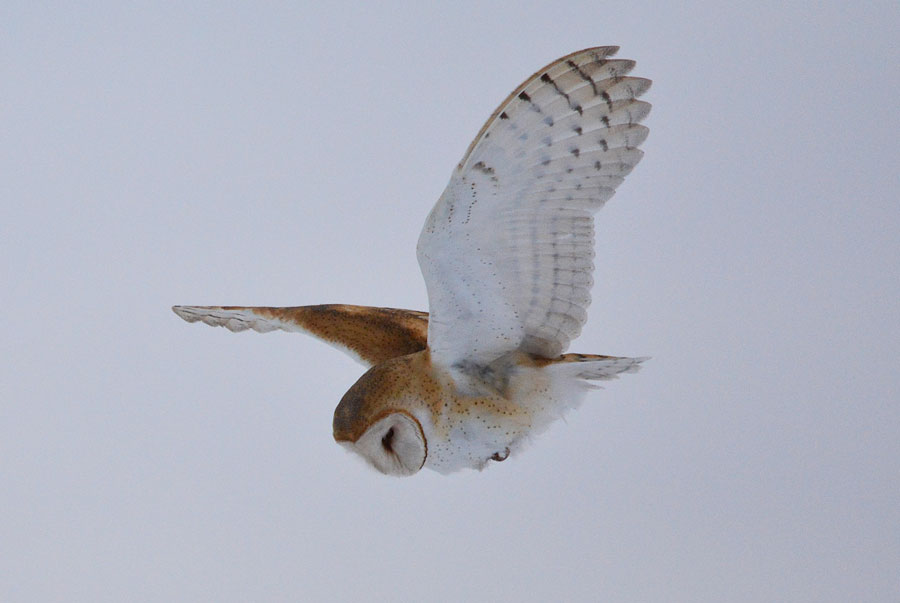
Last Friday afternoon while looking for wildlife to capture with my camera, I was fooling around west of Mud Lake when I saw a male barn owl attempting a “moth-flight” maneuver. He was trying to impress a female with his talented flight patterns, but she failed to be impressed. She appeared to be hunting for something to eat as she flew along an empty feeder canal with her eyes and ears trying to pinpoint a rodent in some tall grass.
It was odd to see the two barn owls hunting in the afternoon as they are extremely nocturnal hunters. But with three to four inches of snow covering most of the fields and ditch banks, I assumed that they were being forced to hunt during the day to get enough food to satisfy their needs.
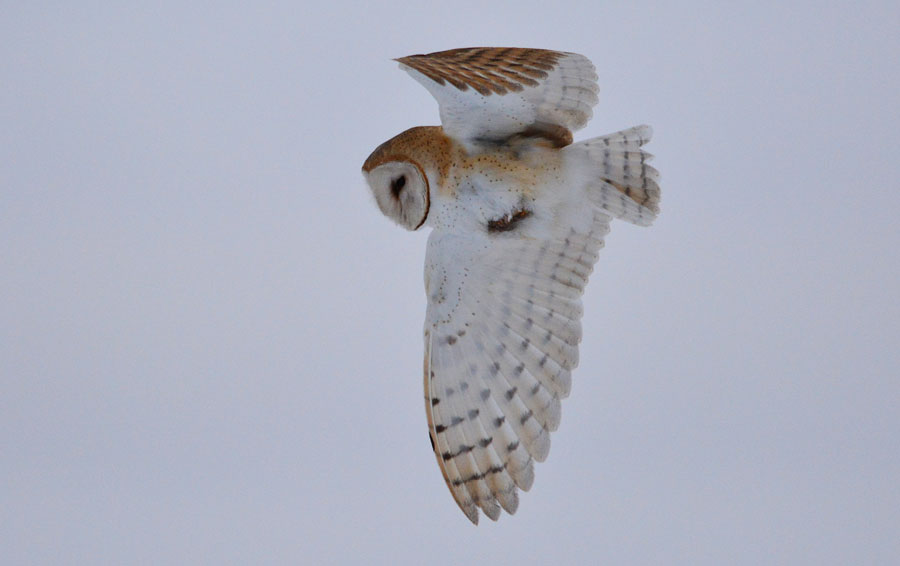
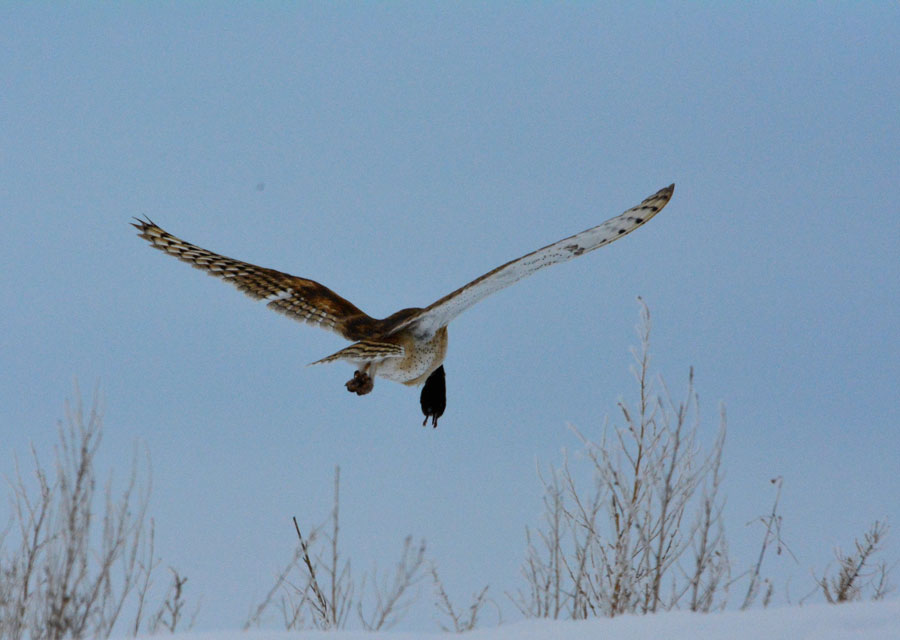
One of the owls, probably the female, captured a vole and flew into a grove of evergreens to eat it. They usually swallow all captured rodents whole. It didn’t take long before both disappeared into the grove of trees and their show was over. Another trip out to the area after the weather warmed up, did not produce any more activities from them.
Barn owls usually are not active during dusk and dawn like most owls but wait for total darkness to come out to hunt or play. Hunger or being disturbed are the reasons they will be active during the daylight hours.
They like to stay in thick stands of evergreens, haystacks or in abandoned potato cellars, barns, and other outdoor buildings that have very little human traffic. These two barn owls are the only ones that I have seen that I have not flushed from their cover since the winter of 2017.
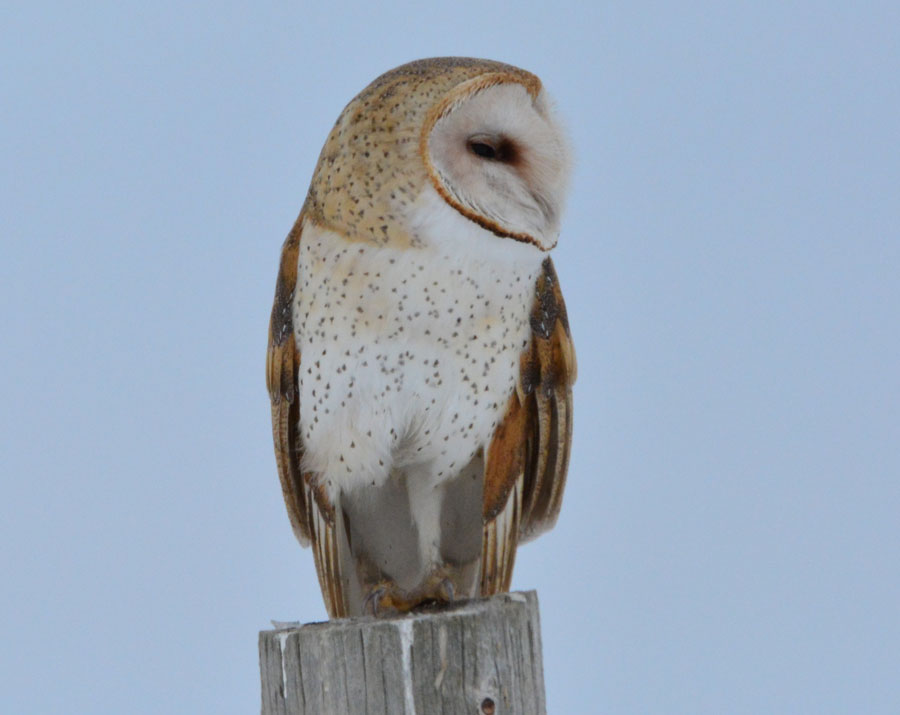
In that year we had hundreds of them show up in the Mud Lake area where they could be seen on most haystacks and on many fence posts. In late January of that year, we had an extremely warm front that melted much of the snow followed by several bitter cold nights that froze the snow and water covering fields. The owls could not harvest enough rodents and most of them perished within a week. Since then, I have only seen a few and most of them have been in the Howe area.
The largest population of barn owls in Idaho is in the Magic Valley from Burley to Mountain Home. As the owls hunt during the night along Interstate 84, many of them become killed in collisions with vehicles.
Barn owls are the most widely spread owls in the world, inhabiting every continent in the world but Antarctica.
Worldwide they were known just as barn owls, but in 2024, ornithologists classified those in the Americas as American barn owls while those found in South Asia to Australia as Eastern barn owls and those found in Europe, Africa and western Asia as Western barn owls. Oh, the fickleness of humans – the birds are all the same! The ornithologists must own travel agencies and to drum up business they created three species out of one. I will just keep the Idaho version of the American barn owl with their beautiful heart-shaped face.
By the way, the Great horned owls that have kept some of you awake at night with all their hooting, have started sitting on their eggs. If we get another spring snowstorm, I will get some pictures of the moms covered with snow on their nests!!
Spring migration will be starting soon for many birds and will be an exciting time.

Living the Wildlife is brought to you by Yellowstone Teton Territory. Experience 7,500 square miles of untamed wilderness in Eastern Idaho's Yellowstone Teton Territory. Where majestic peaks meet endless adventure, your perfect outdoor escape is waiting. Start planning at YellowstoneTeton.com.