



Idaho governor signs into law nearly all tax changes from federal ‘Big, Beautiful Bill’
Published at | Updated at
Laura Guido, Idaho Capital Sun
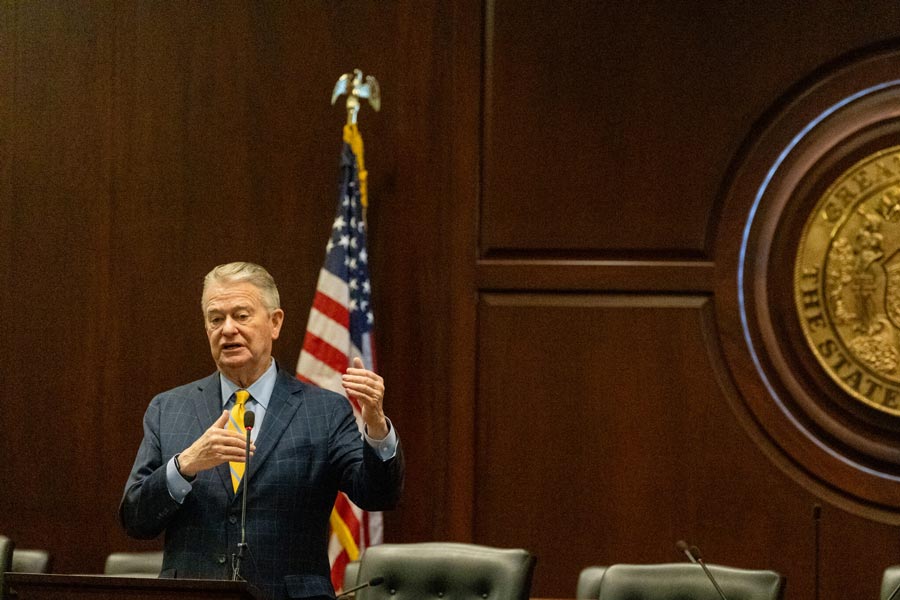
BOISE (Idaho Capital Sun) — Idaho Gov. Brad Little on Tuesday signed into law a bill conforming Idaho’s taxes to the changes in the federal One Big Beautiful Bill Act.
In a tight budget year, the bill is expected to reduce the state’s revenue by $155 million in the current fiscal year, which ends June 30. In fiscal year 2027, it’s estimated to cost the state $175 million.
However, the tax commission previously estimated it would cost the agency an additional $555,000 this fiscal year to conform to all the changes for the current tax year. That cost was not included as part of the bill, and may require a supplemental budget request.
House Bill 559 adopts nearly all the same tax cuts included in the federal megabill approved by Congress in July, including provisions such as no taxes on workers’ tips, no taxes on overtime for some employees, and an enhanced deduction for seniors. There are also corporate tax benefits, such as full deduction on eligible research and experimentation expenses starting in 2025.
If the budget cuts to nearly every agency approved last week by the state budget-writing committee go through, the state tax commission may experience significant delays in issuing refunds and payments.
Those delays could cost the state around $3.5 million in interest, according to a memo to lawmakers from the Idaho State Tax Commission.
Little has been supportive of tax conformity this year. However, in his proposed budget, he chose to adopt the changes starting in the 2026 tax year. HB 559, like the Big Beautiful Bill, is retroactive to Jan. 1, 2025, meaning the write-offs and other incentives are applicable to returns currently being filed by Idaho taxpayers.
Bill sponsors Rep. Jeff Ehlers, R-Meridian, and Sen. Scott Grow, R-Eagle, have both said they thought it was important to use the retroactive date, because the individual benefits in the federal legislation only last four years. The corporate provisions are permanent.
The tax commission will need to immediately redesign forms and direct software updates to adjust to the changes, and it was provided no additional funding to do so in HB 559.
The commission, like nearly every other state agency, has already had its budget cut by 3% at the direction of Little this summer, as the state faced a projected budget shortfall. The additional cuts recently approved by the Legislature’s budget committee may mean the tax agency will need to reduce its temporary tax season workforce, which would lead to delays.
The across-the-board budget cuts for the current fiscal year will go before the Idaho House and Senate for a vote.
Tax conformity sailed through Legislature amid budget concerns
House Bill 559 easily cleared the Idaho House and Senate in nearly party-line votes within the Republican supermajority of both chambers.
Democrats all voted against it, arguing that the cuts that the budget-writing committee, JFAC, were seeking to make room for the cost of conformity were doing more harm than the tax cuts were worth.
Some also noted that projected cost of conformity varied widely, which could create an uncertain budget situation for the current and next fiscal year.
Supporters said the cost of the cuts were worth it to allow Idaho taxpayers to keep more of their money.
Sen. Jim Guthrie, of McCammon, was the only Republican to vote against the bill. He opposed that the research and experimentation deduction didn’t conform fully to the federal provision.
In the federal legislation, eligible research expenses could be deducted going back to 2022. House Bill 559 would allow expenses to be deducted over time, or amortized, between 2022 and 2024, and deducted fully starting with 2025 expenses.
Corporate income tax revenue to the state dipped late last year, in a way that suggested businesses were assuming the state would fully conform to the federal tax provisions. Those businesses that withheld those costs may be subject to penalties for late payments.
“In my opinion, we should rip the Band-Aid off now and fully conform,” Guthrie said on the Senate floor.
Idaho Capital Sun is part of States Newsroom, a nonprofit news network supported by grants and a coalition of donors as a 501c(3) public charity. Idaho Capital Sun maintains editorial independence. Contact Editor Christina Lords for questions: info@idahocapitalsun.com.