



Is half the country in a recession? Shelley legislator says budget chairs are ‘fear-mongering’ to justify cuts
Published at
Sean Dolan, Idaho Ed News
BOISE (Idaho Ed News) — A Republican lawmaker is criticizing Idaho’s top budget writers after they claimed on television that 26 states are in a recession — a figure they could not immediately source as legislators debate spending cuts and whether to tap the state’s rainy day fund.
The co-chairs of the Joint Finance-Appropriations Committee made their stance clear in a roundtable discussion last week on Idaho Reports, but one data point they shared didn’t sit well with a representative from Shelley.
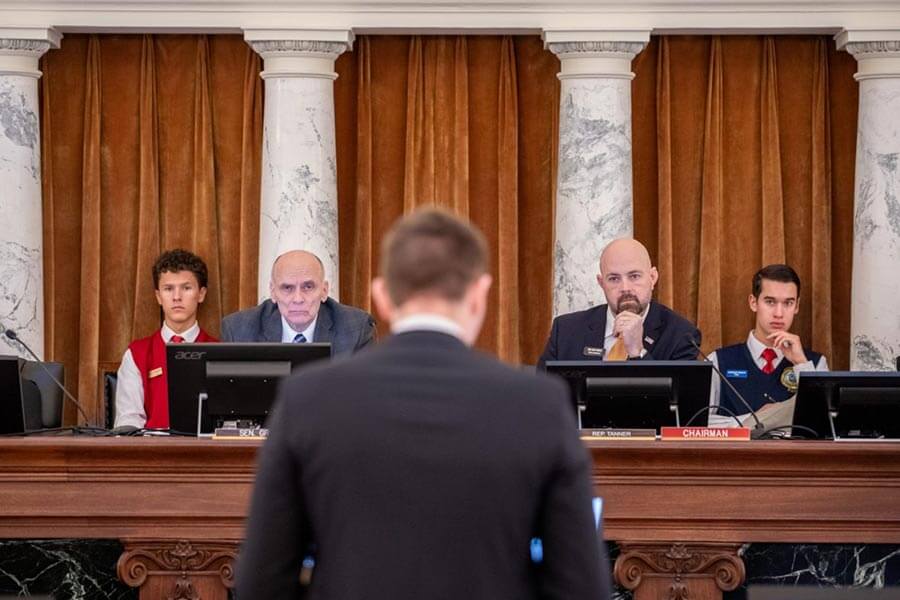
Co-chairs Sen. Scott Grow and Rep. Josh Tanner, both R-Eagle, said the Idaho economy is strong and growing. But other states are in recessions and Idaho is not immune. They say they want to cut the budget now in order to align ongoing expenses with ongoing revenues, and stay away from using budget stabilization funds that are set aside for a rainy day. They want to save that fund for when, or if, Idaho faces a recession.
“We are not in a recession,” Grow said on Idaho Reports. “Idaho is one of the top economies in the nation. There’s 26 states that are in a recession. We will have a recession, we just don’t know when. So we’re reluctant to use money that’s set aside for reserves for the rainy day when it’s not raining.”
Tanner said in the segment that there are a lot of uncertainties and he wants to put cuts in place now to improve the budget picture.
“I think going after a stabilization fund when you’re actually not in a recession is probably the most irresponsible thing you can actually do because we are going to go into recession at some point in time,” Tanner said. “Idaho is not immune from a recession.”
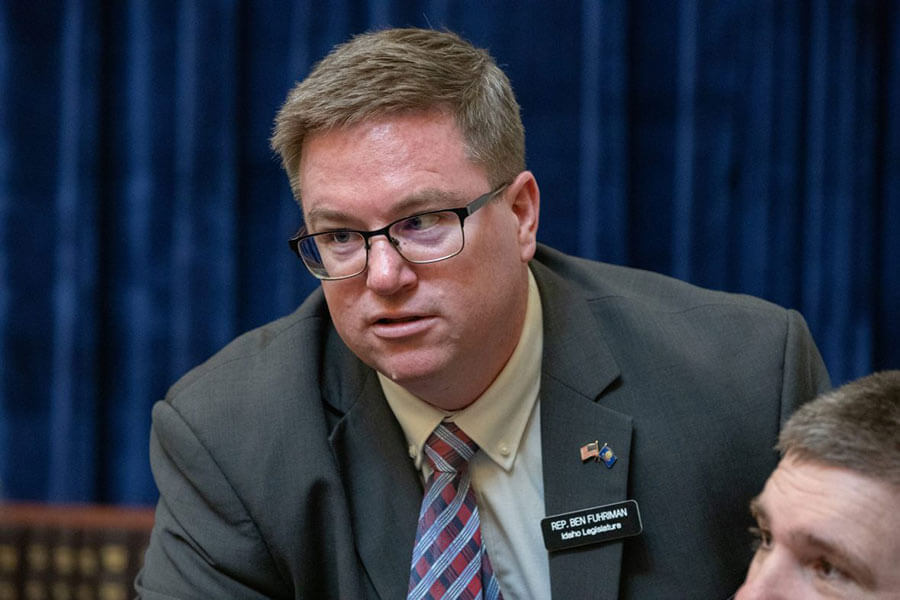
Rep. Ben Fuhriman, R-Shelley, told EdNews he was appalled when he heard Grow say 26 states are in a recession. He issued a press release earlier this week disputing the co-chairs’ claims.
In a Tuesday interview, Fuhriman said the two co-chairs are trying to push a narrative in order to justify deep cuts that are unnecessary and non-surgical. Fuhriman is in favor of using the rainy day fund to stabilize the state budget.
“I truly believe it’s irresponsible for the two leaders of the budget committee to go on television and tell the state and the world that half — over half — of the country is in recession without any kind of justification at all,” Fuhriman said. “It’s fear-mongering, and it’s just irresponsible.”
EdNews called Grow and Tanner in a joint interview Tuesday to ask for a source for the claim that 26 states are in a recession.
“The site that I went to said 26 states were considered in a recession,” Tanner said.
Tanner said he saw the figure on a national website but couldn’t immediately provide a link.
“I’d have to go back to try to find which ones that — there were multiple that when I originally was looking as we were starting the session and going through this,” Tanner said.
The “current ones” are saying 22 states are in a recession, he said.
“So it changed from 26 to 22 since the start of the session,” Grow added.
EdNews found late-2025 reports citing Moody’s economist Mark Zandi, who posted that 22-23 states were “in or at high risk of recession,” based on his assessment of state-level data.
Fuhriman, a financial planner, said he searched for a source for Grow’s claim that 26 states are in a recession.
Fuhriman thinks the co-chairs might have misunderstood a recent report from the Federal Reserve Bank of Philadelphia. The bank releases a monthly “state coincident index,” which uses an algorithm to reveal a state’s economic growth. If the number increases, the state’s economy is growing. The most recent report, released Jan. 30, shows the index increased in 41 states over the past three months and decreased in nine states. It also shows an overall increase for the U.S. economy.
Tanner told EdNews that he did not use that report for his claim that 26 states are in a recession.
“There aren’t 26 states that are in a recession,” Fuhriman said. “In fact, there aren’t any states that are in recession right now.”
The National Bureau of Economic Research, which officially determines U.S. recessions, has not declared one since the short COVID-era downturn in 2020. According to its website, expansions are periods between a trough and a peak and recessions are periods between a peak and a trough.
Fuhriman is concerned that Grow and Tanner are speaking as though a recession in Idaho is inevitable, while also saying the state shouldn’t use stabilization funds because Idaho is not in a recession. Budget cuts could create a self-fulfilling prophecy, he said.
In addition to broad cuts to statewide agencies, the Legislature is considering:
- $20 million in cuts to the Idaho Launch grant program
- $10 million in cuts to the Idaho Digital Learning Alliance
- $23 million in proposed cuts to virtual schools, such as Idaho Home Learning Academy
- Cuts to higher education and to career and technical education programs.
“If you keep these cuts up … you’re going to cause a recession,” Fuhriman said.
When EdNews relayed that message to Grow, he laughed.
“Well, I hope that our economy is certainly stronger than having to depend on the state of Idaho spending to prop up the economy,” Grow said. “No, when the economy is still growing and we’re doing well, we don’t want to use one-time money to fill an ongoing problem.”
Using stabilization funds could risk the state’s AAA credit rating, Tanner said, adding the proposed budget cuts are “very small dollar amounts.”
“A lot of people that are in both the House and the Senate that are not on JFAC,” he said. “They don’t understand all of what’s going on. They just hear things and they will blame it on the Legislature.”
Fuhriman thinks the Legislature should do it “the Idaho way” and go line by line to cut out waste, then fill the gaps with emergency funds.
“We’re in a cluster of emergencies,” Fuhriman said. “The transmission broke, the roof is leaking, the fridge broke, and we have to fix all those things at once. And that’s exactly why you have an emergency fund.”
Originally posted on IdahoEdNews.org on February 19, 2026