



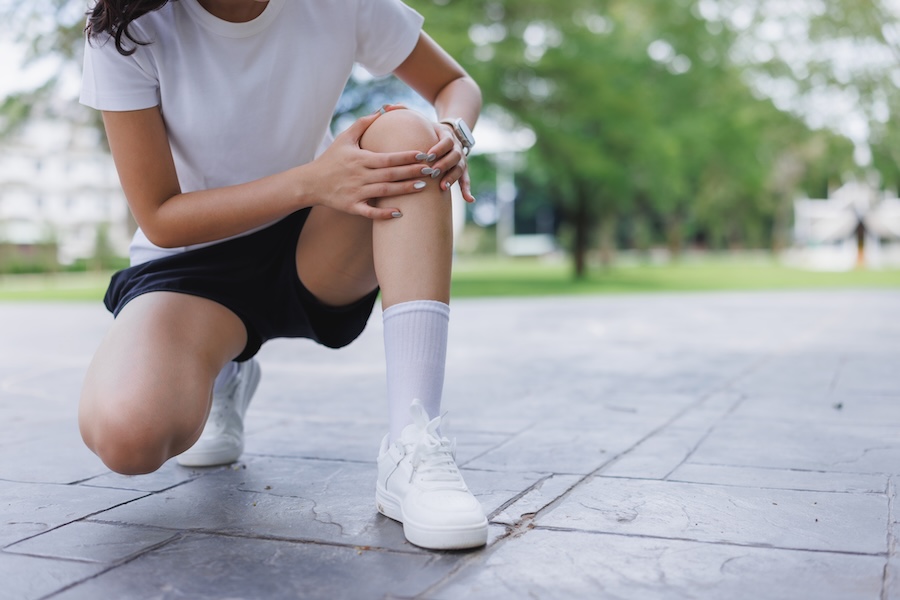
Why do teens develop knee pain?
Published at
Have a medical-related question you've always wanted answered? The doctors at Mountain View Hospital and Idaho Falls Community Hospital are here to help! Email your "Ask the Doctor" questions to news@eastidahonews.com and they might end up in our weekly column.
Question: Why does my teenager have knee pain without an injury?
Answer: Knee pain in adolescents is very common, especially in active teens and during growth spurts. As bones grow faster than muscles and tendons can adapt, the knee becomes more vulnerable to overuse and alignment issues. Several conditions can cause pain even without a specific injury. Knowing the common causes can help you decide when rest is enough and when to see a doctor.
Question: What is patellofemoral syndrome (runner’s knee)?
Answer: Patellofemoral syndrome occurs when the kneecap does not track properly in the groove of the thigh bone (femur). Each time the knee bends and straightens, the kneecap may rub against the femur, leading to inflammation and pain.
Common symptoms include:
- Pain in the front of the knee or around/behind the kneecap
- Pain that worsens with activity, stairs, squatting, or standing after sitting
- Popping or grinding sensations
- Pain in one or both knees
This condition is often caused by muscle imbalances, typically weak glutes or quadriceps that don’t fire together, leading to poor knee alignment. It affects girls more often than boys, though either can experience it. About 30% of adolescents will have patellofemoral syndrome at some point.
Treatment: Usually consists of physical therapy with a focus on addressing muscle imbalances, strengthening quads and glutes, and stretching tight muscles around the knee. Anti-inflammatory medications can also be used to improve inflammation and pain. Sometimes bracing or kinesiotaping can also help to decrease symptoms.
Question: What is Osgood-Schlatter disease?
Answer: Osgood-Schlatter causes pain just below the kneecap at the bony bump on the shin (tibial tuberosity). In growing teens, the patellar tendon repeatedly pulls on the growth plate in this area, causing inflammation and pain. This can sometimes result in visible swelling or a more prominent bump. It is more common in boys and typically occurs during periods of rapid growth. Treatment: Physical therapy to address muscle tightness and decrease the tension of the patellar tendon pulling on the tibial tuberosity, anti-inflammatory medications, and activity modification. Symptoms typically resolve once growth plates are fused in the later teen years.
Question: What is patellar tendinitis (jumper’s knee)?
Answer: Patellar tendinitis is caused by repetitive high-impact activities such as volleyball, basketball, or gymnastics. The pain is located in the patellar tendon just below the kneecap and occurs when the tendon becomes inflamed from overuse. Early on, the condition involves inflammation, but if left untreated, it can progress to tendon tears or chronic tendinopathy. Treatment: Rest/activity modification, anti-inflammatories, a patellar tendon strap to distribute stress, and physical therapy with a focus on stretching quads and hamstrings as well as strengthening muscles of knee, hips, and core. If tendinitis becomes a chronic tendinopathy, it may require more invasive treatments such as injections.
Question: How can adolescent knee pain be prevented?
- Proper warm-ups and cool-downs
- Regular stretching to maintain flexibility
- Supportive footwear
- Strength and conditioning programs
- Avoiding sudden increases in training intensity
- Adequate rest and recovery
- Proper nutrition and hydration
Question: When should my teen see a doctor for knee pain?
Answer: Most adolescent knee pain can be managed with rest, over-the-counter anti-inflammatory medications, and physical therapy, though improvement may take time. Many young athletes will experience at least one of these conditions during their sports careers. Your teen should see a physician if:
- Pain is severe or worsening
- Pain persists despite rest
- There is swelling in the knee
- An injury occurred
- Physical therapy or athletic trainer rehab is not helping
For high school athletes, starting with an athletic trainer is often a good first step. If symptoms continue, a physician can confirm the diagnosis and guide treatment. Oftentimes, a majority of these conditions can usually be managed with rest, over-the-counter anti-inflammatory medications, and physical therapy, but may take time and require temporary modifications in activity. Many young athletes will experience at least one of these conditions in their athletic careers.
Dr. Ashley Ford, DO, CAQSM PM&R, is a Sports Medicine Physician at Rocky Mountain Spine & Sport.
This column does not establish a provider/patient relationship and is for general informational purposes only. This column is not a substitute for consulting with a physician or other health care provider.

Ask the Doctor is brought to you by Mountain View Hospital and Idaho Falls Community Hospital. Mountain View Hospital is proud to offer the community compassionate surgical, labor and delivery, NICU, diagnostic and rehabilitative services. And when the seconds count, count on Idaho Falls Community Hospital for emergency care. With around-the-clock trauma services, state-of-the-art technology, and a highly-skilled team, Idaho Falls Community Hospital is always ready to provide patients with the best possible treatment.