



Idaho bill would require parental consent for transgender kids’ social transitions
Published at
Becca Savransky, Idaho Statesman
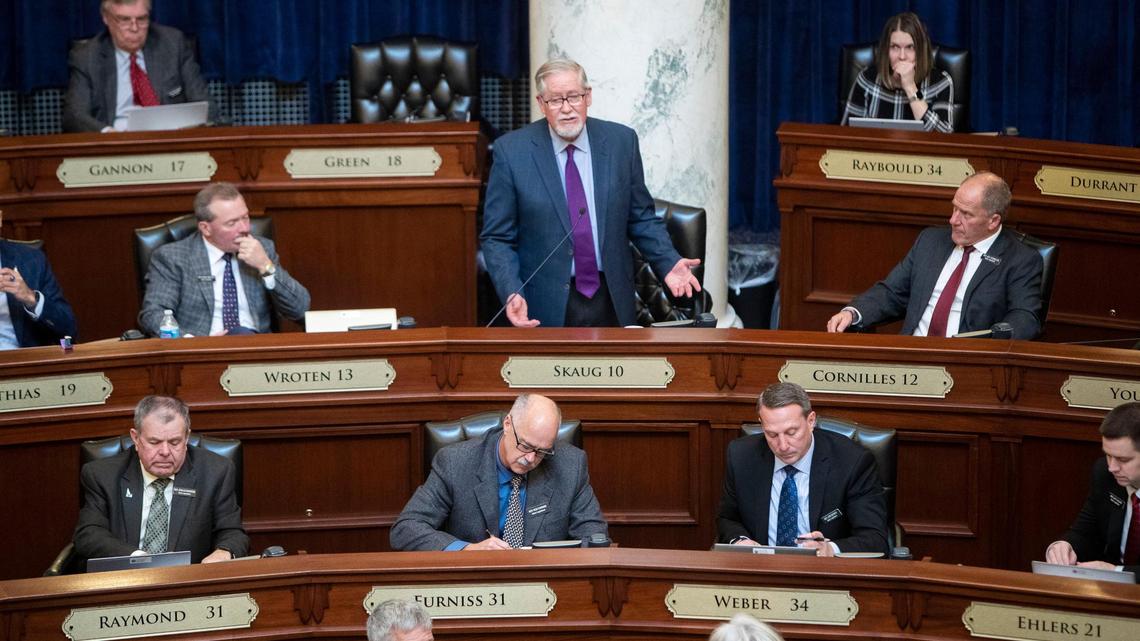
BOISE (Idaho Statesman) — Lawmakers advanced a bill Monday intended to prevent schools and health care providers from helping transgender children transition without parental consent.
The bill, sponsored by Rep. Bruce Skaug, R-Nampa, would bar health care providers and educational institutions from “facilitating a pediatric sex transition or social transition” without parental permission. Named the “Pediatric Secretive Transitions Parental Rights Act,” the bill would require that a school and medical, behavioral or mental health care provider notify a parent within 72 hours of receiving a “request” from a child to participate in or facilitate a social transition, which could include being referred to by pronouns different from the student’s sex assigned at birth, using restrooms or locker rooms associated with their gender identity or going by a different name.
The attorney general could investigate the allegations, and seek civil penalties of up to $100,000. Parents could also seek damages.
During the Monday hearing, Skaug said he’d heard from parents whose children had been allowed to socially transition at school without parental consent. The bill defines social transition as the process by which a person identifies with a gender different from their sex assigned at birth, which may involve changes including “pronouns, appearance, or dress.”
“That’s wrong, to keep things from parents,” Skaug told the House Judiciary, Rules and Administration committee. “That’s what this bill is about. Parents have to know if this type of thing is going on.”
The bill also says health care providers and schools can’t withhold information from parents about a child’s “expressed interest in or desire for sex transition procedures.”
“So that’s not when a girl wants to have a short haircut. That’s not when a girl wants to dress in boy’s clothes or vice versa,” Skaug said. “But if there’s that desire to have social transitioning from one gender to the other, then that needs to be reported to the parents.”
He and other supporters of the bill said the legislation was about parental rights. Those in opposition warned it puts vulnerable children at risk, especially those in unsupportive households, and represents government overreach.
Legislators rushed to vote on the bill after Rep. Joe Alfieri, R-Coeur d’Alene, who was chairing the committee while Skaug was presenting the bill, reiterated they were in a time crunch and needed to be on the House floor within the hour. He gave the committee no time to debate the bill.
Lawmakers voted along party lines to advance the bill to the House floor. Before and after the vote, people in the hearing room shouted at lawmakers and warned of the harm the bill could do. Alfieri asked for them to be removed.
Testifiers argue on both sides of transitioning bill
The Rev. Sara LaWall, of the Boise Unitarian Universalist Fellowship, testified that gender-affirming care saved her child’s life and helped her become confident and flourish. She said she had always been supportive of her daughter’s transition, but she still had to fight to get the care her daughter needed. She added that she doesn’t know if her daughter ever consulted a counselor.
“And I don’t need to know,” she told lawmakers. “If she received support and care that helped her, that is good enough for me.”
LaWall said this bill would be problematic for transgender children, a vulnerable group who already face significant challenges in finding affirming care, which research has shown can improve mental health for children experiencing gender dysphoria, she said.
Nikson Mathews, the chair of the Idaho Queer Caucus who identified as a “proud trans Idahoan,” said he’s heard from health care providers, teachers and parents that this bill would not make children safer, but would rather make it “harder for the professionals responsible for their care to do their jobs.” Mathews pushed back against the narrative that educators are secretly helping transition students at school, but said it’s important that kids have trusted adults they can talk to when they need support.
“When young people feel like they cannot safely talk to the adults responsible for their care, they stop asking for help,” Mathews said. “And when they stop asking for help, it is not just harmful, it is tragic.”
In a statement, the American Civil Liberties Union of Idaho called the legislation a “dangerous” and unconstitutional bill that would mandate that teachers and counselors monitor children “for signs that they are not conforming to gender stereotypes.”
“Forcing school employees and medical professionals, including counselors, to monitor and ‘out’ students who have questions about their gender identity is dangerous for transgender students and a serious violation of privacy for all students,” the ACLU said. “Politicians who stand for small government and personal liberties should not regulate how people dress or express themselves.”
The organization said the bill threatens free speech for students, teachers and health care providers.
Those who testified in support of the bill said parents should always know what’s going on with their children and should have the ultimate say over their upbringing. One mother from California who said her daughter attends college in Idaho shared that her child’s high school allowed her child to socially transition without parental consent or knowledge.
Matt Sharp, senior counsel with the Alliance Defending Freedom, a national legal organization that has been involved in other cases targeting trans people, said recently there has been a “wave of secret transition policies” that violate parental rights and harm children by directing school staff members to “conceal information from parents.”
“These harms are not theoretical,” Sharp said.
Idaho laws target trans students
The Idaho Legislature in recent years has passed several bills targeting transgender people and emphasizing parental rights.
These include laws that bar transgender women and girls from participating in sports that align with their gender identity; banning children from accessing gender-affirming care; prohibiting teachers from using pronouns that differ from a student’s sex at birth without parent approval; and barring trans youths from using bathrooms that correspond with their gender identities.
In 2024, the Legislature also approved a bill that prohibited those under 18 from accessing health care services in most cases without parental consent. The bill had exceptions for emergencies.
During the hearing Monday, Democratic lawmakers raised several concerns about the language in the bill and how it could be interpreted.
As Alfieri rushed into a vote, Rep. Ilana Rubel, D-Boise, asked whether there would be any time to discuss the motion.
“We’re really very short on time. I’m sorry,” he said.
Rubel then made a substitute motion to hold the bill in committee to give lawmakers time to discuss it. She said it’s an impactful bill that presents legal problems, has “grossly excessive penalties” and a lot of ambiguity. It’s already difficult to retain teachers and doctors, she said, and this bill would make it even harder. Lawmakers voted down her motion.