



Are streaming platforms killing quality content?
Published at | Updated at
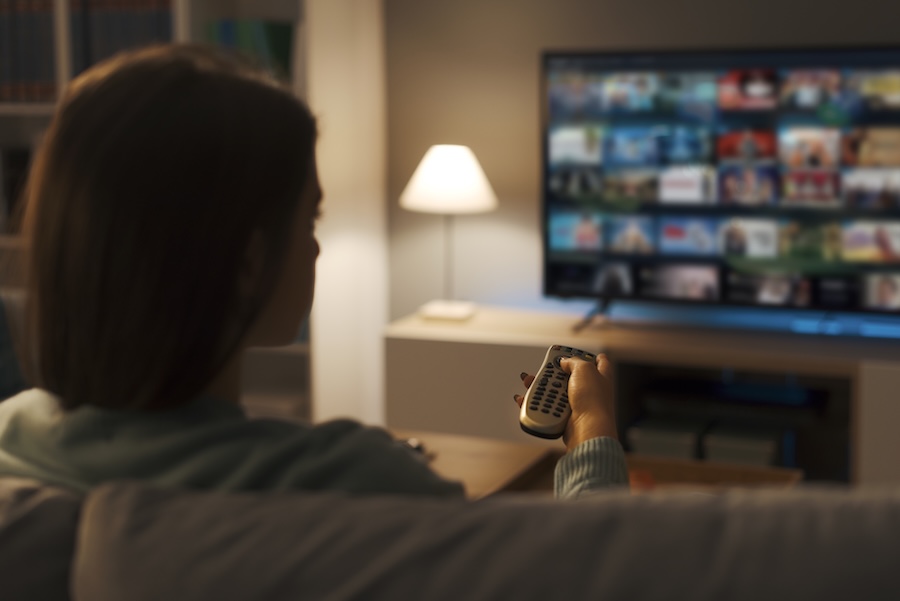
There was a time — and yes, this makes me sound older than I’d like — when you didn’t choose what to watch; you simply accepted what was on.
If you were lucky, you got home from school just in time to catch “Batman: The Animated Series.” If you were less lucky, you ended up watching something you didn’t plan on, like paternity tests on “Maury.”
And you know what? You watched it anyway.
Well, I did at least.
Eventually I’d hit my limit, and the boredom would creep in. I’d shut off the TV and go outside. Maybe I’d lay in the grass watching clouds, or knock on a neighbor’s door and figure out some game to play.
My point is: There was a natural stopping point when it came to watching television. Today, that stopping point is nowhere in sight.
Welcome to the endless scroll
We are living in the golden age of content. At least, that’s what we’re told.
Every major studio now has its own streaming platform. Netflix, Disney+, Hulu, Amazon Prime Video, and about a dozen others are all competing for your attention. And they are feeding us content at a pace that would have been unthinkable 20 years ago.
To give you some perspective:
- Netflix alone releases hundreds of original titles every year.
- Across all platforms, there are now thousands of new movies and shows annually.
- Compare that to the 1990s, when major studios and networks had a finite number of release slots and had to be far more selective.
We didn’t just open the floodgates; we blew the dam to smithereens.
Does more content mean more quality?
Let me be clear, this is not a “everything new is bad” argument. There is incredible content being made right now.
Streaming has given a voice to creators who may have never had a shot before. We’ve seen bold storytelling, unique ideas, and projects that would have never survived the old studio system. That’s a good thing.
But here’s the problem: When you dramatically increase the number of things being made, the percentage of truly great content naturally shrinks. Not because people suddenly got worse at making movies and TV shows, but because there’s just more.
And quite possibly, too much.
More scripts are getting the green light; more projects are being rushed; and more shows being made not because they’re great ideas, but because a platform needs to justify its existence.
At some point, it stops being about “What’s the best story we can tell?” and starts becoming “What can we add to the library this month?”
The illusion of choice
Here’s the irony: We have more options than ever, and yet it’s never been harder to find something to watch.
You open a streaming app, scroll for 10 minutes, maybe 20, bounce between platforms, and somehow end up watching something you’re only half interested in.
Not because it’s great, but because it’s there.
We’ve replaced anticipation with accessibility. And I argue that in doing so, we have lost something.
When watching something felt like an event
Remember renting a movie? That wasn’t just something you did; it was an event.
You walked through the aisles. You judged movies based on the cover. You debated your choice like it mattered — because it did.
You had one pick, and once you got home that was it. You had a couple of days to watch it, rewatch it, maybe quote it endlessly with your friends.
There was value in that limitation.
Now? Everything is available all the time.
Somehow, that makes none of it feel special.
We don’t stop anymore
One of the biggest differences between then and now isn’t just what we watch, but how long we watch.
Back then, boredom had a purpose.
You’d hit a point where there was nothing good on, and instead of forcing it, you’d move on. You’d go outside. You’d do something else. Your brain got a break.
Today, boredom doesn’t stand a chance. There is always something else to click — another episode, another movie, another recommendation based on something you barely remember watching — and so we stay.
We sit there, watching things that are fine — not great, not terrible, just fine — simply because we can and it’s there.
Is the algorithm in charge now?
Another piece of this puzzle is how decisions are being made in the TV and film industry.
In the past, studios had limited bandwidth, so they had to be selective. There were only so many shows that could air, so many movies that could hit theaters.
Now? If you can fill a content slot, you’re in business.
Algorithms are helping drive decisions. Data is telling platforms what people watch, how long they watch, when they stop watching. And instead of chasing greatness, it sometimes feels like we’re chasing engagement.
Instead of asking “Is this amazing?” studios are asking “Will people click on it?”
So, is quality actually suffering?
That’s the big question. Is content getting worse, or does it just feel that way because we’re drowning in it?
Personally, I don’t think quality has disappeared; I think it’s just harder to find. The great stuff is still out there, but it’s buried under an avalanche of “pretty good,” “kind of interesting,” and “I guess I’ll watch this.”
When everything is available all the time, even the great stuff can lose a little bit of its shine.
Maybe we need a little less
Now, I’m not saying we should go back to three channels and rabbit ears, and I am not saying streaming is bad. There are too many positives to ignore. However, I do think we’ve lost some things along the way.
Good things, like anticipation, limits, and that moment where you say, “There’s nothing on,” and then go do something else.
Sometimes, the best part of entertainment was knowing when to turn it off.
What do you think?
So, I’ll throw it out to you: Do you feel like we have too much to watch? Is quality suffering because of quantity? Or, are we actually living in the best era of entertainment and just don’t realize it?
Let me know in the comments.
Because right now, I’m not sure if I’m overwhelmed or just tired of scrolling.