




Five candidates seeking Republican nomination for Jefferson County Commission Seat 1
Published at | Updated at
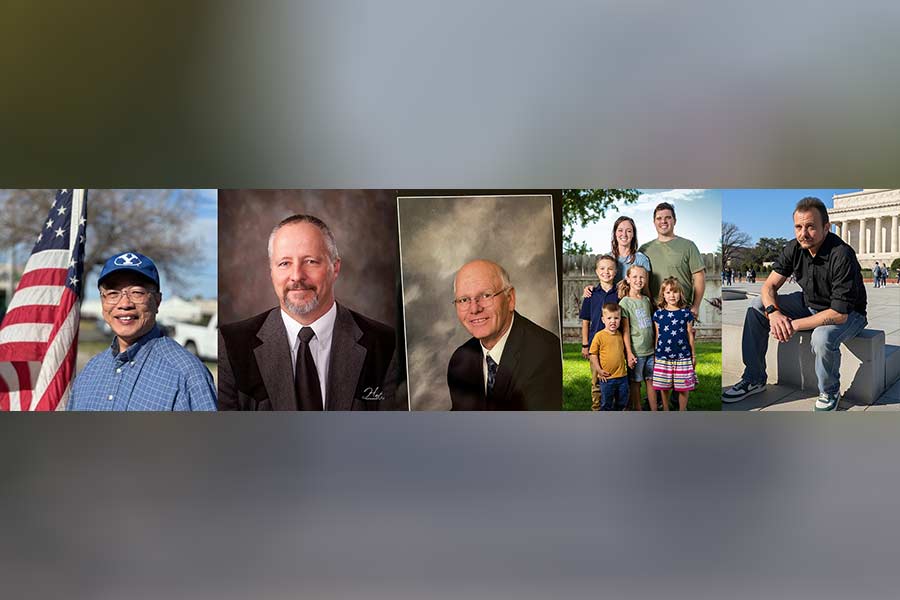
RIGBY – Five candidates are hoping to become the Republican nominee for Jefferson County Commissioner, Seat 1.
Incumbent Republican Shayne Young is not seeking re-election. Those running in the primary include Art da Rosa, Brian Farnsworth, Danny Ferguson, Dylan Davis and Joshua Duran.
EastIdahoNews.com sent the same eight questions to each candidate. Their responses, included below, were required to be 250 words or less. Some responses have been edited for length.
The candidate who wins the primary will be on the general election ballot in November. The primary election will be held on May 19.
Tell us about yourself — include information about your family, career, education, volunteer work, and any prior experience in public office.
da Rosa: I grew up in Macau, a former Portuguese colony on the edge of Communist China. I came to America as a teenager, not for money, but for freedom. That choice has shaped everything I have done since.
I studied civil engineering at Brigham Young University, served a two-year mission, and earned a Master of Public Administration from Fresno State. I am a licensed Professional Engineer and Certified Floodplain Manager.
For 35 years, I designed, built, and managed public infrastructure across California and Idaho, rising from engineer to Public Works Director.
At the City of Pocatello, I served as Senior Engineer and secured $20 million in grants over six years.
Currently, I am working for an engineering firm in Idaho Falls. I am twice elected Republican Precinct Committeeman, and for over seven years, I have taught a free weekly Constitution class to Jefferson County residents.
My wife Shannon teaches Special Education at Rigby Middle School. We have been part of the Jefferson County community, and we are proud to call it home.
Farnsworth: My name is Brian Farnsworth. I was born in 1960 to Darrell and Mary Jane Farnsworth. I served a mission for The Church of Jesus Christ of Latter-day Saints in Jackson, Mississippi from 1979 to 1981, which helped shape my values of service and hard work. In 1982, I married my wife Tammy May, and together we’ve raised five children and are proud grandparents to 15 grandchildren. Family has always been at the center of my life, and it’s a big part of why I care so much about the future of our county.
I’ve spent many years serving my community and building businesses. I volunteered with the Ucon Fire Department and served as Fire Chief, where I learned leadership and responsibility. I also started and operated two successful businesses, Mountain Top Glass & Vinyl and Mountain Top Transport, gaining hands-on experience managing budgets, employees, and operations.
I previously served as Jefferson County Commissioner for District 1 from 2013–2019, including two years as chairman. During that time, I also served on the District 7 Health Board, Magistrate Commission, Cloud Seeding Board, and the Idaho State Fair Board. That experience gave me a strong understanding of how county government works and how decisions impact our residents.
I’ve always believed in being accessible, listening to concerns, and working with people to find practical solutions. I’m running again because I believe my experience and commitment can help Jefferson County move in the right direction.
Ferguson: I have lived in Jefferson County all my life. I Married Dana Clark in 1974. We began raising our family on a farm we bought east of Rigby. We were blessed to have three children and loved working together as our children grew. Dana got Cancer and passed away in 1989. I Married Marcene Miller from Menan and we had two more children and together we continued to raise our children and grow our farms. We raised Seed Potatoes, Wheat, Barley, Certified Hay, Corn, and a Cow Calf operation. I served on the Jefferson County Farm Bureau Board and as President Then was elected to the Idaho Farm Bureau State Board of Directors for 16 years. During that time, I had the opportunity to serve on several committees including state water committee, Marketing and 3 years as IFBFs Representative on the American Farm Bureau Immigration committee in Washington DC. I currently serve as a board member for Harrison Canal, Rudy Canal and Palisade Water Users Inc. respectfully. I am Currently the chairman of the Midway Mosquito Abatement District in Jefferson County. When I was 19, I served a mission for the Church of Jesus Christ of Latter-Day Saints in Germany for two years. Learning a new language and a different culture taught me to appreciate and learn from people with a different perspective than mine. In 2018 we were called to serve as Director/President of the Joseph Smith Birthplace in Vermont.
Davis: I grew up in rural Washington near Moses Lake and have spent much of my life working in and around small, agricultural communities. I have worked as a beekeeper for Browning’s Honey and Cox’s Honey, taught high school English in Glenns Ferry, and currently serve as a Deputy Prosecuting Attorney for Madison County.
I earned my law degree along with an M.B.A., with an emphasis in business leadership and economics. My professional experience has centered on working with people, solving problems, and applying practical judgment in real-world situations.
I have also been involved in service throughout my life. I have volunteered with the Boys and Girls Club and the Idaho Veteran Wills Clinic, and I have served in various church callings, including a two-year mission in Houston, Texas, as well as in nursery, primary, and as a ward clerk.
My wife, Christy, was raised in Shelley, Idaho, and together we have four children. As a family, we enjoy learning, camping, playing, and working together in the garden.
Duran: I’m running for Jefferson County Commissioner, District 1, because this place shaped me, and I want to help protect it for the next generation.
My family moved here over 30 years ago. Though my last name is Duran, I originally went by Grubbs. As the oldest of nine siblings, I learned early what leadership really means — keeping structure, balancing budgets, distributing resources fairly, and making sure everyone had what they needed. Those lessons from a big family have stayed with me.
I spent my teen years going between Portland and Idaho. In Oregon, I volunteered with Free Geek, building computers with Linux and teaching disadvantaged people to use them. Back in Idaho, I worked on farms and Reinke Grain, gaining grit and construction skills that later led me to volunteer with Habitat for Humanity. I’ve also spent years distributing food at local food banks.
My education is a mix of hands-on subjects: Wilderness Leadership, Avionics (one of the first civilians allowed back in PDX ATC after 9/11), Dairy Science, 501(c)(3) Grant Writing, Community Emergency Response Teams (CERT), Search & Rescue, Emergency Management, and Defense Intelligence. I didn’t jump around because I was lost — I wanted to learn how to serve effectively in many ways.
It all started at age 14, slinging coffee at Cafe Paragon in Ririe. Listening to local farmers every morning taught me the real value of community, hard work, and listening.
That foundation: family duty, volunteer service, farm grit, and practical skills — is what I bring to this office.
Why are you seeking political office within your community? Briefly explain your political platform.
Duran: I love this community and want to protect what makes it special for the next generation.
I grew up here, hauled grain down County Line, fixed trucks, raised a family, and I’ve seen how rushed development clogs our roads, strains our aquifer, and threatens our farms and way of life. I refuse to watch it happen without a fight.
My experience includes years as an Industrial Executive Chef managing tight budgets under pressure, leading the build-out of a $4.3 million commercial kitchen and tasting room, completing state-funded grant writing training through the Ririe Community Coalition, and finishing FEMA’s full Professional Development Series in emergency management. As a civilian contractor at Fort Bragg, I sometimes trimmed my own margins just to ensure military families received the services they needed.
These experiences taught me how to manage large projects responsibly, protect limited resources, and put people first.
My platform is simple and focused:
- Protect our farms and aquifer by requiring real infrastructure studies before approving large developments
- Keep County Line and other key roads open and functional for harvest traffic
- Defend property rights and ensure local control! These decisions should stay in Jefferson County, not Boise or Washington
- Manage taxpayer dollars with accountability and common sense, pursuing responsible grants without compromising our independence
I’m not a career politician. I’m just a local guy who knows the real struggle the community faces, sacrifice, and what it means to care deeply about this valley.
Davis: I am seeking office because I want to preserve what has made Jefferson County a strong and stable place. I believe in maintaining our communities, our infrastructure, and the way of life that people here value.
A central part of that is supporting and protecting our agricultural base. From Ririe to Mud Lake, agriculture is an industry and a foundation of our local economy and identity. Growth and development should not come at the expense of those who have built their livelihoods here.
I also believe county decisions should be fair and balanced. Residents in communities like Ririe, Mud Lake, and Monteview should not be burdened with the costs of decisions if they are not seeing the benefits. That principle should guide how we approach growth, budgeting, and public services.
At its core, my platform is about stability, responsible growth, and accountability. I want Jefferson County to remain a place where families are safe, can thrive, and have confidence that their local government is working for them.
I am running to help ensure that we maintain what we have, make thoughtful decisions about the future, and keep Jefferson County a great place to live.
Ferguson: I am grateful to have grown up and raised my Family in this wonderful community. Building a farming operation from scratch has been a lot of hard work but with advice from neighbors and associates who have become some of my dearest friends, this county has given me the opportunity to become successful. I’m running for county commissioner because I want to see these opportunities continue for those who are returning to raise their families in this beautiful area. The experiences of my life will be helpful in addressing the infrastructure needs of a growing populace and balance the requirements for roads, water, agriculture and schools.
Farnsworth: I’m running for Jefferson County Commissioner Dist. 1, because I care deeply about Jefferson County and the direction we’re headed. We’re seeing rapid growth, increasing pressure on infrastructure, and ongoing concerns about water and long-term planning.
Having served as commissioner before, I understand the role and what it takes to make responsible decisions.
My focus is straightforward: responsible budgeting, transparency, protecting our resources, and making sure growth happens in a way that makes sense for our community. We need to be thoughtful about how we move forward so we don’t create bigger problems down the road.
I’m not running for politics, I’m running to serve. I believe county government should work for the people, be open about its decisions, and stay focused on the basics that matter most to residents.
da Rosa: Jefferson County is growing at a pace that outstrips its planning. I am running
because the decisions made in the next four years, about roads, water, farmland, commercial development, and the reach of county government, will shape this community for a generation. Those decisions require an engineer and a public administrator at the commissioners table. I am that person.
My platform rests on five pillars:
First, engineering expertise applied to county government, roads, infrastructure, water, and infrastructure planning managed with 35 years of professional experience.
Second, smart grants without surrendering local control — I secured $20 million in grants for Pocatello using a clear two-question standard: no new mandates, flexible usage.
Third, economic self-reliance — updating Jefferson County’s development plan, designating growth corridors, streamlining permitting, and recruiting commercial development that keeps dollars in the county.
Fourth, agricultural preservation — protecting farmland by directing infrastructure investment to designated growth corridors, not through government mandates on private property.
Fifth, limited, accountable, constitutional government — eliminating unnecessary ordinances, enforcing existing ones proportionately, and resisting outside mandates from Boise and Washington.
My tagline is Conservative | Constitutional | American. I mean all three.
What are the greatest challenges facing people in your county? What is your plan to meet and overcome those challenges?
Ferguson: I believe water issues and rapid residential growth are the two most pressing issues facing our county right now. I will work within State Water Laws and Codes to develop Local policies that will help manage efficient use and distribution of this precious commodity. Concerning our rapid residential growth, I will work cohesively with Developers, Planning and Zoning and constituents for infrastructure to support needs for Roads, Wells, Septic and other services that can facilitate orderly and sustainable growth.
Davis: Jefferson County is already a great place to live, and one of the greatest challenges we face is managing growth without losing our rural and agricultural character.
In my work as a prosecutor, I see the effects that rapid, unmanaged growth can have on a community. I have spoken with residents who feel that if Jefferson County loses its rural nature, they will be forced to leave, even though their livelihoods depend on staying. That is not a fair position to put people in. Growth should be approached carefully, with respect for those who have built their lives here.
Another significant challenge is infrastructure, particularly in our schools. Many high school students are already learning in out-buildings, and with continued growth, that strain will only increase. Without proper planning, we risk falling behind the needs of our community.
To meet these challenges, I support responsible, well-planned growth paired with strong fiscal discipline. That means using taxpayer dollars wisely, prioritizing essential infrastructure, and planning ahead for increased demand. It also means ensuring that growth decisions reflect the interests of existing
residents, not just future development.
My goal is to help Jefferson County remain a place where families can live, work, and raise their children without losing the qualities that make it worth staying in.
da Rosa: Jefferson County faces four converging challenges that require engineering expertise and fiscal discipline.
First, unplanned growth. Jefferson County has grown 37% since 2010, almost entirely residential. They reported that the population will double within 30 years. Rigby functions as a bedroom community with residents spending their dollars in Idaho Falls. The solution is updating the County Development Plan, designating commercial growth corridors with supporting infrastructure, and actively recruiting
employers and businesses.
Second, water. Jefferson County’s aquifer faces increasing pressure from population growth and agricultural demand. I am a Civil Engineer with professional experience in water infrastructure systems. I will bring engineering analysis to water decisions — not political instincts — and pursue every available grant for water infrastructure.
Third, agricultural preservation. Uncontrolled residential sprawl drives up property taxes on farms and removes productive agricultural land. Directing growth through infrastructure investment protects farmland without restricting property rights.
Fourth, infrastructure capacity. Maintenance alone won’t solve Jefferson County’s road challenges. A growing population means road width standards and intersection capacity will need systematic evaluation. The county is doing difficult work with a lean crew and constrained funding — including a $1.72 million state distribution cut this legislative session. As commissioner, I will bring engineering depth to capital planning decisions and work to identify transportation grant opportunities that are fiscally sound — meaning the local match obligations are manageable within Jefferson County’s annual budget capacity.
Every one of these challenges requires the same thing: a commissioner with engineering and public administration expertise. That is what I offer.
Duran: Greatest Challenges Facing Jefferson County:
- Uncontrolled growth vs. infrastructure strain- Rapid development, especially along County Line Road, is clogging harvest traffic, overwhelming roads, and bypassing proper studies.
- Pressure on our aquifer and water resources: Increased demand, reduced natural recharge from changing land use, and nutrient contamination threaten our sole-source drinking water and agricultural economy.
- Property rights and local control: Outside mandates and rushed approvals risk eroding the freedoms and rural character that define us.
- Budget accountability and emergency preparedness: Limited resources must be stretched wisely while preparing for floods, wildfires, winter storms, and other events.
My Plan to Overcome Them:
- I will demand real infrastructure studies before approving large developments so new growth pays its fair share and doesn’t burden existing residents and farmers.
- I will support smart, responsible growth that protects recharge areas, expands managed aquifer recharge (MAR), and preserves our farms and water without unnecessary tax increases.
- I will fight to keep decisions local — resisting overreach from Boise or Washington and defending property rights.
Drawing from my experience and the plethora of education; working with my hands, never afraid to get dirty when it comes to achieving our goal. Be it my membership within Epsilon Pi Phi, completing state-funded grantwriting training, and finishing FEMA’s Professional Development Series, I will pursue responsible grants, prioritize road repairs, strengthen emergency planning, and ensure every dollar serves Jefferson County first and foremost.
Let’s think about our future, Let’s keep Jefferson County strong, free, and ours.
Farnsworth: Jefferson County is facing several challenges, but the biggest ones are rapid growth, pressure on infrastructure, and concerns about water availability—especially with unpredictable weather and drought conditions.
We need to take a more measured and responsible approach to growth. That means making sure infrastructure is in place before approving new development and working closely with the state on water issues, since well permits are handled at that level.
I also support looking at options like limiting subdivision density in certain areas or considering community well systems with reasonable use guidelines where appropriate. These are conversations we need to have now, not later.
At the same time, we have to stay disciplined with our budget. Growth can bring opportunity, but it also brings costs. My approach is to plan ahead, listen to residents, and make decisions that protect both our resources and our quality of life.
How will you best represent the views of your constituents – even those with differing political views? How do partisan politics play into your role as an elected leader?
da Rosa: County government is not primarily partisan; it is operational. Roads need to be
maintained regardless of party affiliation. Water needs to be managed. Budgets need to balance. My decisions as commissioner will be driven by engineering analysis, constitutional principles, and fiscal responsibility, not partisan pressure.
That said, I will be honest: I am a conservative Republican, and I will not pretend otherwise. I believe in limited government, property rights, and local control. Those are my governing principles, and they are consistent with what Jefferson County voters have demonstrated they believe. This county gave President
Trump over 80% of its vote.
On representing constituents with different views: I will hold monthly public meetings that rotate across the county, east side to west side, so every resident has direct access to their commissioner. I will listen to every resident who comes to me, regardless of their politics. And I will make decisions transparently, with
clear public explanations for every major budget and policy choice.
The role of a county commissioner is to serve all residents well. I will do that. But I will govern from the constitutional principles I have held and taught for seven years, not from whatever is politically convenient at the moment.
Farnsworth: My approach is simple: listen, be respectful, and make decisions based on what’s best for the community as a whole.
Not everyone is going to agree on every issue, and that’s okay. What matters is making sure people feel heard and understood. When I previously served as commissioner, I worked with individuals from different viewpoints and focused on finding practical solutions rather than getting caught up in politics.
At the county level, this job isn’t about party lines—it’s about roads, budgets, land use, and services that affect people’s daily lives. I believe in keeping politics out of local decisions as much as possible and focusing on common-sense leadership.
I will continue to be accessible, attend meetings, and communicate openly so residents know where I stand and how decisions are being made.
Ferguson: There will always be differences of opinion on needs and priorities in a diverse demographic of people. I believe the most important element to navigate a challenge is communication between the parties. As a Commissioner I will listen and appreciate the ideas and concerns of all the constituents. In my farming career I have worked with many employees with different qualifications, abilities and needs. I have rented many farms and dealt with the needs and requirements of individual Landlords. On the many committees I have served on, every member has the right to their opinion, and those opinions need to be heard and understood. The best way to solve problems has always been to identify the problem and discuss how to resolve it by listening to all the ideas and opinions even if they don’t agree with mine and then evaluate how these differences affect the operation of the business to find solutions that best fit all who are involved.
Davis: I am a Republican, and my approach to leadership is grounded in being principled and consistent. To me, that means applying the same standards of fairness and accountability regardless of political pressure or changing circumstances.
At the county level, partisan politics should play a limited role. The decisions made by County Commissioners affect everyone, whether Republican and Democrat alike. My responsibility is to represent all constituents, not just those who share my views.
That starts with listening. People deserve to be heard and to know their concerns are taken seriously, even when there is disagreement. It also means making decisions based on what is best for the county as a whole, not based on political labels.
Being principled also requires balance. For example, prioritizing economic growth without consideration can harm the agricultural foundation that has long sustained Jefferson County. Good governance means establishing policies that protect existing communities while allowing for thoughtful, responsible development.
Ultimately, my goal is to ensure that residents are represented, not overlooked or betrayed. Regardless of political affiliation, everyone in this county is affected by the decisions we make, and everyone should have a voice in that process.
Duran: I will best represent the views of my constituents by staying accessible and listening first — not just during campaign season, but every day I’m in office.
I will hold quarterly town halls in Rigby, Menan, Ririe, and Lewisville so every part of District 1 has a voice. My cell phone number will be public, and I will keep an open-door policy at the commissioner’s office. I will also continue door-knocking year-round and use simple online surveys and comment cards at meetings to track what residents actually want.
Even when constituents have differing political views, I will treat every person with respect. My job is not to convert anyone — it’s to represent the majority will of Jefferson County while protecting the rights of the minority. On local issues like roads, farms, water, and property rights, we usually share far more common ground than we realize. I will always explain my reasoning openly and invite honest dialogue, even when we disagree.
Partisan politics will play a very small role in my leadership. I am a grassroots Republican who believes in constitutional principles and small government, but my oath will be to Jefferson County first and always! Not to any national party or outside agenda. I will vote based on what’s best for our families, farms, and future, not on partisan talking points. Local government should solve real problems, not wage culture wars.
That’s the kind of steady, independent leadership I will deliver.
What parts of the county budget could use more funding? Where are places in the budget where cuts could be made?
Duran: The County’s 2026 general fund budget sits around $25 million, with recent years showing structural pressures: rising health insurance and personnel costs, growing department requests, and the need to preserve carryover reserves (starting 2026 with ~$9 million but facing potential draw-downs if spending isn’t controlled).
Areas running lean right now:
- Road and bridge maintenance (critical for harvest traffic on County Line and rural routes).
- Emergency services and volunteer fire/EMS support (equipment upgrades and training lag behind growth).
- Infrastructure planning for new development (traffic studies and utility upgrades often fall short).
Where I would look to trim “fat” immediately upon taking office:
- Non-essential administrative overhead and travel/conference budgets that don’t directly serve residents.
- Duplicative or low-priority consulting contracts.
Areas where department requests consistently exceed realistic needs (some 2026 requests were trimmed 7.5% voluntarily; I’d review further for efficiencies without cutting core services).
My approach is simple: protect essential services (roads, public safety, emergency preparedness) while demanding accountability. I’ll use my background in managing tight budgets (mechanic repairs, $4.3M kitchen build-out, grantwriting, and FEMA training) to pursue responsible grants, require real infrastructure studies for developments, and ensure every dollar serves local families and farms first! Without unnecessary tax increases!
Practical stewardship, not politics. That’s how we keep Jefferson County strong and solvent.
Davis: Transparency is the first issue that needs to be addressed in the budget process. Public participation and accessible information are essential for accountability, yet it is difficult for residents to engage when budget documents are not easily available or clearly explained. A transparent budget should be understandable and accessible before final approval, not after the fact.
On funding priorities, the General Fund should be a focus. The 2024 audit reflected a significant deficit in the General Fund despite overall governmental surpluses, which suggests core services, such as general government, courts, and administration, are not being fully supported by stable, recurring revenue. Strengthening this area through responsible allocation of property tax revenue and carefully implemented cost-recovery fees where appropriate would improve long-term stability.
On the expenditure side, cuts should be targeted rather than broad. Administrative growth, overtime, and discretionary spending should be reviewed for efficiency. Capital projects should be evaluated based on urgency, with non-time-sensitive projects deferred or funded through one-time surplus dollars instead of ongoing commitments.
At the same time, funds that are legally restricted or externally supported, such as road and bridge or grant-funded programs, should generally be preserved. Any efficiencies found in those areas should be carefully evaluated within legal limits.
The goal should be a disciplined budget that is transparent, sustainable, and focused on essential services.
Ferguson: The current county policy is to stay within the budgets that have been approved. This of course means staying within the revenue we have for county operation. This will continue to be the priority especially with the retraction of the State Cost Sharing funds because of the State budget shortfall. We will have to address this by reviewing current budgets and prioritizing needs to ensure we do not exceed what we have to work with.
Farnsworth: The county budget should reflect the priorities of the people, and that starts with focusing on core services like roads, law enforcement, and essential infrastructure.
We need to be responsible with taxpayer dollars by reviewing spending carefully and making sure funds are being used efficiently. That means looking for areas where we can cut unnecessary costs while still maintaining the services residents rely on.
At the same time, we have to plan for growth. As our county grows, so do the demands on our infrastructure and services. That’s why it’s important to take a long-term approach to budgeting rather than reacting year to year.
My focus will be on keeping spending in check, prioritizing needs over wants, and making sure we’re not putting unnecessary financial burdens on residents.
da Rosa: I want to be honest rather than make promises before completing a thorough budget review. What I can say with confidence is where I will look and why.
Areas that deserve funding priority:
Roads and infrastructure. Jefferson County maintains over 700 miles of roads with a thin commercial tax base and recently absorbed a $1.72 million cut in state highway distribution funding. Any grant strategy must account for local match obligations — multiple grants hitting in the same year with large county portions
could strain the budget as much as help it. My approach: evaluate every grant opportunity against Jefferson County's total match capacity, pursue those that are fiscally sound, and build the commercial tax base that gives the county more local revenue to work with over time.
Law enforcement. Jefferson County is losing trained deputies to higher-paying agencies. A compensation analysis is needed to determine the gap and address it strategically.
Areas where I will look for efficiencies: Administrative processes that have accumulated over time without a clear public benefit. Ordinance enforcement costs for rules that should not exist in the first place. Any county function where the same outcome could be achieved at a lower cost through better management
or grant funding that offsets local appropriations.
The most important long-term budget solution is strengthening Jefferson County’s commercial tax base. A county that depends almost entirely on residential property tax will always struggle to fund competitive services. Economic development is not just a platform goal; it is a fiscal imperative.
What specific changes can be made in this office to increase public transparency and access to public information? How will you communicate directly with your constituents?
Ferguson: Everyone is invited to attend meetings and discuss problems and solutions. I would investigate holding meetings in areas distant from the county seat that pertain primarily to local concerns.
Davis: Increasing public transparency and access to information starts with meeting people where they are. One effective change would be holding regular outreach meetings in rural communities throughout the county, giving residents an opportunity to speak directly with their elected officials in a more accessible setting than formal meetings in one location.
Communication should also be improved through more consistent use of modern tools. Social media, email updates, and the county website can all be used to provide timely notice of meetings, key decisions, and issues under consideration. The goal should be to ensure that information is easy to find and
widely distributed.
Public input should not only be collected but meaningfully acknowledged. That can include structured feedback methods such as surveys or polling, along with clear follow-up on how public comments are being considered in decision-making.
While it is not possible to meet with every individual or resolve every concern personally, it is possible to ensure that meetings are well-publicized, accessible, and open to attendance. A simple but important measure of transparency is whether residents actually know what is happening and have a realistic opportunity to participate.
Ultimately, even when the law allows minimal transparency, the standard should be higher: county government should aim to be as open, visible, and accessible as possible to the people it serves.
Duran: As commissioner, I will make immediate, practical changes to increase county transparency:
- Post all meeting agendas, full packets, and supporting documents online at least 72 hours in advance (currently often 48 hours or less).
- Require live-streaming of all regular commission meetings on YouTube and the county website, with archived recordings and closed-captioning.
- Create a simple, searchable online dashboard showing the county budget in real time- every major expenditure, grant received, and contract awarded- updated monthly.
- Establish a “Transparency Portal” on the county website where residents can submit public records requests and receive status updates within 5 business days.
- Mandate plain-language summaries of all major votes and contracts so non-experts can understand what was decided and why.
Direct Communication with Constituents
I will communicate directly and personally, not through gatekeepers:
Hosting quarterly town halls in Rigby, Menan, Ririe, and Lewisville, rotating locations so every district is covered.
- Keep an open-door policy with my cell phone number published- call or text anytime (Text preferred); I answer.
- Continue door-knocking year-round, not just during campaigns, to hear concerns face-to-face.
- Send a short, plain-language monthly e-newsletter (opt-in) summarizing key votes, upcoming issues, and how residents can get involved.
- Create a dedicated Facebook group and Nextdoor page for real-time updates and questions.
Government works best when people can see it and talk to it. I will treat every resident, completely regardless of political view, with respect and make sure their voice is heard. Local control means local access.
So let’s have a chat?!
da Rosa: Transparency is not a policy; it is a practice. Here is specifically what I will do.
Monthly rotating public meetings across the county. Jefferson County is geographically large. Holding every public meeting in Rigby means residents in Roberts, Ririe, Mud Lake, and Hamer effectively have no commissioner. I will rotate meetings across the district so every community has direct, regular
access.
Clear public explanations for every major decision. When I vote on a budget appropriation, an ordinance, or an intergovernmental agreement, I will provide a written public explanation of my reasoning. Residents deserve to know not just what their commissioner decided but why.
Accessible communication. I will maintain an active website, a campaign Facebook page that transitions to a commissioner communication page, and a direct phone and email contact that I personally monitor. I will not hide behind the staff.
Transparency about grants and contracts. Every grant I pursue will be publicly disclosed with the terms explained, including any conditions attached. Every significant contract will be publicly reviewed before approval. Jefferson County residents have the right to know what obligations are being made on their behalf.
The goal is a commissioner who is genuinely accountable, not one who attends meetings and signs paperwork behind closed doors.
Farnsworth: Transparency is critical to building trust. People deserve to know how decisions are made and how their tax dollars are being spent.
I believe in clear communication, open meetings, and being available to the public. When I served previously, I made it a priority to listen to residents and keep communication open, and that’s something I will continue.
I also believe we need to do a better job using all available ways to communicate. That includes regular updates through social media, partnering with local radio and media.
County government should never feel distant or out of reach. My goal is to keep it accessible and accountable to the people it serves.
Can you give a concrete example of a policy or budget decision you would support to improve a county service within your first year in office?
Duran: In my first year as Jefferson County Commissioner, I would propose a focused “Harvest Safety & Road Relief” initiative totaling $400,000 to address immediate problems on County Line Road and other high-traffic rural routes.
Specific actions:
-Pothole repair, shoulder stabilization, improved signage, and rumble strips at dangerous intersections. I would also require any new development along these corridors to contribute impact fees toward road upgrades before approval.
Funding breakdown (no new tax increase):
- $200,000 from existing general fund carryover reserves (the county currently maintains healthy reserves of approximately $9 million entering 2026).
- $100,000 from efficiency savings by trimming non-essential administrative expenses (travel, conferences, and low-priority consulting contracts).
- $100,000 from available LHTAC (Local Highway Technical Assistance Council) grants and Idaho Transportation Department (ITD) rural road safety funds that I would actively pursue.
This targeted investment would reduce harvest delays for farmers, improve emergency response times, and enhance safety — delivering quick, visible results for residents.
My background is full of complicated and high stress environments that give me the practical experience to stretch these dollars responsibly and seek additional external funding without raising taxes.
This is the kind of accountable, results-oriented decision I would make right away: protect our farms, improve daily life, and prove that county government can act effectively for the people who live and work here.
Ferguson: At this time I would be errant to judge a policy or budget without considering the current budgets that have already been approved and the obligations that have been incurred.
da Rosa: My first-year priority is a comprehensive review of Jefferson County’s existing
ordinance library, identifying rules that are unnecessary, outdated, or disproportionate in their impact on residents and property owners.
Jefferson County residents have expressed genuine frustration with ordinances that feel like government overreach on their own property. That frustration is legitimate. An ordinance that cannot survive a simple test, does it serve a clear and necessary public purpose proportionate to its burden on residents, should
not exist.
I would request a full staff review of existing ordinances and present findings at a public meeting, inviting resident input before any changes are made. This is transparent, participatory governance, not unilateral action.
In parallel, I would initiate a transportation grant strategy review — a systematic evaluation of every federal and state program available to rural Idaho counties, coordinated with the Roads and Bridge department to ensure grant applications are timed and sized so that local match obligations remain within annual budget
capacity. Jefferson County is already pursuing grant funding, which is the right instinct. The commissioner’s role is to make sure that the pursuit is strategically coordinated so that grants strengthen the county’s fiscal position rather than strain it.
Both actions — ordinance review and grant audit — cost the county nothing to initiate and can produce direct, measurable benefits for residents.
Farnsworth: One of my first priorities would be taking a close look at the county budget to identify areas where we can improve efficiency and ensure funds are being used effectively.
I would also focus on infrastructure planning, especially as it relates to growth. Making sure roads, water considerations, and services are in place before approving new development is key to avoiding larger problems down the road.
Additionally, I would work to strengthen communication with residents so they feel informed and involved in the process.
These are practical steps that can make a noticeable difference early on and set a strong foundation moving forward.
Davis: One concrete policy and budget priority I would support in my first year is beginning a coordinated planning and funding effort to address school facility capacity in the county.
A growing student population has already created strain on existing school buildings, with students being taught in out-buildings due to lack of space. While temporary solutions have helped, they are not a long-term answer. A first step would be working with the school district and county budgeting process to identify potential funding sources, prioritize infrastructure needs, and begin planning for expanded or new facilities.
That effort would require a close review of the county budget to determine where efficiencies or reallocation could be made to support long-term infrastructure planning without creating unnecessary financial strain.
In addition, I would support reviewing how certain services are funded to ensure costs are allocated as fairly and directly as possible. Where appropriate and legally permissible, shifting more costs toward user-based fees rather than broad tax burdens can help ensure that those who benefit from services are the ones primarily supporting them.
Overall, my goal would be to ensure that growth-related challenges are addressed proactively through planning, responsible budgeting, and fair allocation of costs, rather than allowing infrastructure needs to fall further behind demand.
What experience do you bring that prepares you to manage county finances, and how will you ensure fiscal responsibility?
Davis: I bring both professional and academic experience that prepares me to manage county finances. I currently serve as a Deputy Prosecuting Attorney for Madison County, where I regularly work within a structured public budget environment that requires accountability, prioritization, and adherence to
statutory and procedural limits. I also hold a law degree and an M.B.A. with an emphasis in business leadership and economics, which provides me with a practical understanding of financial systems, budgeting principles, and organizational decision-making.
Ideologically, I am a conservative, and I apply that approach to fiscal management by focusing on discipline, efficiency, and long-term sustainability. County spending should be evaluated based on whether it is necessary, effective, and aligned with the core needs of the community, not simply whether it is expedient or popular.
I also believe fiscal responsibility requires protecting what makes Jefferson County unique, including its agricultural foundation. Budget decisions should be made with an understanding of how they impact that long-term identity and the people who rely on it.
Finally, fiscal responsibility requires transparency and public input. Taxpayers should have a meaningful opportunity to understand and provide feedback on how public funds are being spent. Open communication and
accountability are essential to maintaining trust in county government.
da Rosa: Managing public budgets is something I have done professionally for decades. As Public Works Director, I managed departmental budgets, evaluated capital projects against available funding, prioritized spending across competing needs, and maintained fiscal discipline under political pressure to overspend. I also hold a Master of Public Administration, a degree specifically designed to train public
sector financial and operational management.
My grant expertise is directly relevant to county finance. Securing $20 million in grants for Pocatello over six years meant understanding not just how to write applications but how to evaluate whether accepting a grant was financially sound, whether the conditions attached created long-term liabilities that outweighed the immediate benefit. I will apply that same discipline to Jefferson County.
My standard for fiscal responsibility has three parts: first, eliminate spending on functions that do not serve a clear public purpose; second, apply every available tool, including grants that do not compromise local independence, to fund necessary services without raising residential property taxes; third, build the
commercial tax base that gives Jefferson County the revenues to fund its responsibilities long-term.
The commissioners control the budget, the taxing authority, the contracting body, and the appropriation of every public dollar. That is the most consequential power the office holds. I will exercise it with engineering discipline, public transparency, and constitutional seriousness.
Farnsworth: My experience as a former commissioner gives me a strong understanding of how county finances work and the responsibility that comes with managing taxpayer dollars.
I’ve been through the budgeting process, worked on difficult decisions, and understand the importance of balancing needs while avoiding unnecessary spending.
Fiscal responsibility means asking tough questions, prioritizing essential services, and planning ahead so we don’t create bigger issues later. It also means being transparent about where money is going and why.
I take that responsibility seriously, and my goal is to make sure the county operates in a way that is efficient, accountable, and respectful of the taxpayers who fund it.
Ferguson: I bring many experiences, with having to manage my own farming budgets and budgets from the various committees I have chaired. In my own world I had to be responsible to meet the expenses in good years as well as bad years. Personally, I and my wife have had to be transparent with lenders and businesses that provided operating funds or services to sustain our operation. If I and my wife had not met our obligations, we could never have been successful.
Duran: (no response)