



How easy is it to walk to this Pocatello elementary school? Volunteers to gather information this Thursday
Published at | Updated at
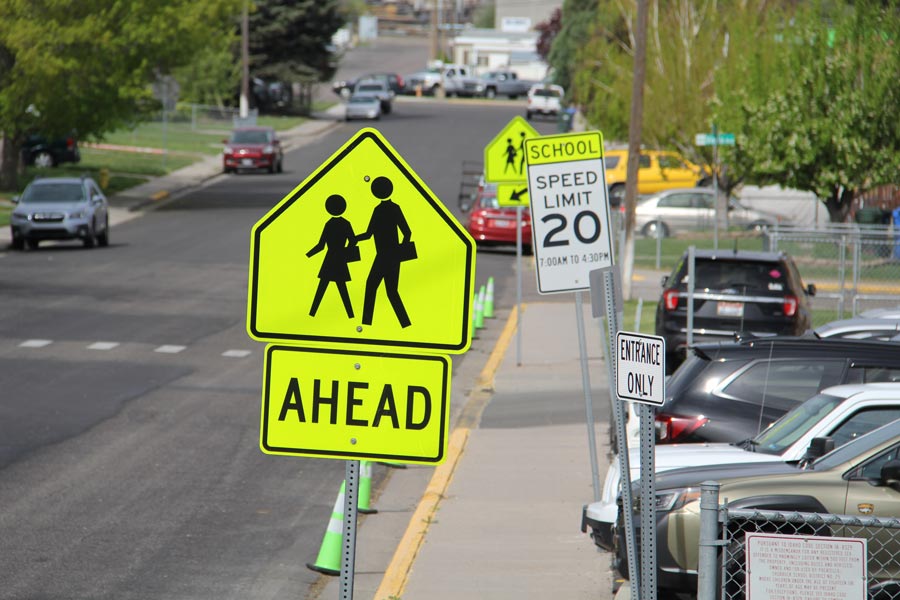
POCATELLO – Volunteers from a variety of backgrounds will join together this week to assess the safety and accessibility of walking to a Pocatello elementary school.
On Thursday at noon, a group of around 20 volunteers will conduct a walk audit of the area around Syringa Elementary School to document street conditions and potential safety concerns for kids and parents walking or biking to school. And then, at 5 p.m. that day, there will be a community meeting where parents and community members can share their personal experiences and insights.
The information gathered on Thursday will be compiled and ultimately inform a School Travel Plans Report, which the city and other community partners can use in grant applications.
And organizers don’t want to just stop there.
“We hope to do more schools, because … you should be able to walk to school. That’s a fun thing to do for the students, so we’d love to do more of these,” said Haley Reed, the Safe Routes to School coordinator for Southeast Idaho Council of Governments (SICOG).
The walk audit is being coordinated by SICOG, but the larger project is a collaborative effort between it, the city of Pocatello, Pocatello/Chubbuck School District 25 and Kimley-Horn, the engineering firm that will build the report.
Last year, Reed said that SICOG coordinated two other school travel plans, one in Bear Lake County and another in Dayton, in Franklin County. This will be the first school travel plan they’ve coordinated in Pocatello.
And for the Gate City’s first school travel plan, Reed said Syringa Elementary was chosen because it’s surrounded by a “dense neighborhood” and has smaller school boundaries than many other schools in the district.
“I knew that there were kids walking, which was one of the first things we were just looking at as a place to start,” Reed said, saying they approached it with questions like, “If these students are already walking, what are the conditions like for that? And how could we encourage more students to walk?”
Reed said that while some of the volunteers are SEICOG staff, the mix of participants includes officials from the school district, city staff, students from the Highland National Honor Society, and other community members.
“We just kind of (tried) to get a variety of ages and backgrounds, because everyone’s gonna look at this project a little bit differently, and that’s good. We want a variety of perspectives to get the most out of it,” Reed said.
Reed said there are a number of benefits that come with more kids walking to school, including savings in transportation costs for families and the district. But there are also benefits directly to the lives of students who walk to school and the community they’re a part of.
“It’s really beneficial for students when they can walk to school. … They’re better focused when they get some of that movement first thing in the morning. There are fewer absences and fewer tardies,” Reed said. “When they’re able to get themselves to school, they’re not reliant on other people. … You build a sense of community in the area when kids are walking together. They’re seeing their friends, they’re seeing their neighbors.”