



First advanced reactor criticality in the US announced at INL
Published at
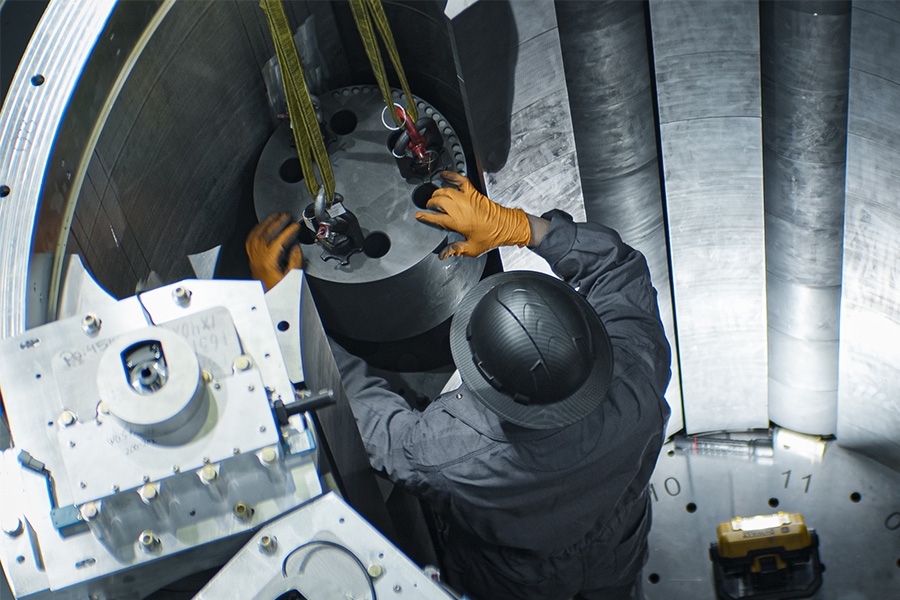
IDAHO FALLS — Antares Nuclear, a private nuclear fission energy company developing microreactors, achieved a zero-power fueled criticality demonstration on its Mark-0 advanced reactor at Idaho National Laboratory on Thursday, according to multiple news releases.
“It is fitting that on the eve of our nation’s 250th anniversary, we are witnessing a historic moment for American energy,” U.S. Energy Secretary Chris Wright said in a release from the Department of Energy. “For the first time in more than four decades, a new privately developed non-light-water reactor has reached criticality in the United States.”
This is the first of multiple advanced reactors anticipated to go critical by July 4 — a deadline set by President Donald Trump last year, according to the DOE release.
“Thank you to President Trump for his bold leadership and thank you to the bold scientists and entrepreneurs at Antares and Idaho National Laboratory who helped make this moment possible,” Wright said. “I look forward to seeing continued progress in the American nuclear renaissance.”
According to a news release from Antares, Mark-0 benefited from using the same nuclear fuel as the Department of War’s Project Pele program, an initiative to design, build, and demonstrate a prototype of a transportable micro nuclear reactor for military use. The TRISO (TRI-structural ISOtropic) fuel was fabricated by Virginia-based BWX Technologies, Inc.
The Mark-0 was authorized by DOE under the Reactor Pilot Program, with the U.S. Army integrated throughout as a future end user, the release states.
“We went from concept to a critical reactor, safely, in less than 12 months,” Jordan Bramble, CEO of Antares, said in the release. “That doesn’t happen by accident. The team treated the schedule as non-negotiable.”
“Our partners at Idaho National Laboratory and DOE-Idaho provided the design, regulatory, and facilities support that enabled this schedule,” Bramble continued. “This is a victory for Antares, for our partners, and for an American nuclear industry that is accelerating again.”