



It’s a fight for two lives: a mother is trying to survive for her unborn daughter
Published at | Updated at
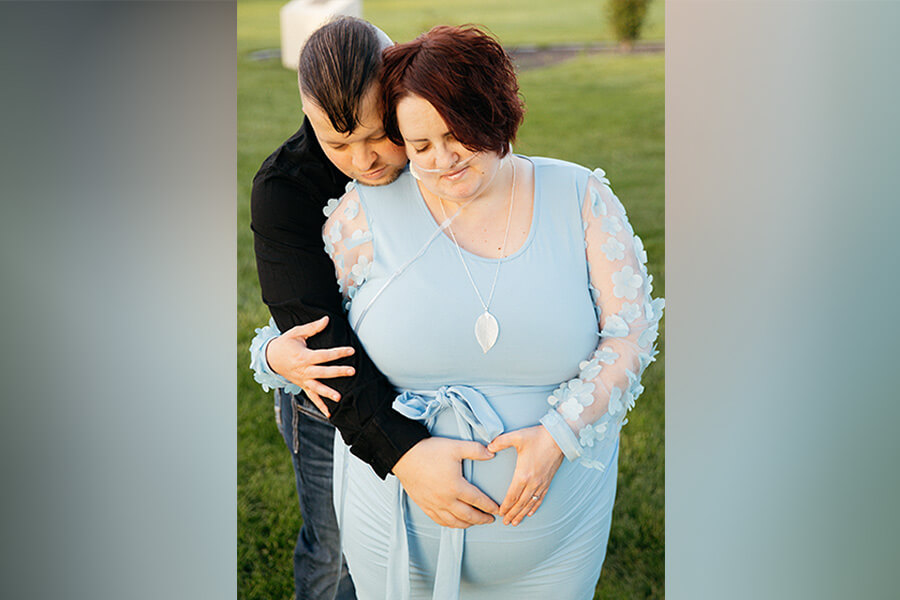
IDAHO FALLS — A local husband and his family are facing a situation they never imagined. He is fighting for his wife’s life while also trying to protect their unborn baby. They additionally have to relocate to another state on short notice for necessary care and have created a fundraiser for it.
Jasen, an army veteran, and Ambrosia Howell live in Idaho Falls and have been married for 10 years. Ambrosia was diagnosed with stage 4 bronchiolitis obliterans last year in Pocatello when she was just 29 years old. It’s the most severe stage and is life-threatening.
According to the American Lung Association, it’s a rare chronic lung disease that worsens over time. It leads to inflammation, irreversible damage, and scarring.
Ambrosia’s lungs are already badly scarred, and it makes it difficult for oxygen to reach her body. She has breathing problems because of it.
“I was told that I was very young to be on oxygen. This isn’t normal. Basically, be prepared for the worst-case scenario,” Ambrosia said, who is now 30.
She’s been on oxygen as an adult since 2024.
Background on her health
Ambrosia has fought medical challenges since the day she was born at just 24 weeks. She weighed only 1 pound 11 ounces. She survived a collapsed lung, underwent open-heart surgery at one day old, and spent her first year in the hospital.
She didn’t walk until age 2, after finally being taken off oxygen, and relied on daily breathing treatments until she was 5.

Despite those hardships, she went on to earn a bachelor’s degree in criminal justice and spent four years serving the Idaho Falls community in the mental health and crisis field. She also worked with foster youth in a group home.
“She loves helping people in the community,” Jasen said about his wife.
However, in 2021, her health began to deteriorate. After months of breathing problems and hospitalizations during the COVID-19 pandemic, doctors diagnosed her later with bronchiolitis obliterans.
“It’s been pretty difficult. I’ve had to really slow down my life. I’m not able to work right now, which is hard for me,” Ambrosia said.
Doctors also discovered her heart was under strain and diagnosed her with intermittent ectopic atrial rhythm.
She will need a double lung transplant. She was told to lose weight before she could get the lung transplant scheduled. She did lose some, however, something unexpected happened in life and has caused her to gain weight: a pregnancy, which is considered very high risk.

Pregnancy
Ambrosia is currently 26 weeks pregnant with their first child. Her due date is Sept. 5. It’s a girl, and they have named her Aurora. It was an unplanned pregnancy.
Before she was pregnant, she and Jasen were seeking answers from doctors about whether they could potentially have a child after she was diagnosed with lung disease. They had tried to have one before her diagnosis, but she wasn’t getting pregnant.
They had met with a maternal-fetal medicine doctor in Idaho Falls in June 2025, who manages high-risk pregnancies, to get an opinion.
“We wanted to start a family, and then we were told it would kill her. So we stopped trying, but of course, when you stop, that’s when it happens,” Jasen said.
According to medical notes provided to EastIdahoNews.com by Jasen and Ambrosia, the doctor in Idaho Falls had advised having a lung transplant before conception and recommended waiting one to two years post-transplant before conceiving.
“Though a lung transplant would require careful planning and close monitoring with a multidisciplinary team, the risk of maternal mortality would be significantly lower with improved pulmonary function,” the doctor wrote.
When Jasen and Ambrosia found out she was pregnant in January of this year, it came as a shock.
“It was a happy surprise, but it was also a scary surprise because we weren’t sure what was going to happen,” Jasen said.
Doctors in Utah
“Moving forward, I have to hope that I can survive and my baby can survive delivery,” Ambrosia said.
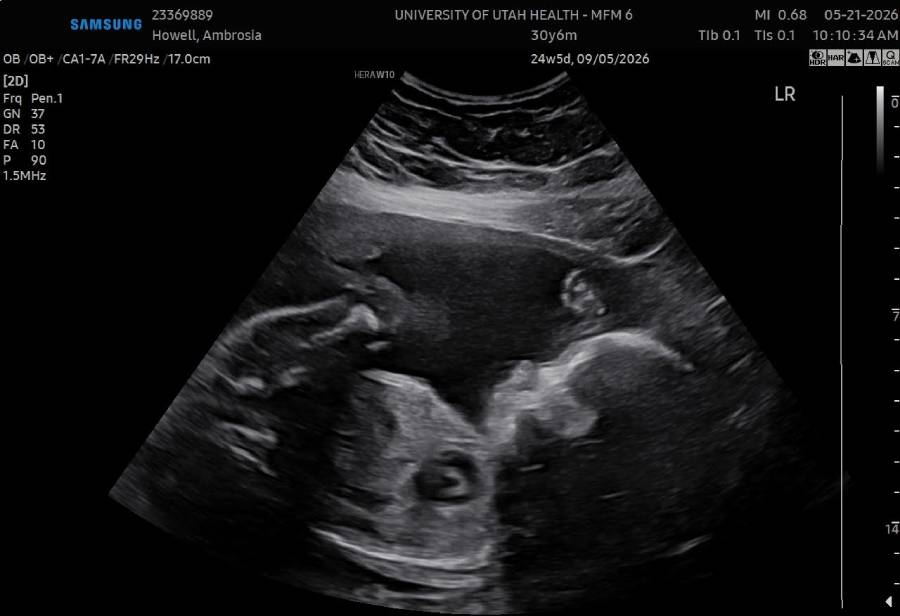
She has met with maternal-fetal medicine doctors at the University of Utah Health in Salt Lake City. She said she’s been told by doctors that there is a chance of her not making it through and to consider aborting the baby.
“I understand the risks. This is our first baby. I love our baby, and I think that as long as we have a great team, I think our baby deserves a chance to live,” Ambrosia said.
For her to have a shot at surviving along with her baby, she has to have an entire team in the delivery room when it comes time, she said.
“I have to have a maternal-fetal medicine doctor, a pulmonologist, a cardiologist, and an anesthesiologist all in the delivery room with me for us to live. I have to,” Ambrosia said.
Ambrosia said doctors have told her that it is likely she will deliver their baby early due to difficult breathing problems that she will experience. Aurora would be a premature baby and most likely spend time in the neonatal intensive care unit.
“Because of my condition and everything as the baby grows, which right now she is healthy, the less space my lungs have to function, eventually she is going to cut off the lung capacity that I do have,” Ambrosia said.

What experts say
EastIdahoNews.com reached out to University of Utah Health to speak with doctors about Ambrosia’s care, but we were denied an interview because she is one of their patients.
Instead, we talked with experts at UW Medicine at the University of Washington in Seattle, who provided insight on lung disease and high-risk pregnancies.
Dr. Guang-Shing Cheng is a professor of pulmonary critical care and sleep medicine at the University of Washington and Fred Hutchinson Cancer Center.
She said bronchiolitis obliterans is not a common condition.
“It’s a disease where the small airways get fibrosis that causes airflow obstruction. It’s not like asthma, but people have a really hard time breathing because basically their smaller airways are plugged up. It’s really, really hard to treat,” Cheng said.
Fibrosis is when lung tissue becomes damaged and scarred, according to the Mayo Clinic.
“Fibrosis is largely considered to be irreversible, although there are agents that can slow down the processes of lung fibrosis,” Cheng said.
The only real treatment is a lung transplant, but there are also potential complications with that.
“50 percent of people who get lung transplants get bronchiolitis obliterans at some point in their lung transplant journey. It remains a major problem. That’s the primary reason why lung transplants fail, because this can happen,” she explained.
However, for someone who has end-stage bronchiolitis obliterans, a lung transplant really is the only sort of cure.
“For some people, it’s temporary, but it definitely can prolong people’s lives,” she said.
EastIdahoNews.com asked her if a pregnant woman with bronchiolitis obliterans could pass it to the baby.
“No, the baby would not be born with bronchiolitis obliterans; it’s not that kind of disease. It’s not something you can catch,” Cheng said.

Dr. Alisa Kachikis is an assistant professor of maternal-fetal medicine at the University of Washington and helps deliver babies.
“High-risk pregnancies are any pregnancy where there’s a maternal condition or a fetal condition or a placental condition that makes the pregnancy higher risk for potentially adverse events, for either the mother or the baby,” Kachikis said.
Those pregnancies are often managed with an OB/GYN and typically a maternal-fetal medicine doctor. Kachikis said there are all sorts of conditions that can make a pregnancy high-risk and present problems potentially for the mom and for the baby.
Kachikis has seen pregnant women with lung disease before. It’s rare but more often seen at larger centers like UW Medicine. People from smaller or more rural communities in places like Wyoming, Alaska, Montana, and Idaho have come to receive care.
“We’ve taken care of people with different types of lung disease and different dysfunctions of the lungs… scarring in the lungs or the lungs not working properly. We also have taken care of people with lung transplants,” Kachikis said.
She told EastIdahoNews.com that any cardiac or pulmonary condition that is not well controlled before pregnancy is not going to get better in pregnancy.
“There are a lot of changes that happen in a pregnant person’s body during pregnancy that can make it really hard for the heart and lungs to function if they’re not functioning well at baseline. So, for example, in pregnancy, the total lung volume will decrease just because the uterus is getting bigger,” Kachikis explained.
However, there is a lot of care that goes into patients with rare conditions. She said they want to make sure the mother and baby stay safe during the whole process. In some cases, aborting the baby happens, but it’s a personal decision.
“We can provide statistics, we can provide recommendations about what a pregnancy might mean, depending on different conditions, and how a pregnancy might affect the pregnant person’s risk for illness or disability. We also call that morbidity or mortality or death during pregnancy,” she said.
“Obviously, the decision to continue a pregnancy or to terminate a pregnancy is a very personal decision, and that’s made by the pregnant person and potentially her family. There are conditions where the risk seems to be too high and some pregnant people do decide to terminate the pregnancy. I think there are many different factors that can go into that,” Kachikis added.
The fundraiser
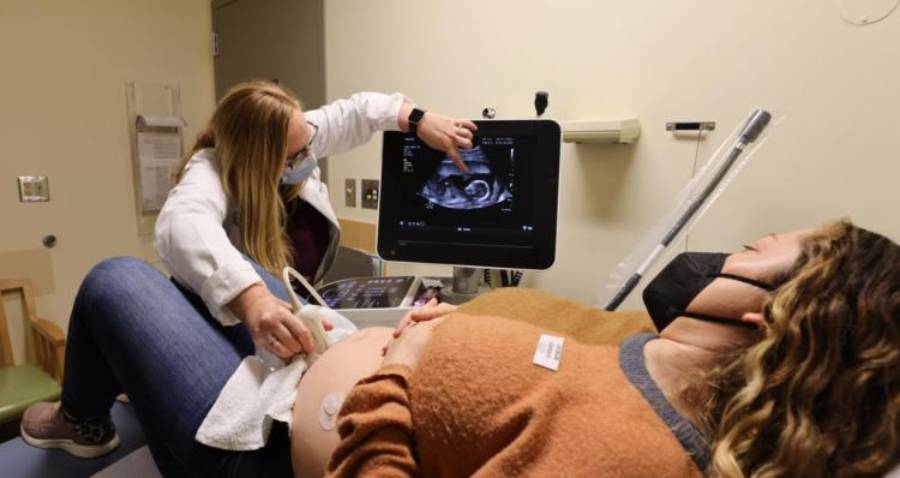
A recent doctor’s appointment in Utah showed that Ambrosia will have to have appointments every two weeks, which could easily turn into every week, due to the nature of her pregnancy.
Jasen and Ambrosia are now looking to move to Utah as soon as possible. All of it has put a financial strain.
They have set up a “Give a Hand” which is similar to GoFundMe, to try and raise money for travel expenses, medical bills and unforeseen issues. There is a goal to raise $500,000. As of Tuesday morning, $330 has been raised.
“Donations allow us to focus on survival—not choosing between medical care, safe travel, or basic needs. Every contribution helps give Ambrosia the chance to breathe long enough to meet her daughter, and gives Aurora the chance to grow up with her mom,” the Give a Hand reads.
“We’re not the type of people to ask for money. I like to work for what I earn, but I just don’t know how to earn that much money in enough time,” Jasen said.
“We appreciate anything. Anything really helps, and even just support and sharing our story to get it out there because I just…I’m just trying to survive, to be able to be a mom to my baby,” said Ambrosia.
The Give a Hand reads, “Adding to this already fragile situation, Ambrosia cannot yet receive a lung transplant because of her pregnancy. Transplant medications are too dangerous for an unborn baby, meaning doctors must work to keep her stable-sometimes by the narrowest margins—until Aurora can be safely delivered.”
“This has been a lot of stress on Jasen, and I know that he lays awake at night a lot, and stresses, and I stress too, because we just want to have a happily ever after, like other people, you know?” Ambrosia said.
Ambrosia and Jasen were Secret Santa recipients last year. Secret Santa gives away $1 million to deserving people in eastern Idaho during the holiday season. East Idaho News delivers the gifts. You can watch the video here.
RELATED | A Secret Santa brings relief to woman battling life-threatening lung condition




Our attorneys tell us we need to put this disclaimer in stories involving fundraisers: EastIdahoNews.com does not assure that the money deposited to the account will be applied for the benefit of the persons named as beneficiaries.