



Long-eared owls found nesting in east Idaho
Published at | Updated at
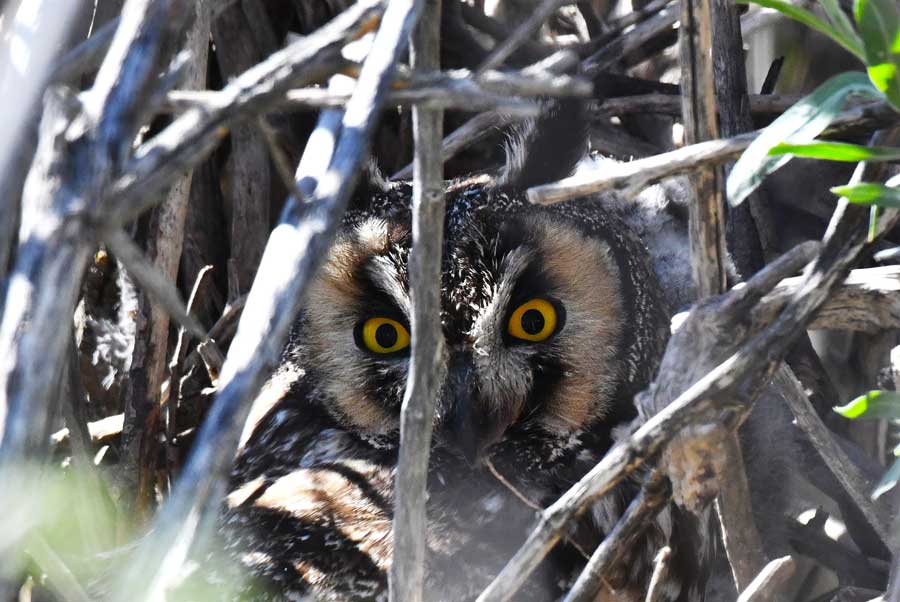
Two bright yellow eyes caught my attention as I was driving by a willow thicket at the end of May. I soon found they belonged to a female long-eared owl that was sitting on a nest, watching me over her right wing.
Knowing that the male was feeding her while she was incubating her eggs, I assumed he would be close by in the thickest of the thicket. It took me several trips back to the nest before I finally located him as he peered at me with one exposed eye.
Once a female long-eared owl starts incubating the five to seven eggs that she has produced, she rarely leaves the nest. It’s Dad’s job to bring her food.
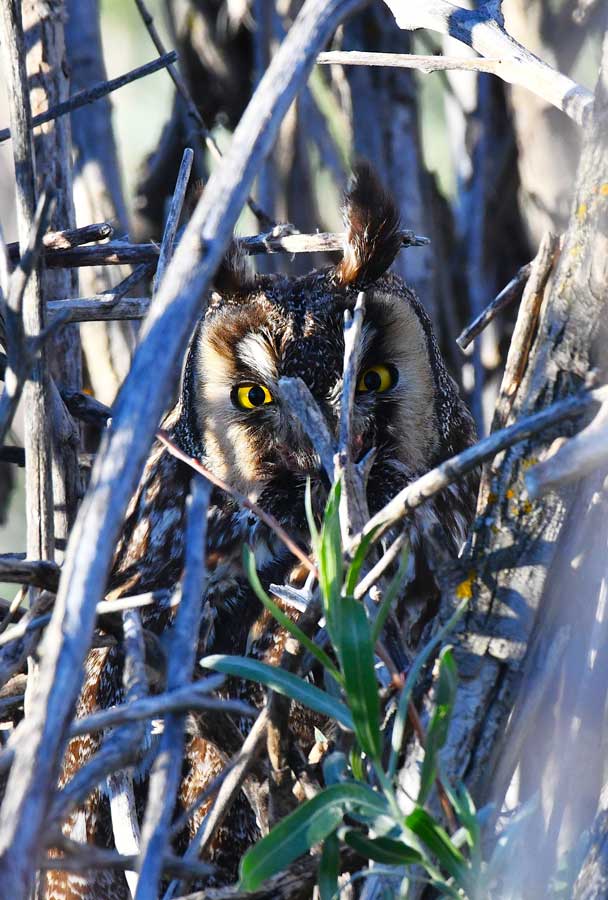
Later on, in the middle of June, I found another nest of long-eared owls as I searched other thickets of mixed trees.
This time it was much easier to locate the male because his hiding place was a large tree that had been “white-washed” by his poop as he roosted there during the days. I did not find the female until after the babies hatched and were scattered around the nest, beginning to gain a little independence.
One of the nests I have been watching has five owlets — the other one has four. It will take both parents hunting and gathering many rodents to feed these fast-growing babies.
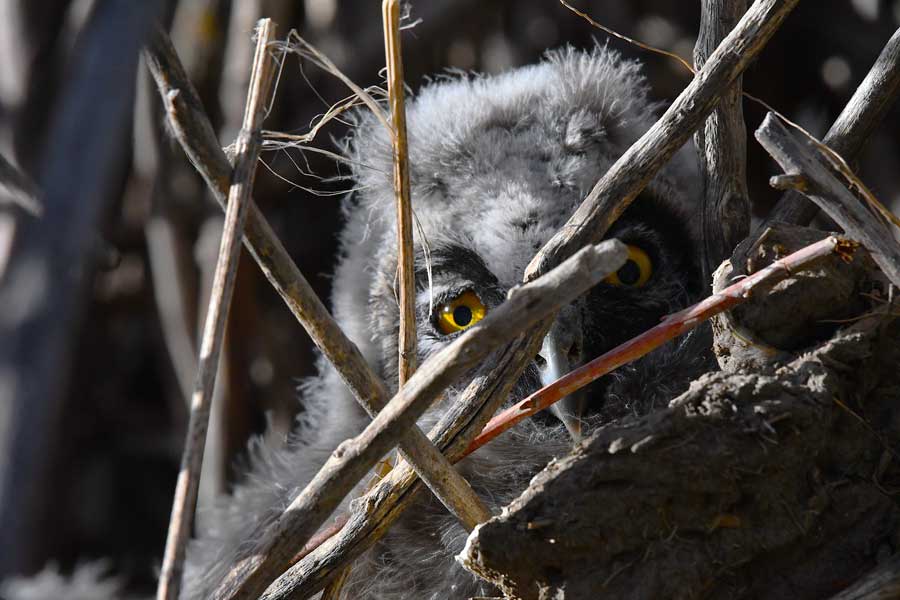
Long-eared owls are nocturnal and hunt mostly at night. But when food is scarce, or there are too many mouths to feed, they will also hunt during the day. Unlike burrowing owls, the male long-eared owl does not store any food before the babies are hatched.
Young long-eared owls leave the nest at 3 to 4 weeks old, but the parents continue to feed them until they are 10 to 11 weeks old. The time between the owlets leaving the nest and becoming independent hunters is the best time to find them in the trees. They’re typically roosting out on limbs near their old nest or even on the nest itself.
Occasionally, you will find the young owls on the ground. If you do, leave them alone. They will get back up into the tree on their own, either by kicking their feet or by grabbing branches with their beaks. It is amazing what they can do by themselves.
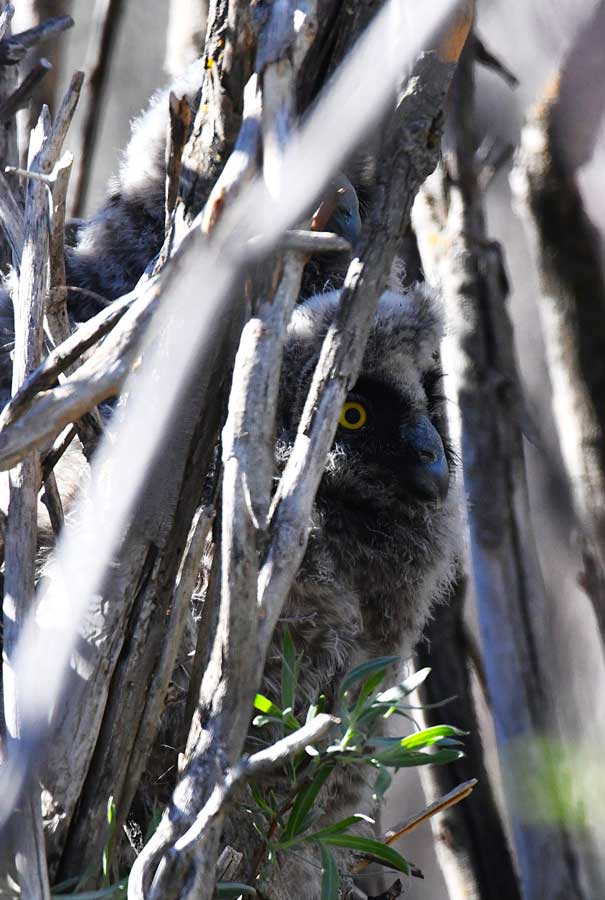
Adult Long-eared owls are masters at hiding themselves. They can elongate their bodies, and their coloring resembles bark on tree trunks. Many times, the only thing that gives them away is their bright yellow eyes.
These owls love to hide in dense thickets, but they need open areas to hunt the rodents that make up about 95% of their diet. Meadows or agricultural fields next to areas of thick brush are excellent areas for them to live — which makes Market Lake, Mud Lake, Camas National Wildlife Refuge and grazing areas around the Snake and Teton rivers great places for them.
Long-eared owls do not build their own nests, preferring to use old magpie, crow, raven or hawk nests that have been abandoned. Magpie nests seem to be their favorites because they can hide better in them.
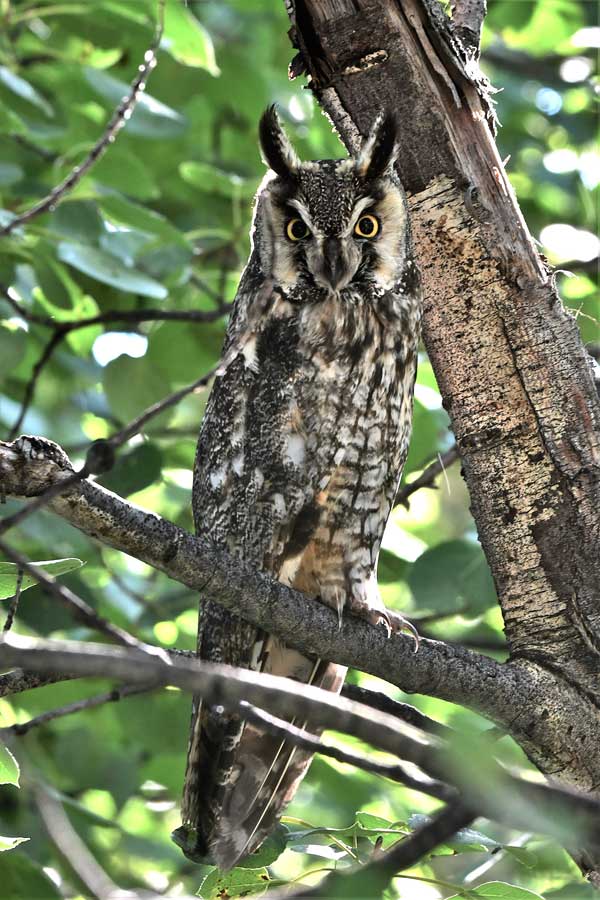
Sometimes during the winter months, long-eared owls will gather in large communal groups for roosting and hunting. This is called a “parliament of owls.” Over the last 10 years I have seen this happen twice, with about 20 owls along the windbreaks at Market Lake. They can be really fun to watch during these times.
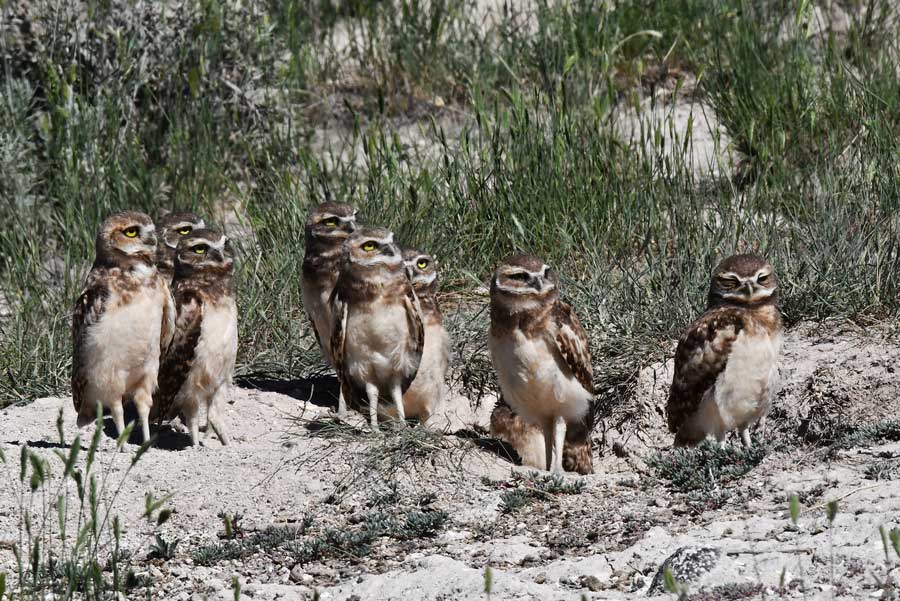
By the way, on a recent walk past ” target=”_blank”>the nest of six young burrowing owls I mentioned in my last column, I realized that I had inadvertently lied to you! There are not just six young owls in the nest — there are at least 10 and maybe even 11 owlets there. They have outgrown the single burrow and are starting to use several others.
Have a great and safe Fourth of July holiday!

Living the Wildlife is brought to you by Yellowstone Teton Territory. Experience 7,500 square miles of untamed wilderness in Eastern Idaho's Yellowstone Teton Territory. Where majestic peaks meet endless adventure, your perfect outdoor escape is waiting. Start planning at YellowstoneTeton.com.