



Victor mayor resigns amid heated recall fight
Published at | Updated at
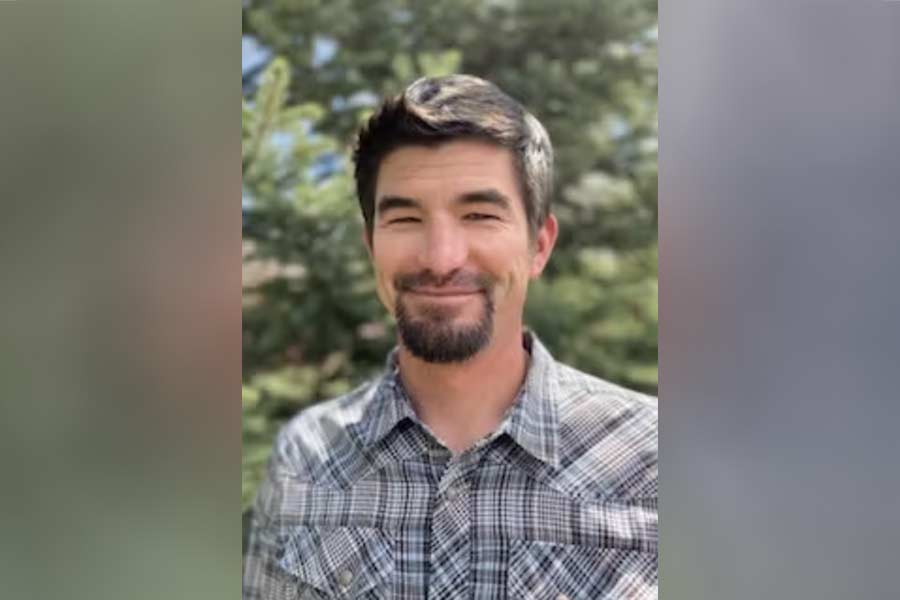
VICTOR – After six and a half years in office as Victor’s mayor, Will Frohlich is stepping down.
The city announced in a June 24 news release that Frohlich’s resignation is effective July 1. In a separate statement, Frohlich says his resignation is tied to a recall petition filed against him in March. Teton Valley News recently reported that Carol Nowakowski, a retired ski instructor at Jackson Hole Mountain Resort, started the petition process over the city’s handling of a years-long wastewater dispute with neighboring Driggs.
Frohlich declined to speak with EastIdahoNews.com, but in his previous statement, he expressed confidence that voters would decide in his favor, but ultimately decided it was in the best interests of the city to resign.
“I do not believe it to be in the best interest of the City to be embroiled for months in the defeat of the recall election, when so many more pressing issues face us,” Frohlich wrote. “After learning who is behind the recall effort and who is financing it, I believe the unfounded personal attacks will only persist. Out of respect for my family, our city, the community I care deeply about, and the responsibilities of my full-time career, I have decided I am no longer willing to remain involved in this dynamic.”
The Teton County Clerk’s Office, which processed the petition, says there were 298 valid signatures. Fifty-two signatures were not valid. Idaho law requires recall election petitions to be signed by 20% of registered voters in that county.
Had Frohlich not resigned, the question of whether to recall him would have appeared on the November general election ballot.
Wastewater dispute
The wastewater dispute between the cities of Victor and Driggs has been an ongoing conflict for decades. Since 2011, the cities have had a shared infrastructure agreement through the regional treatment plant in Driggs. Frohlich notes in his written statement that the agreement required “annual independent audits of shared wastewater finances.” The first audit did not happen until 2024, he says, and it “revealed serious and ongoing irregularities.”
Since then, the Driggs plant has faced multiple clean water standard violations.
“The Idaho Conservation League ranks the Driggs plant among Idaho’s 3 worst performing facilities,” Frohlich writes. “The EPA has documented over 3,700 permit violations. In both 2022 and 2023, the plant discharged 36,000 pounds of ammonia into the Teton River, which exceeds permitted limits by roughly 25 times.”
Teton Valley News reports state and federal officials demanded costly upgrades, which led to disagreements about cost, billing and concerns about future capacity.
On March 5, the city of Victor filed a lawsuit against Driggs after repeated financial disputes and miscommunication.
RELATED | Driggs in ‘hot water’ as City of Victor sues for alleged wastewater pollution violations
“The lawsuit was only filed after a 9-hour failed mediation in which Driggs was unwilling to entertain a fair and equitable path forward on a joint plant,” writes Frohlich.
The Victor City Council recently annexed about 40 acres to build a new wastewater treatment plant there. The council sought judicial approval for a $35 million loan to fund it.
Under Idaho law, local governments cannot incur debt without a two-thirds majority consent from voters. The same law allows municipalities to bypass the election requirement if the expense is “ordinary and necessary.” In that case, a judge, rather than voters, authorizes the city to incur debt.
In an interview with Teton Valley News, Nowakowski claimed the city’s decision to seek judicial approval was not warranted because it bypassed the will of the voters. She said Frohlich “showed a ‘lack of leadership’ by suing Driggs rather than pursuing a cooperative solution; and that the proposed plant site … conflicts with the city’s commitment to preserving open space and agricultural land.”
“They’re saying that this is a necessary expenditure, and the reality is it’s not, because we’re getting our wastewater treated now, and it will continue to be treated through January of 2030,” Nowakowski said. “We’re suing our neighbors and the citizens I’ve talked to are not in support of that. We need to let the leadership know … and a recall is one of the tools to do that.”
In the same article, published months before Frolich’s resignation, the mayor responded to these assertions, saying that “recall elections are intended for situations involving serious misconduct or abuse of office, not to settle policy disagreements.”
“If recalls become the default response whenever people disagree about a policy decision, it risks unraveling the stability that local government depends on,” he said.
After his resignation, Frohlich wrote that he disagrees with the assertion that he’s “been the barrier to negotiations between Victor and Driggs” and that he looks forward “to seeing how things go following my departure.”
“Under the current agreement between Driggs and Victor, Driggs is obligated to treat Victor’s wastewater until 2041. In the interim, it is my hope that the city … will continue to work towards building its own independent cutting-edge facility,” Frohlich writes. “Building state-of-the-art infrastructure will ensure that the river stays clean for future generations, as well as give Victor the ability to provide transparent financials and accurate record keeping. If I have done my part to help facilitate that end, then I am happy to step down.”

What happens next?
Frohlich was elected mayor in 2019 with 70% of the vote, according to Jackson Hole Radio. Before that, he served on the Victor Planning and Zoning Commission and the Victor Urban Renewal Agency. He was elected to the Victor City Council in 2015.
In the news release announcing Frohlich’s resignation, the city acknowledged Frohlich’s efforts “to secure Victor’s wastewater future” and thanked him for his “steady leadership” and years of public service.
“Under Idaho law, the City Council President assumes the role of acting mayor upon the effective resignation of the mayor. At its July 1 meeting, the City Council will formally recognize Council President Stacy Hulsing as acting mayor and consider next steps in the appointment process,” the city says in the news release.
The City Council is expected to appoint Frohlich’s replacement at its July 8 meeting. He or she will fill the remainder of Frohlich’s term, which is up for election in 2027.
If a member of the City Council is selected for the role, it will create a vacancy, which the council will fill through a public application and interview process.