



Driggs in ‘hot water’ as City of Victor sues for alleged wastewater pollution violations
Published at | Updated at

VICTOR — The City of Victor is suing the City of Driggs, alleging that Driggs did not hold up its end of the deal when agreeing to provide a working wastewater treatment plant for both cities.
Victor is alleging:
- Breach of contract for failing to provide a wastewater treatment plant sufficient to treat the water to legal standards and to treat the wastewater to legal standards
- Breach of contract for failing to comply with audit requirements
- Breach of contract for over-billing the City of Victor
- Breach of the implied covenant of good faith and fair dealing
- Unjust enrichment
- Breach of contract for breaching the mediation agreement
EastIdahoNews.com has reached out to both mayors and multiple city officials from Driggs and Victor for comment.
Driggs Mayor August Christensen provided the following statement:
“On Thursday night at 7 p.m., the City of Victor filed a legal complaint against the City of Driggs in regards to the wastewater treatment agreement between the two cities. “The City of Driggs is confident with our legal position and will let the case play out in the court, which will likely take multiple years. We will not be responding to media inquiries regarding Victor’s specific complaints, but will make the city’s official responses available on our website.”
Christensen continued, providing more information about the wastewater treatment plant and her feelings about the lawsuit.
“Past and future information about the wastewater treatment plant lives on the POOP (public outreach on plant) page on the Driggs website. As mayor of Driggs, I am very disappointed with the City of Victor’s chosen path to fund a new wastewater treatment plant through a lawsuit against the City of Driggs, especially after multiple efforts where Driggs extended significant accommodations to address their concerns,” said Christensen.
“This almost certainly severs the long-term partnership with our community neighbor for future endeavors,” the mayor continued. “In the meantime, we continue to move forward with upgrading and expanding the Driggs wastewater treatment facility to serve our residents and businesses in Driggs. We will also continue to accept the effluent and meet the near-term needs of the City of Victor per the wastewater treatment agreement.”
EastIdahoNews.com has not heard back from the City of Victor. If we do, we will update this article.
The allegations
According to the lawsuit filed on March 5, the City of Driggs and the City of Victor executed an agreement on Oct. 13, 1999, known as the “1999 agreement,” in which Driggs agreed to “provide a wastewater treatment plant and wastewater treatment services for Victor in exchange for Victor agreeing to share some of the costs.
“Driggs’ wastewater treatment plant was insufficient to treat the water to the U.S. Environmental Quality Agency, Idaho Department of Environmental Quality, and the National Pollutant Discharge Elimination System Permit standards,” Victor claims in the lawsuit.
Because of these alleged violations, the City of Driggs reportedly commissioned an engineering report in 2006 to upgrade the wastewater treatment plant, which would utilize a “multi-stage activated biological process” to treat the water. In the lawsuit, the City of Victor refers to this process as the “Unproven System.”

The City of Victor claims the process was “not utilized” and was “untested in cold weather climates, such as the climate in Driggs.”
At the time, Victor city leaders shared their concerns with the City of Driggs about using the system in cold weather, but Driggs reportedly “represented to Victor that the Unproven Design would be sufficient to treat the wastewater to legal standards.”
According to the lawsuit, Driggs city leaders, without the City of Victor’s consent, entered into an agreement with Aqua Engineering to design a wastewater treatment plant using the “Unproven System.” Victor claims this violated the National Pollutant Discharge Elimination System Permit.
In 2011, the two cities entered into a new agreement — the “Inter-City Agreement” — to replace the 1999 agreement. The lawsuit claims that with the new agreement, the City of Driggs “promised to accept, convey and treat the wastewater provided to it from Victor.”
In exchange, the City of Victor agreed “to reimburse its pro rata share of the debt service to design and construct the upgraded WWTP (wastewater treatment plant) to Driggs, as well as its pro rata share of operations and maintenance costs to operate any upkeep of the upgraded WWTP.”
“The upgraded WWTP was never capable of treating the wastewater to legal standards,” Victor claims in the lawsuit.
Polluting the water
The City of Victor states in the lawsuit that the City of Driggs “improperly discharged and continues to improperly discharge treated wastewater into Woods Creek,” which flows downstream into the Teton River, Henry’s Fork, the Snake River, the Columbia River, and ultimately ends in the Pacific Ocean.
Victor claims that the wastewater treatment plant’s failure to meet legal wastewater treatment standards was caused by Driggs’ inability to properly operate the plant.
According to the lawsuit, the City of Driggs has “racked up over 3,700 EPA violations between November 2012 and June 17, alone, and has continued to rack up violations to the present day.”
Victor also claims that, according to the Idaho Conservation League, Driggs’ wastewater treatment plant was the second-worst polluting facility in Idaho from 2014 to 2016. From 2015-2018, it was reportedly the third-worst, and from 2017-2019 and 2021-2023, it was alleged to be the worst wastewater treatment plant in terms of pollution.
In 2024, Driggs’ wastewater treatment plant was reportedly the second-worst polluting facility in Idaho, according to the Idaho Conservation League.
The lawsuit states that in April 2018, the City of Driggs entered into a Consent Agreement and Final Order with the EPA, agreeing to resolve the numerous violations and bring the city into compliance with the National Pollutant Discharge Elimination System Permit, but Victor city leaders say the city “ultimately failed to perform all of these obligations.”
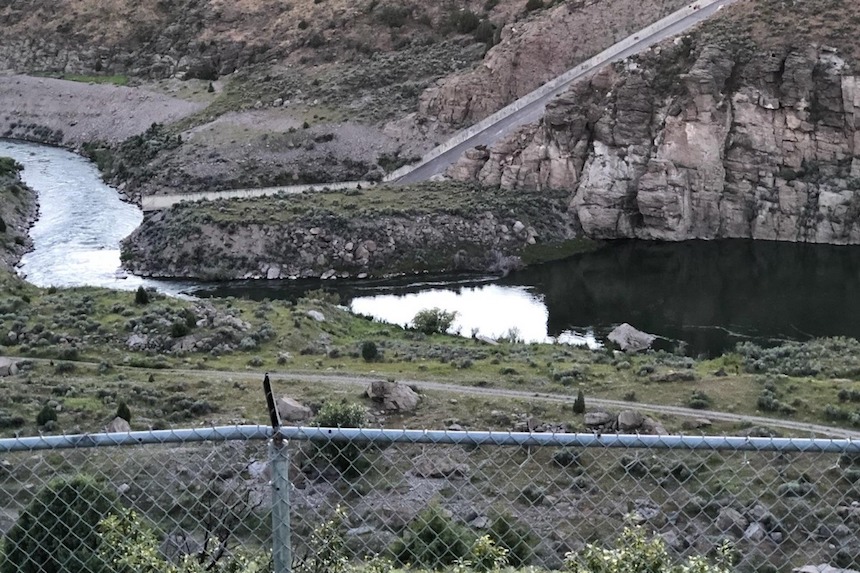
From 2020 to 2021, the City of Victor says the Idaho Department of Environmental Quality informally offered Driggs an approximately $20 million loan to upgrade its wastewater treatment plant, with an understanding that the loan would be forgiven.
Victor says the City of Driggs did not notify or consult Victor city leaders about this and declined to apply for the loan. Victor also alleges that Driggs city leaders refused to upgrade the wastewater treatment plant and “recklessly and intentionally continued to pollute Woods Creek and the Teton River.”
In October 2022, the U.S. Department of Justice reportedly filed a complaint against the City of Driggs in federal court for “thousands of violations” of the discharge permit and sought over $160 million in damages.
The DOJ alleged that, in addition to polluting Wood Creek, Driggs was failing to sample the water required by the discharge permit, failing to comply with the required water-sample chain-of-custody procedures, and continuing to violate the Clean Water Act.
In January 2025, the DOJ and the City of Driggs reportedly agreed to a consent decree requiring Driggs to comply with regulations and stop polluting the water. The decree required Driggs to upgrade the existing wastewater treatment plant and to submit quarterly reports about sampling and discharge monitoring.
According to multiple 2025 quarterly reports, the City of Driggs violated the decree by failing to submit the reports on time and by failing to implement the sample monitoring procedures.
Overpaying
According to the lawsuit, the City of Driggs stated in the 1999 agreement that it would “bond for and pay all costs associated with reconstruction of the existing facility.”
In 2024, Victor insisted on an audit of the wastewater treatment plant, which Victor city leaders claim Driggs did not comply with.
Eventually, an auditor reportedly found that “the City of Victor has been overpaying on the debt related to the DEQ loan for improvements made to the Wastewater Treatment Facility and trunk line upgrades.”
In response, the Idaho Department of Environmental Quality forgave $232,948.35 in loans used to construct upgrades to the trunk line at the wastewater treatment plant.
The City of Victor also claims it was over-invoiced for multiple services related to Driggs’ wastewater treatment plant.
In 2024, the cities attempted to reconcile through a new proposed agreement regarding payment for the wastewater treatment plant. Driggs gave Victor three options:
- Share in the costs of the wastewater treatment plant upgrades;
- Have Driggs pass through Victor’s proportionate share of costs of the wastewater treatment plant upgrade to its users; or
- Terminate the Inter-City Agreement and build its own plant.
After Victor city leaders looked into the possibility of building the city’s own wastewater treatment plant and decided against imposing the costs of the upgrades on the city’s residents, they notified the City of Driggs that they would attempt to renegotiate its current agreement. Victor then requested another contract proposal and says that it was received seven months later.
According to the lawsuit, the Driggs’ proposed contract did not require Victor or its residents to pay for Driggs to treat Victor’s wastewater, making it “impossible to determine the cost to Victor.”
Under the new proposed agreement, Victor city leaders say the city would have been required to “pay a disproportionate amount of Driggs’ violations and for upgrades to a plant that were necessitated because Driggs failed to perform its contractual duty to provide a plant capable of treating Victor’s wastewater and to sufficiently treat the wastewater.”
After further negotiation, the City of Victor notified the City of Driggs of its decision to terminate the Inter-City Agreement. Due to this, Victor city leaders claim that the City of Driggs has “demanded that Victor be disconnected from Driggs’ wastewater treatment plant by Jan. 10, 2029.
The City of Victor says that date does not allow it ample time to “create a solution for its wastewater needs.”
The lawsuit claims that from then on, Driggs “refused any kind of joint partnership agreement, fair customer agreement, or any shared use arrangement with Victor.”
The City of Victor is asking the court to award it with compensatory damages, disgorgement of all amounts Victor paid to Driggs, prejudgment and post-judgment interest, along with costs and attorney fees.
The City of Victor also moved for a change of venue from Teton County to Bonneville County, as both Victor and Driggs are in Teton County.
The City of Victor told the court that there is a “high likelihood and inherent risk that the jury pool will be compromised of impartial or biased citizens due to the personal financial incentives impacted by the outcome of the lawsuit and media coverage.”
The City of Driggs denies all allegations of wrongdoing in an answer to the lawsuit. Driggs also opposed the motion for a venue change, stating that “there is no evidence in the record in this case that a fair trial cannot be held in Teton County.”
The City of Driggs claims in court documents that the City of Victor is “forum shopping” because it believes that Victor’s “decision to file this lawsuit is unpopular among its own residents.”
District Judge Daniel Clark later ordered that the case be held in Jefferson County. A scheduling conference has been set for July 13.