



Chief Justice Roberts transfers complaint against Idaho Falls federal judge to 4th Circuit
Published at | Updated at
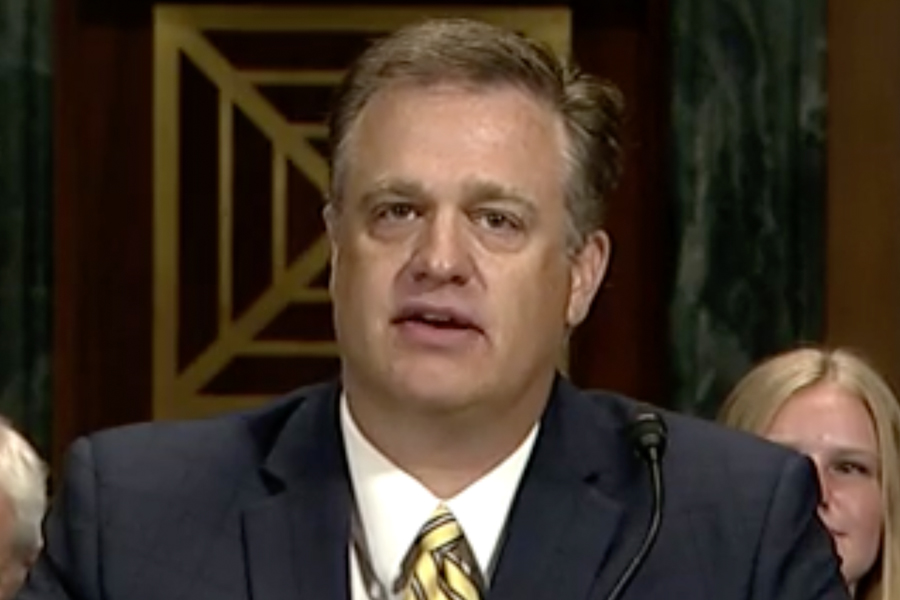
IDAHO FALLS – A case against 9th Circuit Judge Ryan Nelson of Idaho Falls has been transferred to the Fourth Circuit Court of Appeals.
In a Wednesday news release, the U.S. 9th Circuit Court says that U.S. Supreme Court Chief Justice John Roberts transferred the judicial conduct and disability complaint against Nelson to the 4th Circuit for further review.
Chief 9th Circuit Judge Mary H. Murguia made the transfer request in accordance with Rule 26 of the Rules for Judicial-Conduct and Judicial-Disability Proceedings. Murguria filed the complaint on June 8 in response to a June 5 story from the Idaho State Journal, reporting Nelson was facing misdemeanor battery and malicious injury to property charges related to a heated clash in an Idaho Falls parking lot.
The incident originally happened on April 2, according to court documents. Nelson was involved in a verbal dispute over parking when he allegedly grabbed another man’s glasses from his head and threw them across the parking lot.
He tried to grab the man’s phone from his hand, and as the man tried to walk away, Nelson challenged him to a fight, court documents state. When the other man tried to pick up his glasses, Nelson allegedly stomped on them.
An officer said that Nelson admitted to grabbing the man’s glasses and stomping on them, but said Nelson claimed he did not touch him.
The case against Nelson was originally filed on April 22. Idaho Falls City Prosecuting Attorney Zachary Jones charged Nelson with misdemeanor battery and malicious injury to property in Idaho’s 7th Judicial District Court. Nelson entered a not guilty plea to both charges on May 13, according to the Idaho State Journal.

Nelson is represented by Curtis Smith of the law firm Smith, Woolf, Anderson and Wilkinson.
“This conduct isn’t representative of who Ryan is, and we are going to see the process through,” Smith told EastIdahoNews.com in June.
RELATED | Hearing vacated for 9th Circuit judge charged with battery and injury to property
Nelson is scheduled to appear for a pretrial conference on July 16 before 7th District Magistrate Judge John C. Dewey at the Bonneville County Courthouse.
Transferring the case to the 4th Circuit allows the investigation to proceed with judges who have no professional relationship with Nelson and it recuses 9th Circuit judges from ruling on a case involving one of their peers.
Rule 26 outlines the recommended reasons for transferring a case, which often occur in high-profile cases to prevent any potential conflicts of interest.
“Rule 26 authorizes the transfer of a complaint proceeding to another judicial council selected by the Chief Justice. Such transfers may be appropriate, for example, in the case of a serious complaint where there are multiple disqualifications among the original judicial council, where the issues are highly visible and a local disposition may weaken public confidence in the process,” according to federal rules about judicial conduct.
In her transfer request, Murguia explained that the initial complaint is “publicly disclosed ‘to maintain public confidence in the judiciary’s ability to redress misconduct or disability.'” Under federal law, all subsequent misconduct proceedings will be confidential.
Going forward, 4th Circuit Chief Judge Albert Diaz will conduct an initial review of the complaint to determine whether it warrants a full investigation. Judge Nelson may be asked to submit a written response during that process.
During an investigation of judicial misconduct, the U.S. Courts webpage says a special committee of judges is appointed to investigate the complaint and submit a report with recommendations to the circuit judicial council. Remedies for misconduct can include the circuit judicial council censuring or reprimanding the judge, publicly or privately, and temporarily withholding cases from the judge.
If the circuit judicial council concludes that the judge engaged in conduct that might constitute grounds for impeachment, the council must refer the complaint to the judicial conference. If the judicial conference finds possible grounds for impeachment, it submits a report to the U.S. House of Representatives. Federal judges have lifetime appointments and can only be removed from office through impeachment and conviction by Congress.
RELATED | 9th Circuit Court judge from Idaho Falls returning home to speak about religious freedom
Nelson, 52, was appointed to the 9th Circuit Court by President Donald Trump in 2018. He replaced Judge N. Randy Smith of Pocatello.