



Fire code dispute pits Bear Lake business against fire district
Published at
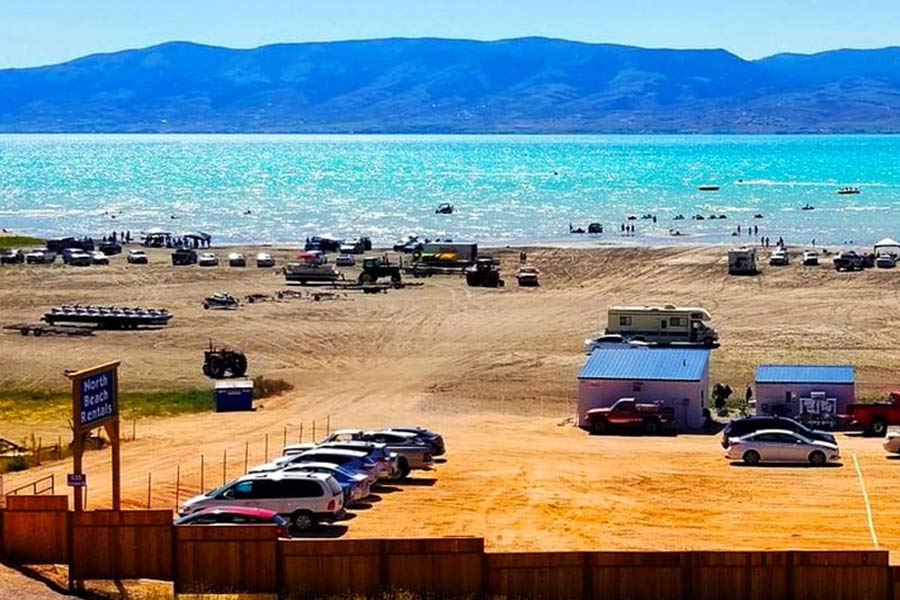
ST. CHARLES – An Idaho watercraft rental company near Bear Lake is engaged in ongoing legal proceedings with the area’s fire district over what fueling practices are allowed under fire code.
The dispute is between North Beach Rentals, which operates in both Idaho and Utah, and the Bear Lake County Fire District. After negotiations between the two parties stalled, North Beach Rentals turned to the court system.
“We tried to negotiate, and we told them, ‘I guess we’ll let a judge decide.’ You know, ‘What else can we do if you’re not willing to work with us?’” said Brian Hirschi, owner of North Beach Rentals.
Both citing the ongoing legal proceedings, Bear Lake County Fire District Chief Mark Parker and Idaho State Fire Marshal Knute Sandahl told EastIdahoNews.com they could not comment on the dispute.
The fueling issue
Hirschi said North Beach Rentals opened about 23 years ago, allowing customers to experience boating on Bear Lake without owning a boat. The company owns a fleet of about 45 watercraft, including boats and personal watercraft, that customers typically rent for about two to four hours.
To fuel the watercraft, the rental company used to drive a pickup truck carrying a 100-gallon fuel tank down to the beach and into the shallow water, which Hirschi described as “inches deep.” From there, employees would fuel a vessel while it was still in the water. This helped the company avoid the time-consuming process of hauling the watercraft out of the lake to refuel them.
“That’s worked great forever. (We) never had a fuel spill, never had an issue, never had a fire,” Hirschi said.
Hirschi said the fire district’s previous chief had authorized this method of fueling and came out to inspect the process annually.
This changed “a few years ago,” Hirschi said, after Parker became fire chief and first inspected North Beach Rentals’ operations. Hirschi said Parker watched the refueling process, then approached his employees and wrote his company a ticket.
“He told my employees … ‘You can’t fuel that way. You’re not a certified marine fueling station, and you have to pull your watercraft out on trailers and take them clear up to your upland property to fuel there’ — which is 2,000 feet away,” Hirschi claims.
For Hirschi, this was a non-starter.
North Beach Rentals uses farm tractors to load and unload boats from the lake, which he said is “a very dangerous and difficult thing.”
“If the wind comes up, people can get their fingers smashed, loading and unloading boats. Lots of employees get injured, so it’s very dangerous,” Hirschi said.
This also means the rental company cannot rent watercraft back-to-back due to the more time-consuming refueling process. Hirschi estimates this results in his company receiving 30% to 40% less business.
After litigation, a judge ruled in favor of the fire district, finding that North Beach Rentals was not in compliance with the International Fire Code, meaning that Hirschi is no longer allowed to use the in-water fueling method. He said he decided not to appeal.
Then, about a year ago, fire officials on the Utah side of the lake also found North Beach Rentals not in compliance with fire code in its operations on the lake’s south side. Hirschi then entered into negotiations with Utah authorities, as well.
A possible solution
In the meantime, Hirschi has come up with a solution that he argues complies with the International Fire Code. He wants to implement a mobile fuel tank trailer that employees can tow down to the beach during the day and back up to the property in the evening.
Hirschi said this trailer would have a capacity of about 900 gallons of fuel within double-wall containment. It would be designed specifically as a mobile fueling unit for marine environments, he said.
Hirschi said that he commissioned a marine engineer from Utah to create a report analyzing why a mobile-certified fuel trailer complies with fire code requirements. Utah officials reviewed that report and approved the proposal in late May, the rental business owner said.
However, that was not the same conclusion reached by Idaho’s state fire marshal.
Sandahl did not approve the mobile fueling unit for Hirschi’s business. Rather, Parker and Sandahl are requiring Hirschi to install a fixed fuel line system to become certified as a marine fueling station.
“If an unfortunate spill or fire were to occur, the public would be exposed to significant risk of injury or worse. Environmental damage from a leak would potentially cause long-term impacts to the state’s resources and property,” Sandahl said in an email exchange between the fire district and Hirschi, provided to EastIdahoNews.com by Hirschi.
But Hirschi argues that his fuel trailer would be safe and is allowed under the fire code. Furthermore, he argues that the state of Idaho is focused on the fixed-line system, even though another option exists.
“(They’re) just stuck on the one option, and (they) just ignore the other option. Well, there’s two options here. You’re stuck on this one option right here. The code says it’s allowed,” Hirschi said.
The complexity of the code
The crux of the disagreement is that the State of Idaho requires Hirschi to comply with Chapter 23 of the fire code, which regulates marine fuel dispensing. But Hirschi argues that Chapter 57 of the code also applies, as it contains rules governing mobile fueling stations.
Specifically, Hirschi refers to Section 5706.5.4.5, which allows for mobile fueling in places where the fire code official has approved it.
EastIdahoNews.com reviewed the International Fire Code to verify this information, and we also found a section at the beginning of Chapter 57 may direct back to Chapter 23.
In Chapter 57 (5701.2: Nonapplicability), it states, “This chapter shall not apply to liquids as otherwise provided in other laws or regulations or chapters of this code.” The section then lists items that are not applicable to the chapter. In its first point, it states, “Specific provisions for flammable liquids in motor fuel-dispensing facilities, repair garages, airports and marinas in Chapter 23.”
Additionally, Hirschi argues that installing the fixed-line fueling system the state is proposing would be more costly and less efficient in his particular geography, where the line would run through the heavily trafficked beach area and be at risk of damage.
“We’re gonna have 2,000 feet of fuel line sitting on the sand, running from our tank up above down to the water, and we’ll just put a (fuel) dock out, and we’ll fuel that way. I mean, I don’t think it’s a very good solution,” Hirschi said.
He also argues that this solution would be more labor-intensive, as his company would have to “pull up that fuel line every year and somehow try to protect it so that it doesn’t get damaged.”
But this solution may not comply with the International Fire Code either.
In Chapter 57 (5703.6.8: Piping supports), it states, “Piping systems shall be substantially supported and protected against physical damage and excessive stresses arising from settlement, vibration, expansion, contraction or exposure to fire.”
This seems to indicate that Hirschi would have to take additional measures to protect the piping, like burying it underground.
Searching for a solution
If Hirschi doesn’t come to an agreement with Idaho fire officials, it could mean two completely different setups for the same watercraft rental business on the same lake.
In early June, Hirschi said he made an offer to the Idaho fire district via email, stating that if the issue was resolved by June 15, he would donate $10,000 for the purchase of fire equipment. The issue has not been resolved, and legal proceedings are ongoing.
“I believe being able to donate this money to the Bear Lake County Fire District would be a win-win situation for all,” Hirschi said.