



Idaho sugar beet growers face a bitter harvest — and an uncertain future
Published at | Updated at
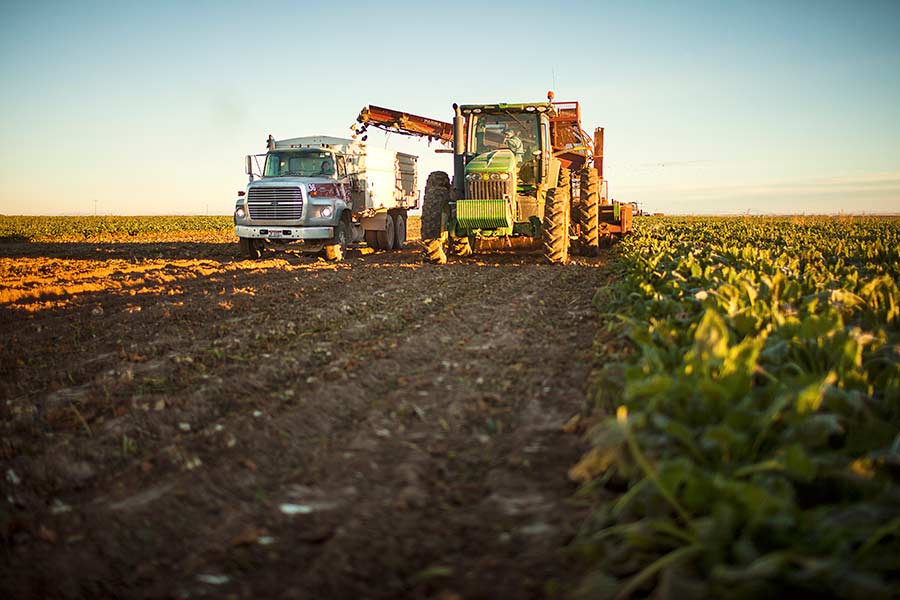
EDITOR’S NOTE: “From the Field” is a weekly feature bringing you the latest agriculture news in eastern Idaho.
IDAHO FALLS – As spud harvest is winding down across Idaho, the sugar beet harvest is ramping up.
Sugar beets are Idaho’s No. 5 agricultural commodity, according to a 2025 report from the Idaho Farm Bureau Federation. Sugar beets brought in $508 million in farm-gate revenue in 2024 and provide nearly 20% of the nation’s supply.
More than 400 farmers in Idaho typically grow about 170,000 acres of sugarbeets each year. They are sold to Amalgamated Sugar Co., which is owned by growers in Idaho, Oregon and Washington.
Duane Grant, the second-generation owner of Grant 4-D Farms in Rupert, grows thousands of acres of sugar beets annually. He tells EastIdahoNews.com the initial stages of harvest got underway in early September. Harvest season is in full swing as of Oct. 5, and Grant is anticipating a 10% reduction in yields after a difficult year.
An 8-day cold snap in late April forced him to replant 90% of his crop, shortening the growing season by at least a month.
“We’ve never had that kind of damage. It’s by far the worst frost damage I’ve experienced in 45 years in this business,” Grant says.
Wildfires this summer also took a toll. Grant says dense smoke in the air for about three weeks filtered out solar energy necessary for growth.
The water shortage has been an ongoing struggle for farmers across the board in 2026, forcing many to make significant cutbacks in irrigation.
RELATED | Eastern Idaho spud harvest underway as farmers grapple with drought, heat
Grant says they’ve had to divert water from their barley crop to ensure they had enough water for potatoes and sugar beets.
“We chopped off the barley before it was mature and then concentrated the available water on sugar beets and potatoes. By doing that, we were able to complete the full growing cycle,” says Grant.
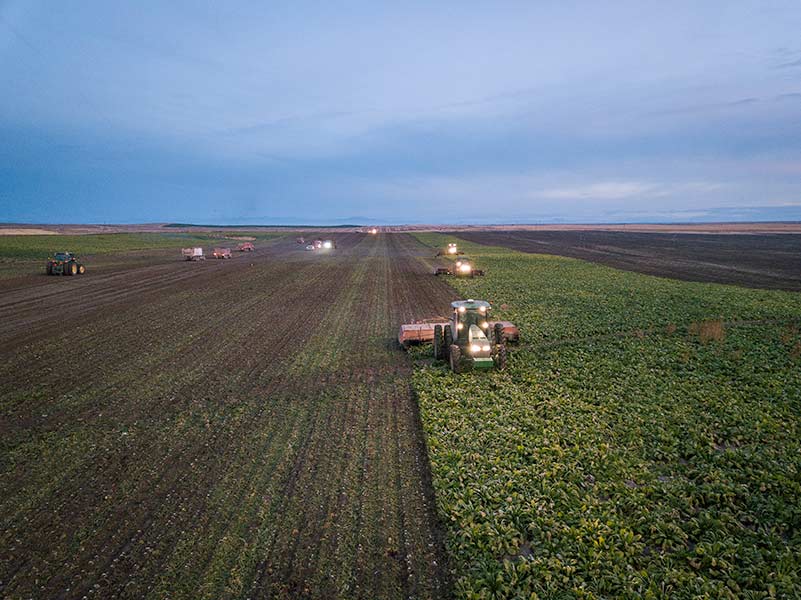
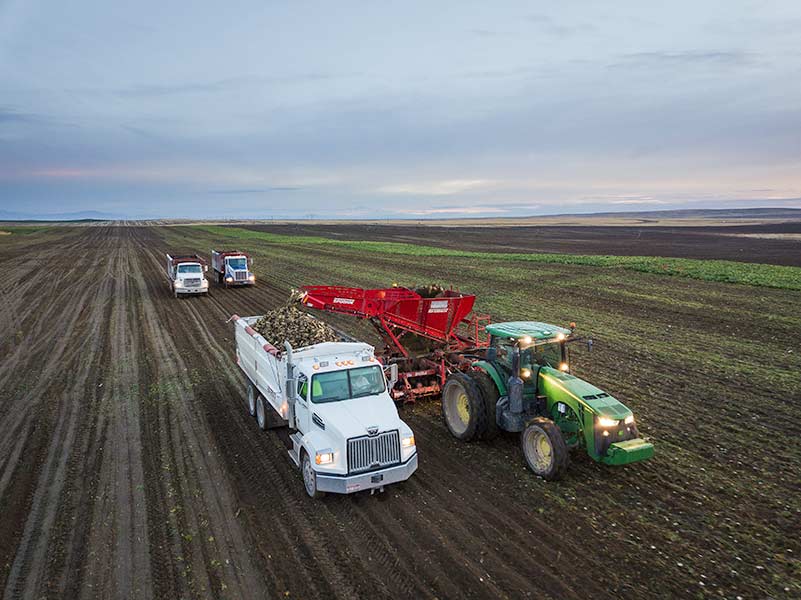
Once harvest wraps up in early November, Grant says his crop will ultimately be used to make sugar. About 90% of sugar beets sold to Amalgamated Sugar Co. are used in the food manufacturing industry. The Hershey Company, Pepsi, General Mills and other companies use it to make their products. The other 10% is sold in grocery stores under the White Satin label.
Ritchey Toevs, of Aberdeen, is another longtime sugar producer. He could not be reached for comment Tuesday.
From pioneer roots to a fight for survival
Sugar production has a long history in Idaho, and The Church of Jesus Christ of Latter-day Saints helped introduce it.
Grant — a former Snake River Sugar Company board member who is not a Latter-day Saint — says that the church bought a sugar factory in Utah after settling the Salt Lake Valley. Its leader, Brigham Young, tapped fellow church member and businessman David Eccles to run it. Eccles went on to form a private company in Ogden, now known as Amalgamated Sugar Company. Today, the Eccles family is half of the namesake for the University of Utah’s football stadium.
Sugar factories eventually started popping up throughout the West, including in Idaho. The University of Idaho reports the first sugar factory in eastern Idaho was built in 1903 near what is now Lincoln High School in Idaho Falls.
On August 21, 1903, a group of men met in Salt Lake City and formed the Fremont County Sugar Factory. The cornerstone ceremony was held on Dec. 9 in what is now Sugar City, according to the city’s website. The factory from which the town got its name became a major center of sugar beet production in the Upper Snake River Valley.
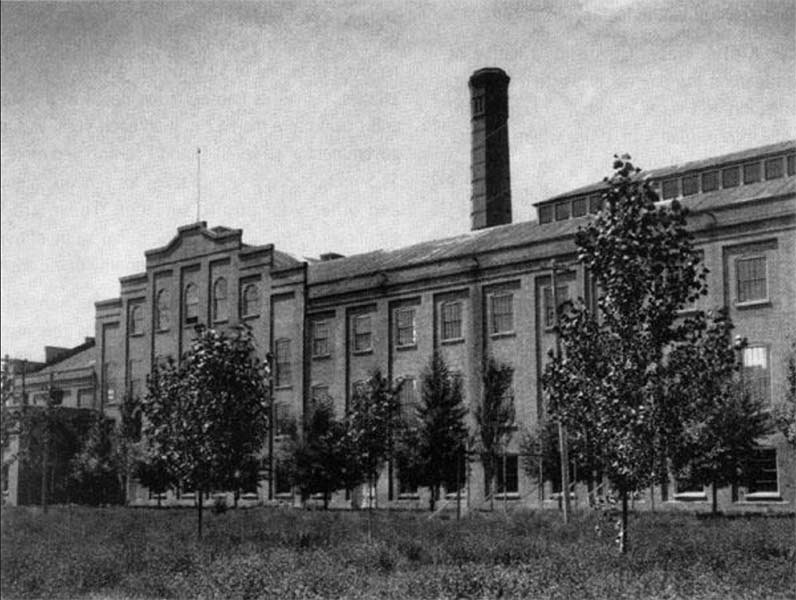
RELATED | We Are East Idaho: Sugar City
Grant’s father started growing sugar beets on a six-acre parcel in Rupert in 1958.
During the industry’s heyday in the 1950s and 60s, Grant says there was substantial government support for sugar beets. The U.S. Sugar Act of 1948 helped “maintain a healthy domestic sugar industry and assure adequate supplies of sugar to consumers at reasonable prices.” At that time, Grant says Idaho sugar beet production would have yielded about 15 tons per acre with a sugar content of 15%.
By the early 1970s, government support for the sugar market lessened. America began importing sugar from foreign countries, which had a detrimental effect on domestic prices.
“The industry became unprofitable and many of the sugar factories that existed in Idaho closed during that time,” says Grant.
The Food and Agriculture Act of 1977 aimed to revive the industry by providing a loan program for growers. Similar legislation in 2002 helped stabilize the market by implementing domestic price supports and import restrictions.
Today, Grant says growers are losing money on sugar production due to foreign imports, and the industry is facing an existential crisis.
“If the U.S. government doesn’t find the political will to block foreign countries from dumping their excess subsidized sugar into the U.S., the industry will cease to exist,” Grant explains.
As a member of the Amalgamated Sugar Company co-op, Grant says he’s invested, and that’s what keeps him going.
While many farmers worry about having enough water in 2027, Grant says that’s in the hands of Mother Nature. For him and other sugar producers, he says the industry’s future lies in Congress’s hands, and that’s his utmost concern. He’s hoping Congress will take action “to prevent the extinction of the U.S. sugar industry.”
“The sugar industry is actively lobbying Congress to that end, and that’s honestly what our hopes are pinned on,” he says.
AG AT-A-GLANCE
Two scientists bring their expertise to Idaho state government
The following is an excerpt of a news release from the University of Idaho.
BOISE – Two scientists will bring their expertise to Idaho’s legislative and executive branches this year through the Idaho Science and Technology Policy Fellowship (ISTPF).
The ISTPF, led by University of Idaho’s McClure Center for Public Policy Research, is a nonpartisan program that places scientists, social scientists and engineers in state government, each serving in yearlong assignments in executive branch agencies and the Legislative Services Office (LSO). The ISTPF is a partnership among Boise State University, Idaho State University and U of I.
Click here for more information.
If you have a From the Field story idea, send it to rett@eastidahonews.com. Remember to use ‘From the Field’ in the subject line.
IN CASE YOU MISSED IT…
This weather-related story is brought to you by Pony Express Car Wash, Idaho's premier express car wash destination, renowned for its commitment to exceptional service and quality. Voted the No. 1 car wash company in Idaho for five consecutive years, we pride ourselves on delivering an unparalleled experience for every vehicle and customer. Our state-of-the-art facility utilizes name-brand soaps and cutting-edge equipment to ensure your car receives the ultimate clean. Established in eastern Idaho in 2019, Pony Express is proud to be a locally owned and operated company that caters to the unique car washing needs of our Idaho Friends and neighbors. We invite you to experience the difference at Pony Express, where your satisfaction is our ultimate goal.