



Idaho Fish and Game culls more wild deer trapped in Rexburg domestic elk farm
Published at
Eric Barker, Lewiston Tribune
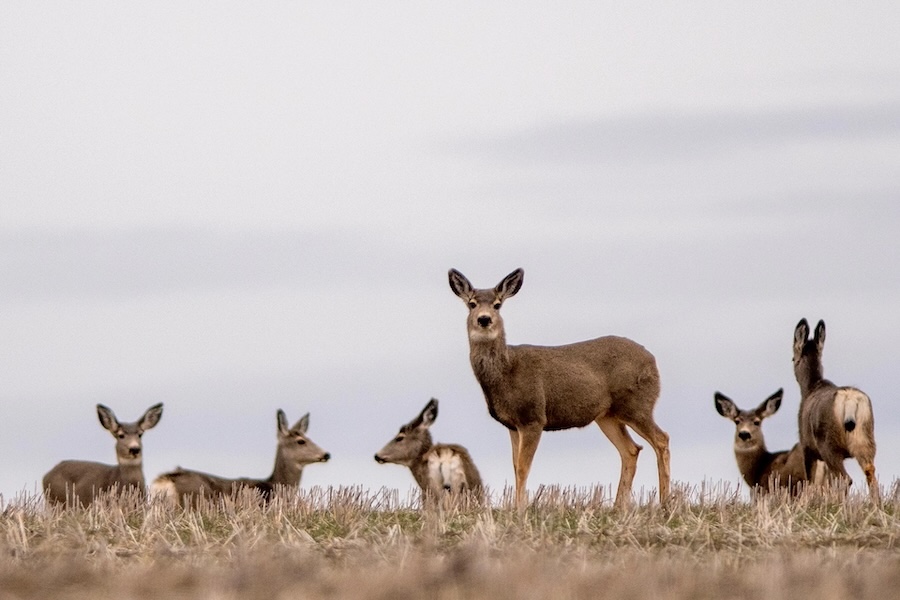
REXBURG (Lewiston Tribune) — Idaho Fish and Game employees shot and killed more than 65 wild deer this summer that made their way into a fenced domestic elk hunting facility near Rexburg that is under a chronic wasting disease quarantine.
The move was taken to prevent the potential spread of the deadly and persistent disease to wild big game herds in the state’s Upper Snake River Region. According to public records obtained by the Idaho Conservation League, the department has spent about $40,000 on the operation at the Rocky Mountain Elk Ranch that includes more than $22,000 in staff time.
“The producer has worked with us as have the previous ones to try to address the situation, but it is very time consuming and very labor intensive,” Matt Pieron, regional supervisor of the department’s Upper Snake River Region, told the Tribune. “I have staff burning both ends of the candle.”
It’s not the first time the agency has resorted to killing wild animals at domestic elk operations that have proven incapable of both keeping wild animals out of the high-fenced facilities and preventing domestic animals from escaping.
More than 80 wild mule deer were killed by Fish and Game sharpshooters and members of the public holding special hunting tags early this year after the animals found their way into a domestic elk ranch.
Previously, the agency shot and killed a wild bull moose that was found inside the Broadmouth Canyon Ranch, a high-fence hunting operation owned by former NFL player Rulon Jones.
Last October, a hunter killed a bull elk that escaped from Broadmouth Ranch and another hunter killed a wild elk inside a different facility. Last September, a hunter killed a bull elk that escaped from the Juniper Mountain Ranch elk facility. The hunter had been scouting the bull for months.
“I think Idahoans have lost trust in how these high-fence hunt pens are run and regulated by the state,” said Jeff Abrams of the Idaho Conservation League. “Each year, the risks they pose to our state’s public wildlife resources are becoming more obvious. Equally troubling is that hunters, wildlife managers, and the public are bearing the true conservation costs of these operations.”
Domestic elk ranching is managed by the Idaho Department of Agriculture and wild animals like mule deer, elk and moose are managed by the Idaho Department of Fish and Game. When it comes to problems such as the need to cull wild animals that have been potentially exposed to CWD from domestic elk, Fish and Game is stuck with the bill.
According to documents Abrams obtained through a public records request, Fish and Game has spent more than $172,000 on problems stemming from domestic elk outfits in the past year, not including administrative costs or the value of the public’s loss of wildlife. The latest culling had extra urgency because the ranch is under quarantine. Previous operations were based on just the possibility that CWD could be present.
Daily headlines, straight to your inbox
Read it online first and stay up-to-date, delivered daily at 7 AM
Do not fill this field
Sign Up
“We know there have been animals harvested out of the facility that have been positive for CWD and they are shedding prions into the facility. So any animals in the facility, unfortunately, need to be harvested,” said Tricia Hebdon, assistant chief of Fish and Games Wildlife Bureau at Boise.
The disease that affects deer, elk and moose is found in 36 states including Idaho and Washington, though it has not been found in southeastern Idaho’s wild deer and elk herds. It is spread by misfolded proteins known as prions and results in debilitating neurological symptoms before the eventual death of the animal. Those prions are shed through bodily fluids that can persist on the landscape for years and infect animals that come in contact with them. While it has never been shown to infect humans, the Centers for Disease Control and Prevention recommends against consuming meat from infected animals.
In an effort to contain its spread, Idaho Fish and Game has culled wild deer herds in the Slate Creek area near White Bird where the disease was first detected in the state five years ago. It has since been found near Bonners Ferry and New Meadows in Idaho and in Washington’s Spokane and Pend Oreille counties.
Don Ebert, an Idaho Fish and Game commissioner representing the Clearwater Region, wants the Idaho Legislature to take affirmative steps to prevent its spread.
“I don’t have anything against private game farmers. I’m all for free enterprise, but the risk is huge. This concerns me greatly,” he said. “I’m not trying to throw ISDA under the bus. I think they run by the rules. This one is on the legislature. If it gets out of control, it’s on the legislature, no one else.”
In 2024, the Idaho Legislature passed House Bill 591 that let domestic elk and deer farms operate with single fences instead of double fences spaced 6 feet apart. Double fences add an extra layer of protection against failure while spacing them apart prevents nose-to-nose contact between wild and domestic animals. Domestic game farms under quarantine can’t move their animals to other facilities but they can move animals within different units of their own operations even if they are geographically adjacent. For example, with permission from the Idaho Department of Agriculture, they can move animals from a breeding facility to a hunting facility.
Chanel Tewalt, director of the Idaho Department of Agriculture, and Scott Leibsle, the agency veterinarian, did not respond to emailed questions from the Tribune about the latest culling, including whether the agency could compensate Fish and Game for its expenses.
The two officials did testify at the Idaho Fish and Game Commission’s July meeting at Jerome, in which they said the domestic deer and elk program is fully paid for by producer fees. Over the past two years, 13 domestic elk have tested positive for CWD.
Tewalt noted her agency and Idaho Fish and Game work well together but have very different missions.
“The department of agriculture has a constitutional and statutory mission to protect private property and the freest extent and the freest use of private property possible and sometimes that flies in conflict with Fish and Game’s mission to protect a public good, and we recognize those are very different things,” she said.