



LIVE UPDATES: Medical examiners take the stand on Day 12 of Lindsay Clancy murder trial
Published at | Updated at
Lindsay Clancy’s murder trial is underway in Massachusetts. The 36-year-old woman is charged with three counts of murder for the strangling deaths of her three children, ages 5, 3, and 8 months old. Clancy is present in the courtroom, bound to a wheelchair after she was paralyzed by injuries she sustained when she jumped from her home’s second-story window in an alleged suicide attempt. Her defense lawyer claims she was insane at the time, suffering from postpartum psychosis, and could not appreciate the wrongfulness of her actions. We are posting live updates from the courtroom here. Time notes are Eastern Daylight Time. Please forgive typos.
4:03 p.m. Judge excuses the jury. Court is in recess until Thursday at 9 a.m.
4 p.m. ME concludes Dawson’s cause of death was asphyxia. Moves autopsy photos into evidence over defense objections. No cross of this witness. Lindsay continues sobbing after testimony concludes.
3:57 p.m. ME walks the jury through autopsy photos, notes strangulation marks and abrasions around the neck. More hemorrhages around Dawson’s face, suggesting that Dawson struggled against the ligature. Observed bruising around the leg. Dawson’s hand is blue – reflective of a lack of oxygen to the body. Dawson’s bruises were red, indicating they were more recent.
3:38 p.m. Direct questioning of Dr. Olson continued: Olson describes petechial hemorrhages around her Cora’s eyes, face and on the inside of the lips. Noted bruising on arms and legs. Bruising was the result of medical intervention by first responders. Can’t tell exact time and age of the bruise – older bruises tend to be yellow/green. Ligature marks are consistent with asphyxial death.
The ME describes how a strangulation death is painful until loss of consciousness. (Lindsay cries through this testimony; sobs are audible but not enough for the judge to halt testimony.)
ME testifies that it would take about 4 pounds of pressure and 10 to 30 seconds for loss of consciousness to occur. The prosecutor is attempting to elicit details about how long a person would remain alive after losing consciousness. This elicits an objection from the defense. Judge calls for a sidebar.
Once the brain dies, it would continue to death if there’s no intervention. You can strangle someone for 30 seconds, then they die? There’s a general time frame. The cause of death of Cora Clancy was mechanical strangulation.
Autopsied Dawson Clancy – he had trauma to the neck and minor injuries to his arm and left leg. (Lindsay has her head down and continues to cry through testimony.)
3:36 p.m. Witness returns to the stand and jury is summoned.
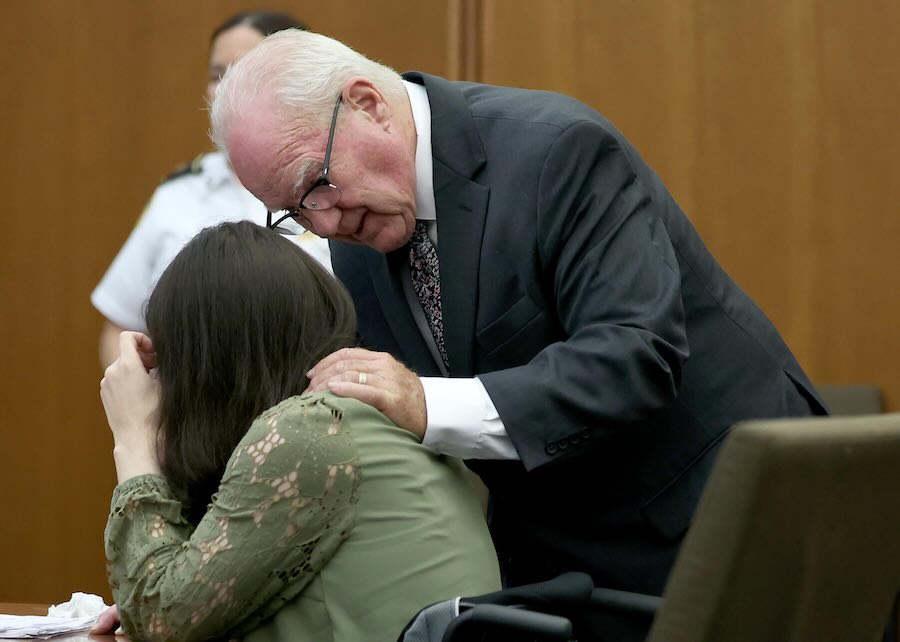
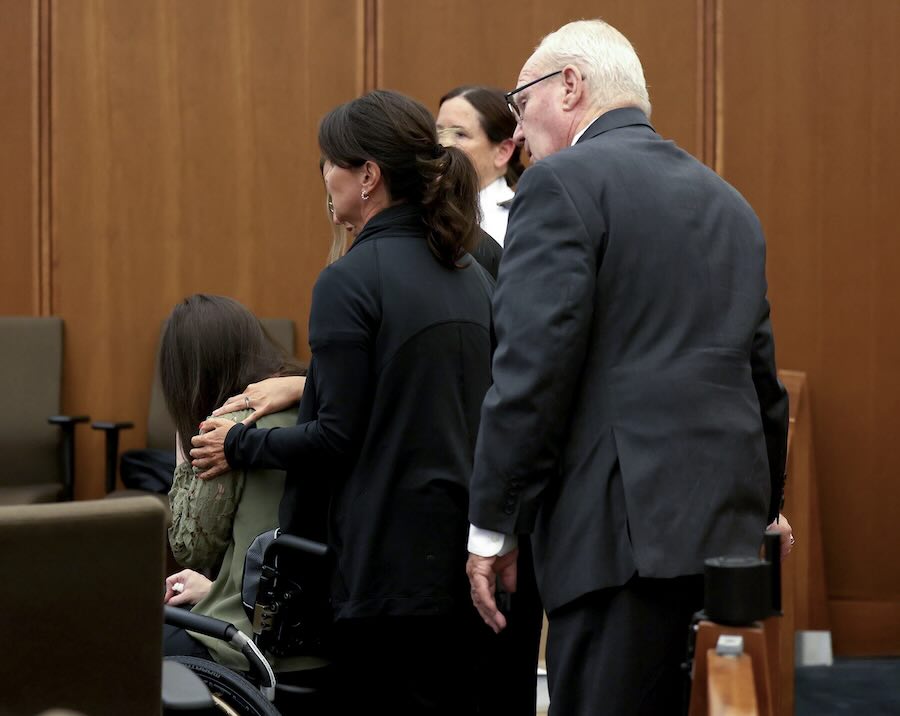
3:32 p.m. Court is back in session; attorneys are at a sidebar. Lindsay is present at defense counsel table and has her head in her hands.
3:12 p.m. Commonwealth Witness No. 68: Dr. Barbara Olson, Medical Examiner’s Office. Olson performed autopsy on Cora Clancy. During this testimony, Lindsay is weeping, trembling and holding on to her lawyer’s hand. Witness details evidence of trauma to Cora’s neck and face. Observed ligature furrows (strangulation marks). Lindsay’s crying has become so loud judge calls for a break. Nurses who are present in the courtroom tend to Lindsay, who is hyperventilating.
3:12 p.m. Judge instructs the jury to be mindful to separate emotion from the evidence.
2:31 p.m. Commonwealth Witness No. 67: Dr. Renee Stonebridge, Medical Examiner’s Office. Stonebridge examined the eyes of Cora Clancy and observed hemorrhages around tissues and nerves around the eye. Concluded the eye injury is consistent with an asphyxial, strangulation death. Examined Dawson’s eyes also, and observed hemorrhages around Dawson’s eye. Observed the brain and eyes of Callan. Testified he suffered brain injury – once brain death occurs, it cannot be revived. Attorney Reddington is holding Lindsay’s hand during this testimony as she breaks down; her sobbing is audible, prompting the judge to call a recess.
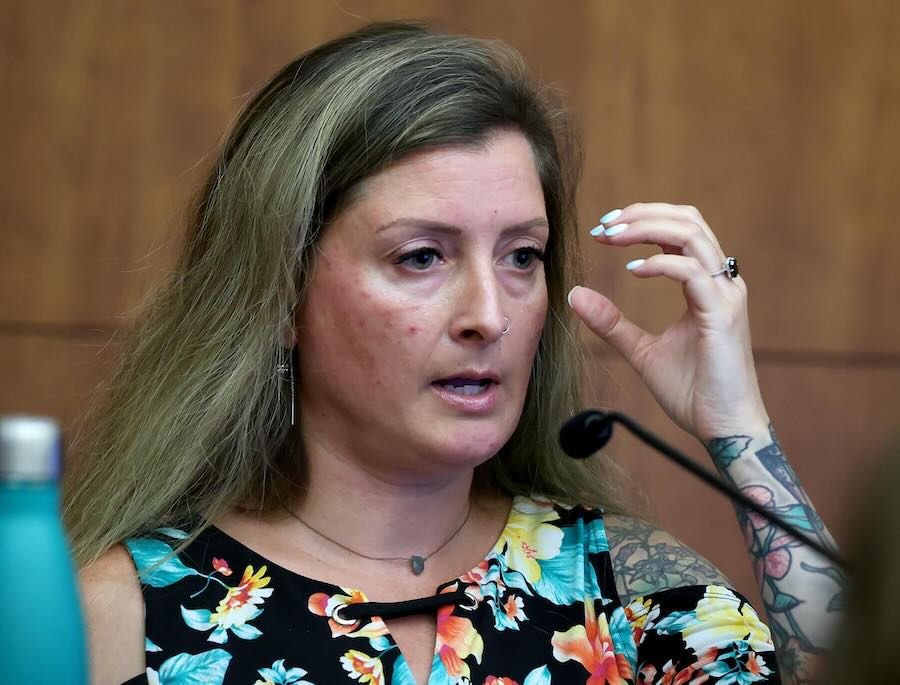
2:27 p.m. Commonwealth Witness No. 66: Nicole Bradley. Prosecutor admits records from Plymouth County Sheriff’s Office for hospital watch of Lindsay Clancy into evidence. Logs reflect sheriff’s watch occurred from Jan. 25 to Feb. 3. Objection from the defense, says records “not necessary.”
2:24 p.m. Judge warns the gallery that any disruptive statements during proceedings would be dealt with summarily.
2:13 p.m. Court is back in session. Attorneys at sidebar.
12:55 p.m. Judge excuses the jury for lunch. Court will resume at 2 p.m.
12:50 p.m. Commonwealth Witness No. 65: Cameron Daley, Duxbury Police Department. Daley tasked to guard Lindsay Clancy at Brigham Hospital on Jan. 25 from 10 a.m. to 7 p.m. Cross: You guarded a woman tied to the bed? Daley: Correct.
12:47 p.m. Mental Health Status exam note: Lindsay was able to laugh – she still continued to report she was numb low mood. correct.
12:38 pm. Redirect: Prosecutor: Why didn’t you review notes of Paul and Jollotta? Witness: I wanted a fresh set of eyes. Prosecutor: You don’t have a role in medication management? Witness: No. On Dec 12, discussed Women & Infants program, when she discussed doing a program at Norwell, you referred her to W & I. They didn’t think she qualified for the program. They referred her to other programs. On Dec. 19, my impression was her symptoms were improving due to her social interaction with family and friends. She was able to smile and laugh.
Recross: Reddington: Was she laughing when she reported numbness? It says in your notes: patient continues to have low mood and numbness. She was told (exercise) was a good thing to do? Witness: The fact that she could do it is an indication of improvement.
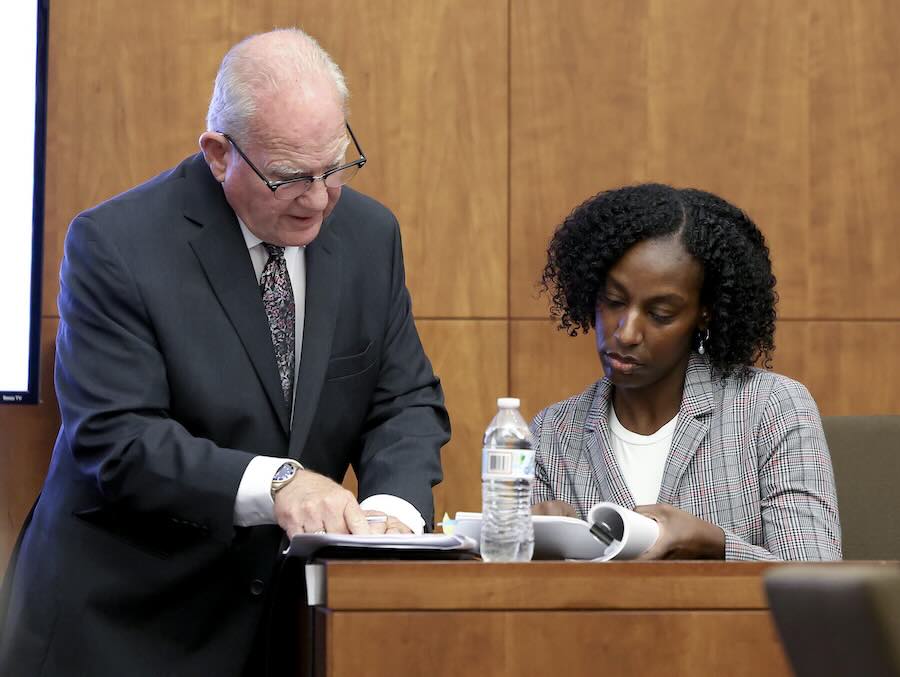
12:27 p.m. Reddington: Are you aware of Mass. Gen. Hospital for Women’s Mental Health? Witness: I’m aware. Reddington: Do you agree that during the postpartum period, 85% of women experience some type of mood disturbance? Witness: Don’t agree. Do you agree that 10% to 15% of postpartum women develop more severe symptoms? Witness: I agree. 1) Postpartum Blues – common, no threat to mother or baby. 2) Postpartum Depression and 3) Postpartum psychosis. Postpartum Depression, symptoms include saddness, tearfulness, loss of interest, guilt, worthlessness, fatigue, sleep disturbances, change in appetite, can not focus, suicidal thoughts. Reddington: Under the Mass. General Hospital research on women, LC hit almost every one of the symptoms? Witness: Correct. Agrees that symptoms can become more severe. An Edinburgh depression scale score of more than 12 requires a more thorough review (LC scored 23 out of 30) Reddington: Postpartum psychosis is the most severe form of postpartum illnesses? Witness: Agree. Occurs in 2 out of 1,000 women. Reddington: In your treatment, Lindsay appeared to be hurting? Witness: correct.
12:15 p.m. Dec. 5: Lindsay met with Aspire clinician virtually and could not get help because she did not have a suicide plan. Reddington: Next time you saw LC was Dec. 12? Witness: Yes. She had a difficult weekend and had intrusive thoughts. Reddington: Same day, LC told you she was going to go to Norwell, you recommended she attend the Women and Infants program. She did on Dec. 20, after not getting anywhere with Aspire, she was interviewed for the program at W and I. They could not treat her because their opinion was that she was suffering from overmedication. Did not know that? On that day, Women and Infants reached out to nurse Jollotta to discuss medication, and Jollotta did not get back to them. Witness: I was not aware of that.
11:55 a.m. Court is back in session. Latiesha Dukes is on cross by Reddington. Dukes says she met with LC a total of 4 times — on Dec 2, 5, 12, 19 — and a phone call on Dec 27. Reddington: On Dec. 2, you had the records of nurse Paul and Jollotta? Dukes: No – says she could look at the records but she did not. Reddington: Lindsay disclosed she was on Prozac and Ativan; she was concerned about taking medication and becoming addicted to benzodiazepines. Dukes: Yes. Reddington: She had heart palpitations, panic attacks, etc.? Dukes: Yes. Reddington: She was prescribed Remeron. She said since she started medication she had suicidal ideation. Three months after the baby was born, she told you she had “unmanageable anxiety,” constant worry about the children, and that something bad would happen to the baby. Discussed her use of alcohol, and Lindsay disclosed that she tried a marijuana gummy once to help with sleep. Under risk assessment on Dec. 2, has suicidal ideation but has no plan. Fair to say she was more than willing to accept help? Dukes: Yes.
11:29 a.m. Judge calls for the morning recess.
11:26 a.m. About Dec. 27, Dukes had a conversation with Lindsay’s husband, Patrick, who expressed concern with LC’s medications. Dukes referred Patrick to the prescriber. Between Dec. 2 and Dec. 27, Dukes did not fear for LC’s safety or the safety of those around her, nor did she observe signs of psychosis. Did not have a need to discuss a safety plan or Section 12 with LC’s providers.
11:20 a.m. Dec. 19 virtual visit with Lindsay Clancy. LC was continuing to have low mood, numbness; LC did not need crisis intervention that weekend. She was spending time with family and exercising to help with mood. Dukes referred LC to Women and Infants program. By that point, W & I reached out but she missed the call. Prosecutor: Did she report any improvements in her sleep? Dukes: LC was reporting sleep improved. That day, LC was more engaged; she was able to laugh and enjoyed time with family. Dukes did not feel it necessary to invoke a higher level of care. Did not have any more meetings with LC after Dec. 19. Called Lindsay on Dec. 27 to tell LC that her referral to W & I had been completed.
11:15 a.m. Dec. 12 visit: LC indicated that she would start partial hospitalization program at Norwell. Dukes recommended Women and Infants program because it was designed for postpartum and children could come with LC. Dukes made a referral after that visit. LC continued to have suicidal ideation but did not have a plan. At this time, LC had support of husband and mother-in-law. LC was able to follow through with suggestions from previous visit.

11:05 a.m. Next visit on Dec. 5 was a telehealth visit. Prosecutor: What did LC say about the weekend? Dukes: She had intrusive thoughts about wanting to die, contacted Aspire support and was told she did not meet the criteria for inpatient treatment because she did not have a plan. She reported having persistent thoughts but no plan. In that visit, LC had no suicidal ideation. She was with her husband. Dukes offered her intensive outpatient therapy and partial hospitalization therapy. Reviewed sleep hygiene. LC was interested in the information and asked for psych testing. Discussed it with Jollotta and sent her info about psychological testing. Presentation was within normal limits. Did not appear anxious. Was not concerned she was in crisis. Saw no signs of mania, paranoia or psychosis.
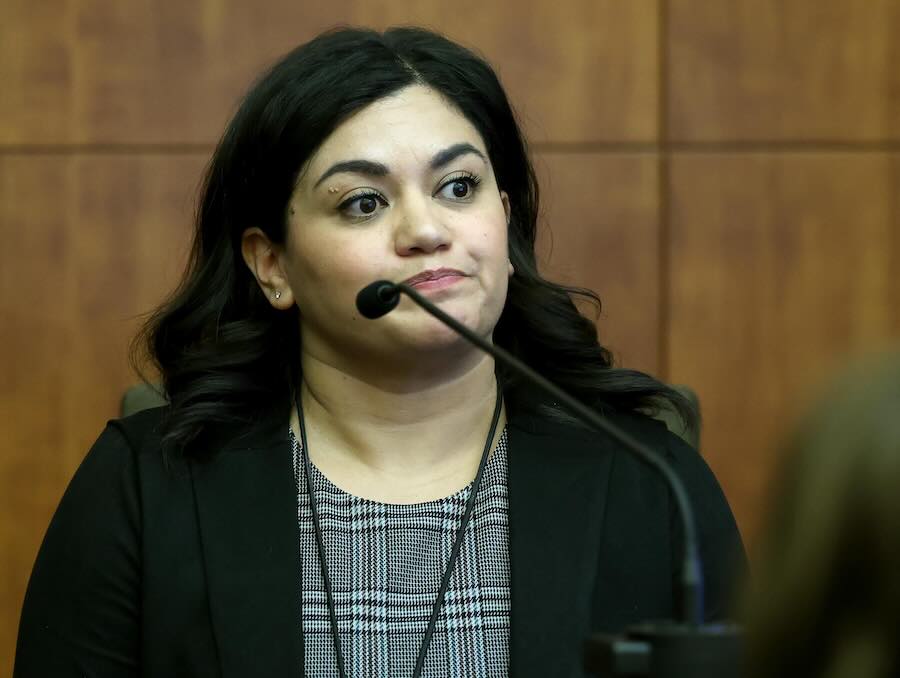
10:45 a.m. Commonwealth Witness No. 64: Latiesha Dukes, Mental Health Counselor, Formerly Perinatal Clinician at South Shore Hospital. Dec. 2, 2022, was her first intake with Lindsay Clancy; it was in-person. LC was referred to Dukes based on postpartum anxiety and depression. Went through psychosocial history. LC was on medication and had prior counseling with a psychiatrist. Prosecutor: What were her concerns? Dukes: Her presenting concerns were anxiety, depression, lack of sleep, thoughts of suicide. My role would be to create a treatment plan, work on coping skills, build on community support, and advise her of resources. In first interaction, Dukes assessed Lindsay. Found LC appeared to have a normal mood. Mental status: LC was cheerful when discussing her anxiety symptoms. She was worried about an addiction to Ativan. She had suicidal thoughts but had no plan. Dukes says if LC had a plan, she would determine that as a crisis and elevate her to a higher level of care. LC did not report wanting to harm herself or others. There is a substance abuse assessment to make that determination – LC did not present with substance use disorder. Dukes did not see it as an issue because LC used it appropriately.
10:44 a.m. Redirect: Prosecutor: Conversations are common among investigators, and theories change? Lawlor: Correct.
10:37 a.m. Defense Cross: Reddington: You observed a doctor enter her room? Lawlor: Yes. Reddington: You weren’t eavesdropping? Lawlor: No. Reddington: When the doctor finished talking with Lindsay, you are aware she called her husband using his cellphone? Lawlor: Correct. Reddington: Sgt. McKelligan told you that the government’s theory is that Dr. Zeizel is the reason she told her husband she heard voices? Lawlor: Yes. Reddington: It was at the office; that was his speculation? Lawlor: Correct. Reddington: Was she still restrained? Lawlor: Don’t recall. It was about a week before she was allowed to have visitors.
10:36 a.m. Court is back in session. Judge calls attorneys to sidebar.
10:23 a.m. Judge takes 10-minute break, presumably to decide whether Reddington will be permitted to pursue this line of questioning with the witness.
10:20 a.m. Voir dire by Prosecutor: You did not know what the theory of the case was at the time you were in the hospital? Witness: Correct. Prosecutor: You don’t know if there’s any evidence of the doctor prompting Lindsay to call Patrick? Witness: Correct. Prosecutor: Nothing about your conversation with the investigator is affecting your testimony today? Witness: No.
10:14 a.m. Jury is out of the courtroom for voir dire of the witness. You’re in the hospital at Brigham, along with other officers. A doctor comes in pursuant to a court order. You don’t recall if he closed the door. Would you agree with me that you worked with the prosecutors to prepare for the case, and they wanted you to obtain interviews? One of the theories they wanted to pursue was that Lindsay used the doctor’s cellphone to call Patrick to tell him that she had heard voices. Witness recalls having a conversation about that with a fellow officer.
9:48 a.m. Defense Cross: Recalls media was at the Clancy house but not sure about hospital. Reddington: It was a large event? Lawlor: Correct. Reddington: You went to the South Shore Hospital before she was transferred. Observed Lindsay at the hospital, but you don’t recall that she was wearing shoes. Assisted in the search of the house but does not recall seeing the nightstand. Seized cellphone and laptop, but does not recall blood on the cellphone. Recalls blood on the floor, mirror, and window. Did you discover an Apple Watch? Lawlor: Don’t recall. Reddington: At some point went to Brigham Hospital to maintain custody of Lindsay for the DA’s office. No one was permitted to see Lindsay while she was detained. Reddington obtained a court order to have a psychiatrist see Lindsay. Reddington asks the witness if he (doctor) asked her to call Patrick and tell him she heard voices. The question elicits an objection; the judge calls for a sidebar.
9:38 a.m. On Jan. 25, 2023, the witness participated in the execution of a search warrant. Lawlor documented items seized from the house. Noted prescription pill bottles in the kitchen. Four bottles are lined up – Trazodone containing 20, Diazepam 2.5, Diazepam 2mg, 9.5, amitriptyline, 20(?) remaining. Lawlor seached master bedroom, seized a baby monitor, does not recall searching the nightstand. Went to the hospital where Lindsay was being detained. While he was guarding Lindsay, says he remained outside of the room. During his time there, a psychiatrist entered the room and closed the door.
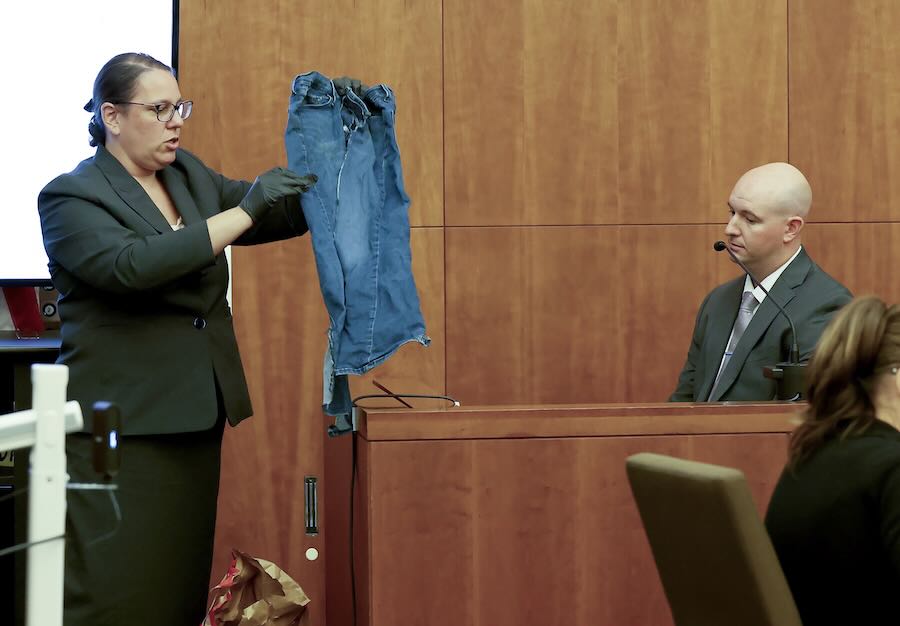
9:30 a.m. Commonwealth Witness No. 63: Daniel Lawlor, Mass. State Police: Responded to South Shore Hospital on Jan 24, 2023. Served the hospital with a preservation order to preserve Lindsay’s urine and blood, took her clothing, wedding ring and band. Prosecutor removes the clothing seized from paper bags; holds up a woman’s black tank top, a pair of jeans, a woman’s bra. Prosecutor notes staining on each of the clothing items.
9:26 a.m. Lindsay watches the jury file in. She usually stares straight ahead.
9:05 a.m. Court is expected to resume shortly with the continuation of the Commonwealth’s case.
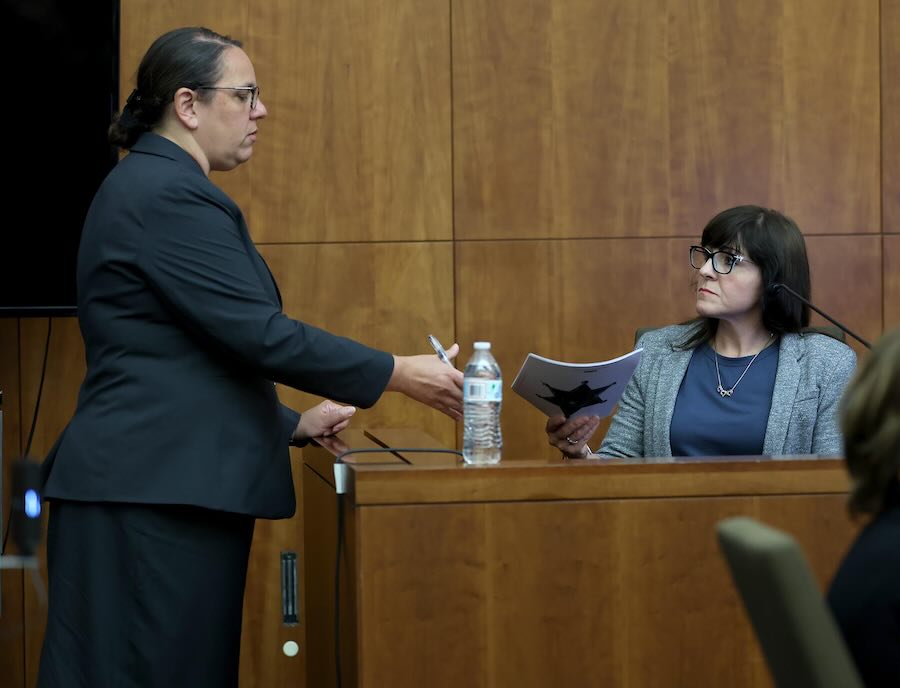
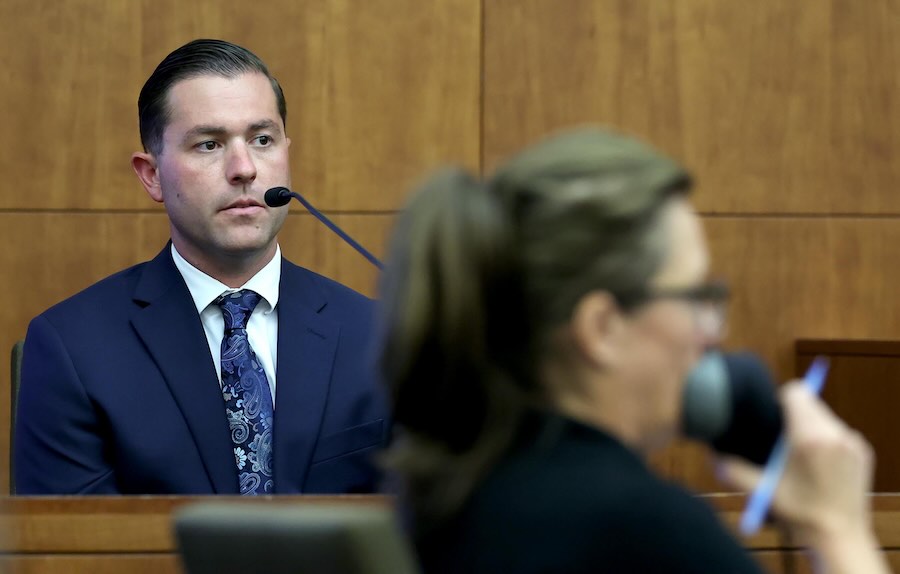
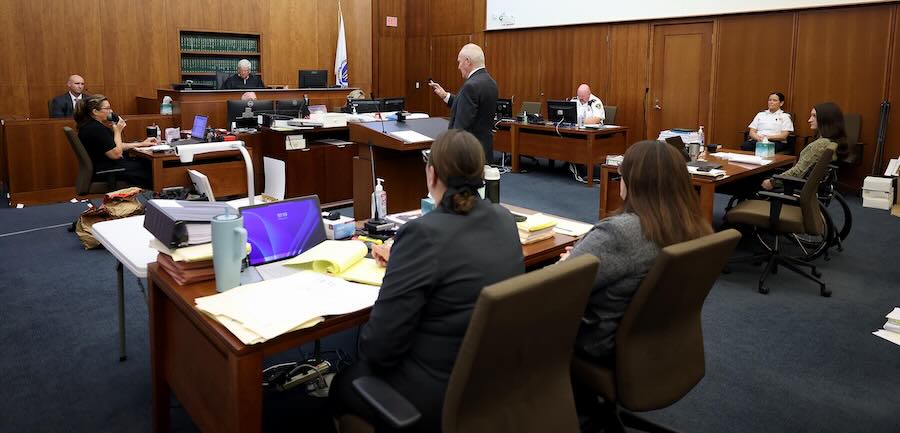
Defense attorney Kevin Reddington, center, questions witness Mass. State Police Sgt. Dan Lawlor, far left, during Lindsay Clancy’s murder trial at Plymouth Superior Court, Wednesday in Plymouth, Mass. | Mark Stockwell, Boston Herald, Pool

Courtroom Insider is sponsored by Browning Law, representing southern Idahoans for decades and in over 114 jury trials. If you've been injured or accused of a crime, call for a free consultation: (208) 542-2700 1-76-BROWNING