



Idaho’s reservoirs hit historic low as winter outlook raises more water worries
Published at
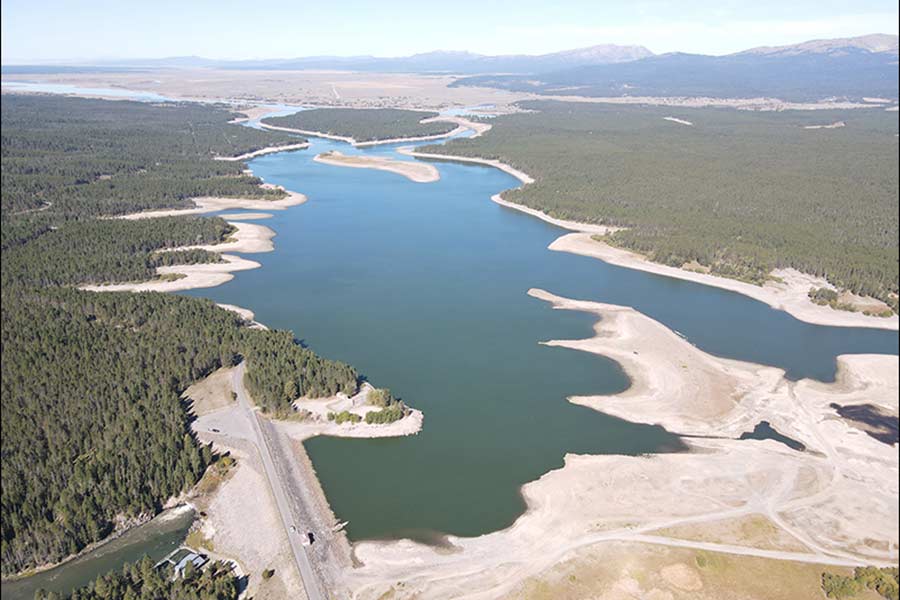
IDAHO FALLS – As Idaho wraps up one of its worst water years on record with reservoir levels at an all-time low, the National Weather Service in Pocatello is projecting a warmer-than-normal winter with equal chances of precipitation being high or low.
On Sunday, the NWS released the temperature and precipitation outlook for the months of December, January and February. A map on its Facebook page shows a potential for higher-than-normal temperatures during that time for most of the United States. Colorado, New Mexico, Arizona and most of Utah are the exceptions, along with southern California, most of Texas and parts of Oklahoma and Kansas. Florida and parts of neighboring states are projected to have near-normal temperatures.
On the precipitation outlook map, most of Idaho has an equal chance of rain and snowfall being above or below normal. Projections for northern Idaho and most of Montana are leaning below normal.
“This outlook is based on the forecast of having a strong El Niño year. El Niño is strengthening, with a greater than 90% chance of a very strong event during the Northern Hemisphere fall and winter 2026-27,” the Facebook post says.
During an El Niño, warm water from the Pacific Ocean is pushed towards the west coast of the United States, creating a warming trend. This runs counter to typical climate patterns, according to the National Oceanic and Atmospheric Administration. An El Niño happens every two to seven years, on average, and typically lasts nine to 12 months.
In a conversation with EastIdahoNews.com, Meteorologist Andrew McKaughan provided some context. While winter temperatures are projected to be higher than normal overall, it’s unclear by how much.
“Whether that’s one degree or five degrees remains to be seen. They’re both above normal,” McKaughan says. “It doesn’t mean that we won’t have a two to three-week period where temperatures are below normal. We could still end up with snow. This is just an overall projection.”
In eastern Idaho, McKaughan says winter conditions during an El Niño year have gone both ways. Some years have had snowfall, and others haven’t, so it’s hard to say “what Mother Nature has in store.”
‘The lowest reservoir levels … in recorded history’
The lack of snowfall last winter resulted in a water shortage this year. In April, the Idaho Department of Water Resources issued a statewide drought declaration, and it’s forced irrigators to make significant cutbacks on their water usage.
RELATED | Idaho declares drought emergency for all 44 counties as snowpack hits record lows
Adam Young, a board member of the Bingham Groundwater District, farms about 2,600 acres in Blackfoot. Earlier this year, he removed 100 acres to help conserve water and set aside another 22 acres for the U.S. Department of Agriculture’s Conservation Reserve Enhancement Program.
RELATED | Idaho braces for hot, dry stretch as fire risk, water woes grow
This fall, Young says he’s made additional cutbacks, bringing the total to about 300 acres. He’s anticipating this will be a permanent adjustment in years to come.
After a difficult irrigation season, he says he’s feeling nervous going into next year.
“We’re heading into this winter with the lowest reservoir levels in the Upper Snake River in recorded history, and this year showed us how desperately we need a decent snowpack to be able to make it through the year,” Young says.
RELATED | Desperate for water, Idaho looks to cloud seeding for a boost
Last month, the IDWR said that reservoirs were being drained at a rate of 24,000 acre-feet per day, and Eastern Regional Manager James Cefalo projected that the water in storage would be gone by the end of August.
As of Wednesday, Rob Van Kirk, science and technology director for the Henrys Fork Foundation in Ashton, says there is still some water in storage. He points to data from the U.S. Bureau of Reclamation, which shows that reservoirs are 8% full — the lowest they’ve ever been.
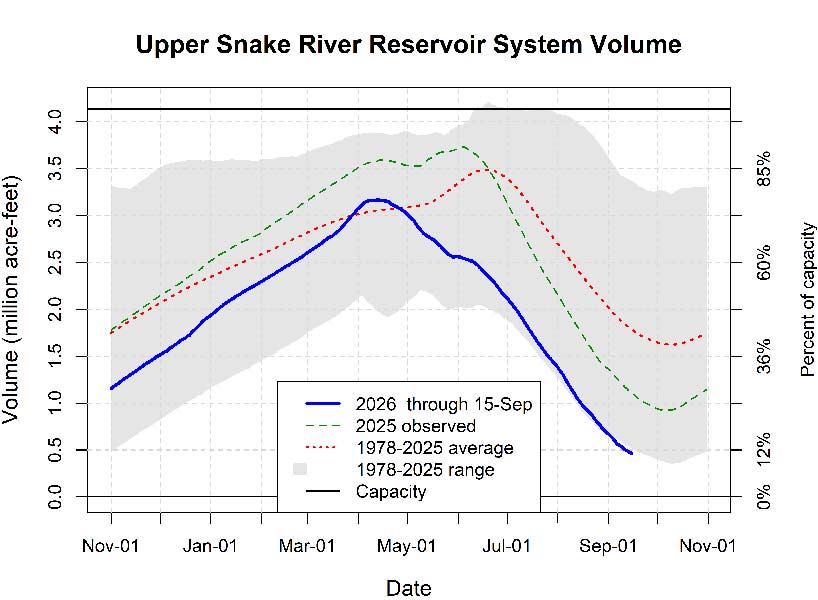
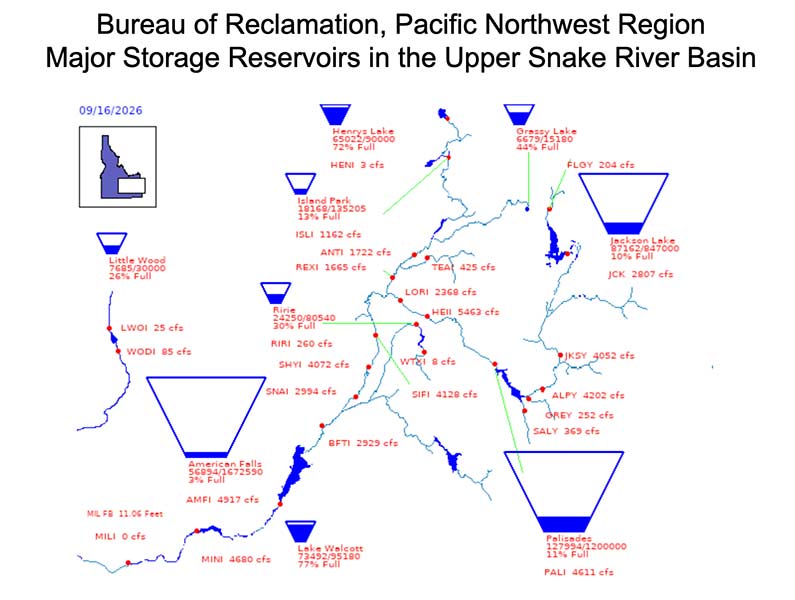
The last time reservoirs approached those levels was in 1993. Van Kirk says record snowfall that year, combined with cool conditions in the spring and summer, resulted in low irrigation demand, which helped replenish the reservoir system.
Based on weather data over the last 40 years, Van Kirk says the chances of having above-average snow this winter are really slim. And even if there is a lot of snow, he says it won’t be enough to fill the reservoirs.
“It’s highly unlikely that we’ll get the cold and wet weather we need to fill the system,” Van Kirk says.
‘If you thought this year was bad, wait until next year’
Despite the dry conditions, Young says most farmers fared better in 2026 than they expected. Still, another winter with low snowpack will create significant challenges.
“The more strained the overall system is, the more cuts we need to make so that we can stabilize the aquifer,” says Young.
Under Idaho law, surface water users have senior water rights, and groundwater users are required to have a plan to recharge the Eastern Snake Plain Aquifer during periods of shortage. There are no opportunities for recharge amid the shortage.
Prior to 2024, junior groundwater users were threatened with curtailment if the department determined there was a shortage. The 2024 Stipulated Mitigation Agreement is a four-year plan that provides a safe harbor and protects wells from being shut off.
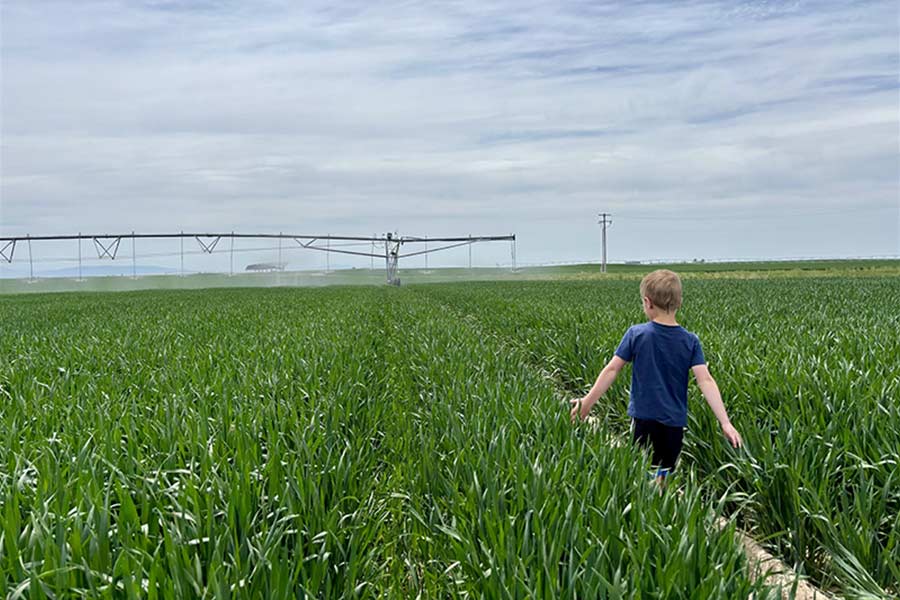
As irrigators renegotiate the mitigation agreement next year, Van Kirk predicts more stringent cutbacks in 2027.
“Irrigators with rights in Palisades, Ririe, Island Park, Grassy Lake and Henrys Lake will likely accrue a little water … and might get a third of their allocation,” he says.
Van Kirk’s bleak prognosis stresses an urgent need for additional water storage.
Sen. Kevin Cook, R-Idaho Falls, is pushing for it across the state. He’s hoping to see a major water storage project get underway in the next decade, including a proposal to rebuild the Teton Dam.
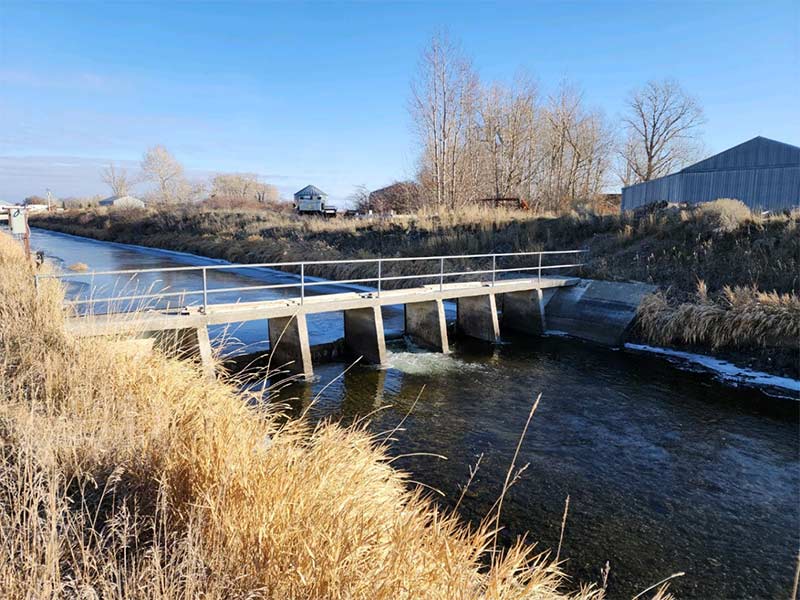
While Young says he supports water storage as a longterm solution, the immediate need is improving water efficiency. He says the widespread adoption of automated check structures — moveable gates that act like dams in canals — would increase the supply of surface water by holding it back and keeping it at consistent levels.
“If you don’t have any check structures in a canal, you’re spilling water out the back end every time you fill it. To keep it full, you have to divert a tremendous amount of water. Automated check structures would (decrease the amount of water you’re diverting),” says Young. “It’s low hanging fruit when it comes to stretching our water supply further.”
The water supply is critical to Idaho’s future and Van Kirk says the way we manage it going forward will have a drastic effect on the food supply and the overall economy.
This weather-related story is brought to you by Pony Express Car Wash, Idaho's premier express car wash destination, renowned for its commitment to exceptional service and quality. Voted the No. 1 car wash company in Idaho for five consecutive years, we pride ourselves on delivering an unparalleled experience for every vehicle and customer. Our state-of-the-art facility utilizes name-brand soaps and cutting-edge equipment to ensure your car receives the ultimate clean. Established in eastern Idaho in 2019, Pony Express is proud to be a locally owned and operated company that caters to the unique car washing needs of our Idaho Friends and neighbors. We invite you to experience the difference at Pony Express, where your satisfaction is our ultimate goal.