



Red-necked phalaropes invade Camas NWR
Published at | Updated at
Last Thursday morning, I ran out to visit Camas National Wildlife Refuge to see if I could find any migrating birds, but the stiff wind had most of the songbirds hidden in the thick willows.
In the distance, I saw a pair of mallard ducks surrounded by about 50 small birds. At first, I thought that they had hatched out a bunch of late ducklings but as I got closer, I realized they were phalaropes feeding with the ducks.
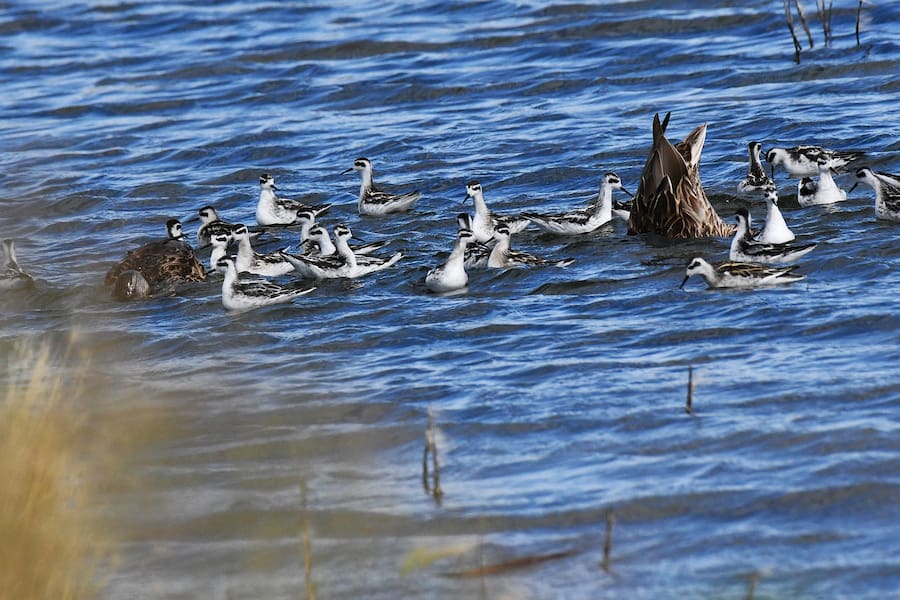
As the ducks would stir up the aquatic vegetation, they would also cause the aquatic invertebrates like midges and fresh-water shrimp –which the phalaropes were feeding on — to come to the surface. Occasionally, the phalaropes would fly off, only to return to feed with the pair of ducks.
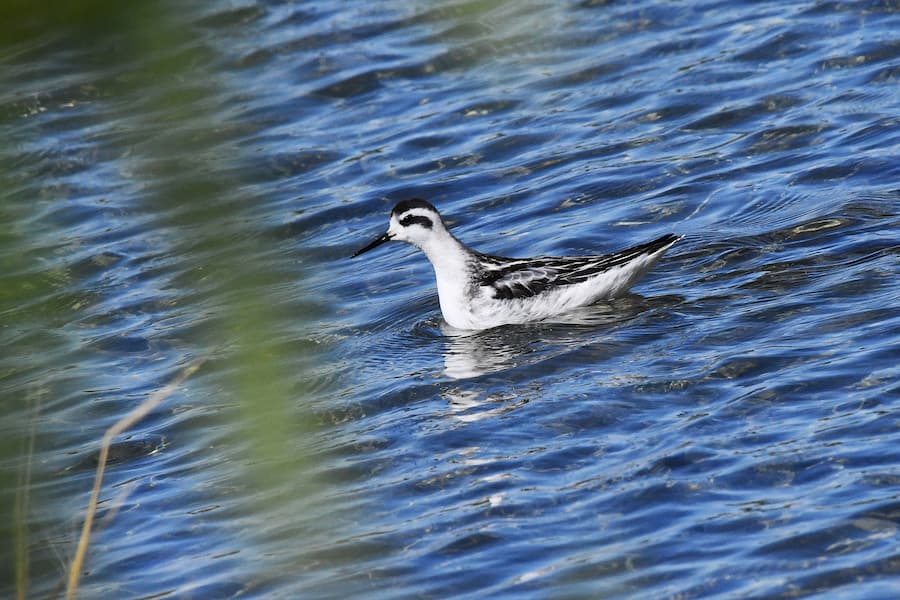
I noticed that the small shorebirds were mostly black and white without a trace of red that the red-necked phalaropes usually have, then I realized that they had already molted their spring and summer colors. When they would fly, the white barring on their wings and back identified them as the red-necked variety.
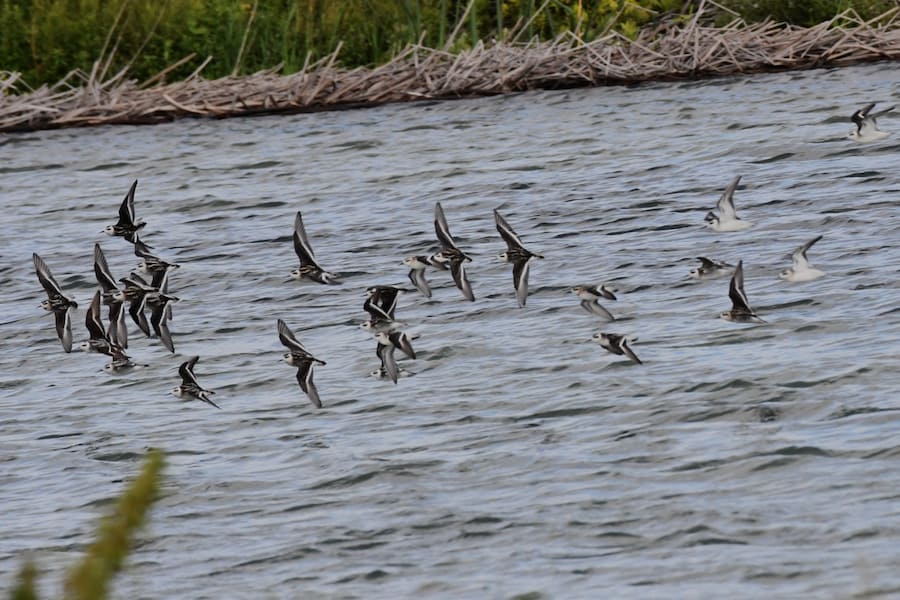
Soon I realized that there were hundreds of phalaropes on Big Pond, so I decided to check out all the ponds along the auto route through the refuge. I also found them on Toomey Pond and Redhead Pond. The center of the auto route is flooded, and when a bald eagle flew over thousands of ducks in the flooded marshes flew up along with shorebirds like the white-faced ibis and greater yellowlegs.
Phalaropes are very interesting birds, and I have been watching a small flock of non-breeding red-necked this summer on the Big Pond. They are only one of two species of shorebirds that molt during their fall migration, but their breeding is somewhat strange.
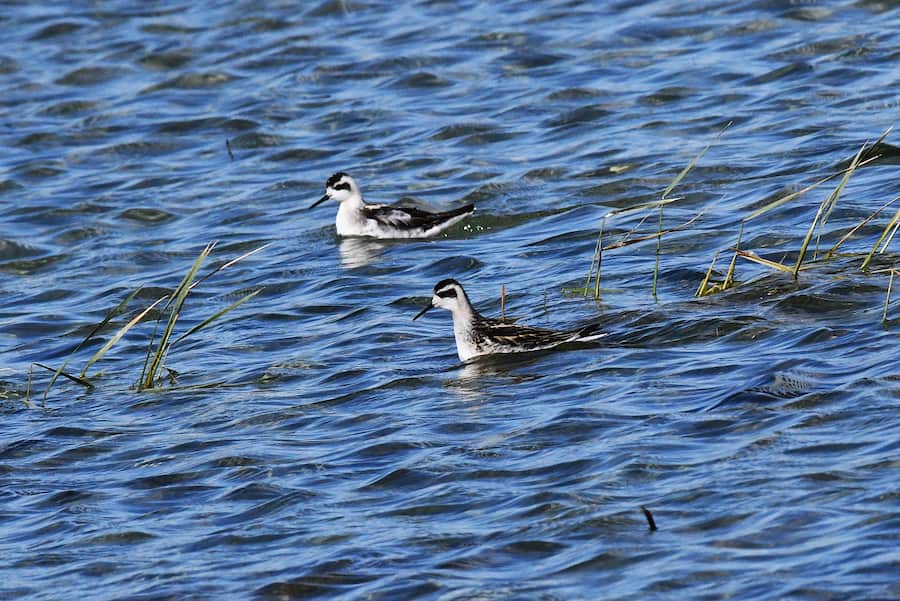
The females are more colorful than the males and initiate the pairing up, if you can call it that. She picks the placement of the nest, which is just a depression on the ground, lays four eggs (almost always only four) and the male incubates the eggs and decorates the nest. He also raises the chicks while the female finds another male, lays four eggs for him to incubate and raise the young. It is called polyandry where the female mates with multiple males during the nesting time.
Phalaropes also are known for their eating habits. They are known for spinning around in circles to cause small whirlpools to bring the aquatic insects to the surface of the water to eat. During their migration when they find a rich insect laden pond, they will gorge themselves until they are so full that they cannot fly. This happens in places like the Great Salt Lake in Utah, where the brine shrimp are abundant.
Due to using the mallards and the wind to stir up the water on Thursday, I saw very little of the twirling around in circles. They were always facing into the wind to pick up the feed floating toward them.
I don’t know how long they will stay at Camas NWR, but for one morning it was an education for me as I watched and photographed these very busy little birds. A few years ago at Market Lake Wildlife Management Area, I watched them during their breeding time. The females were extremely aggressive with other females as they battled over choosing a male to incubate their eggs.
I hope they stay around Camas NWR for a few more days so that I can learn a little more about them.
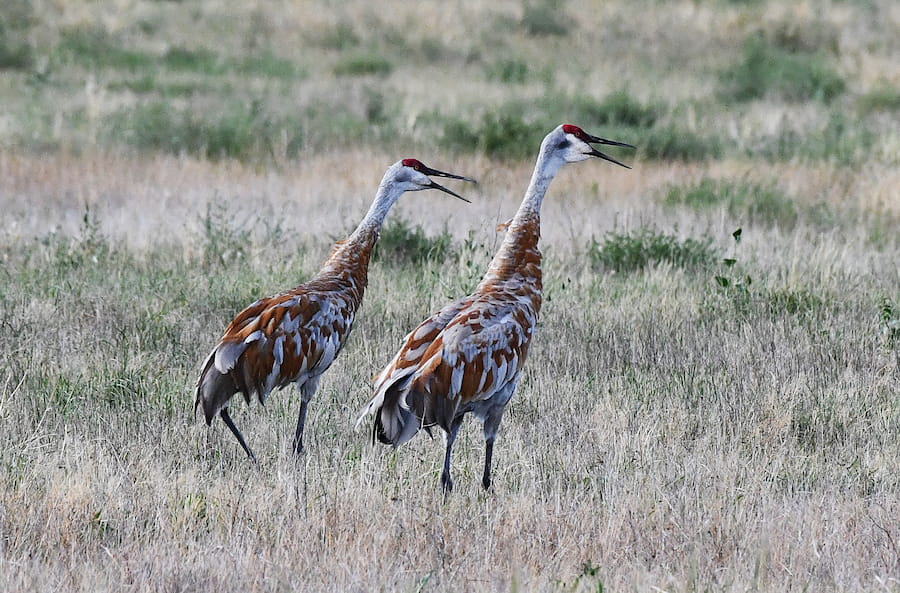
Another reason to visit Camas is that the sandhill cranes are molting their brown summer outfits and replacing them with their gray winter feathers. They are very colorful right now. It is well worth visiting as this fall migration continues through October. You might even see a flock of snow geese and tundra swans fly through, and it appears that the Swainson’s hawks are starting to gather. Have a great week!!!!

Living the Wildlife is brought to you by Yellowstone Teton Territory. Experience 7,500 square miles of untamed wilderness in Eastern Idaho's Yellowstone Teton Territory. Where majestic peaks meet endless adventure, your perfect outdoor escape is waiting. Start planning at YellowstoneTeton.com.