



The crop you’ve probably never heard of is taking off in Idaho
Published at
EDITOR’S NOTE: “From the Field” is a weekly feature bringing you the latest agriculture news in eastern Idaho.
REXBURG – Everyone knows that potatoes are Idaho’s number one agricultural export, but another crop, teff, has become a huge industry in the Gem State as well.
Teff is a warm-season grass originating from Ethiopia that can be used as a grain or forage crop. It’s not clear how much of it is produced in Idaho annually, but BoiseDev reported in 2022 that Idaho was the second-highest producer of the grain portion in the world.
It was introduced in the Boise area sometime in the 1980s. Wayne Carlson launched a company called Maskal Teff in 1986 and partnered with farmers to grow it for an Ethiopian food staple called injera — a pancake-like fermented flatbread.
In 2018, the University of Idaho’s Research and Extension Center in Aberdeen began growing it in eastern Idaho as part of a research project. It was grown primarily as a forage crop for livestock.
RELATED | Local company uses ancient farming technique to provide nutrient-dense food for customers
Joseph Sagers is one of three researchers behind a study on teff yield and quality in Aberdeen. He tells EastIdahoNews.com that the crop is becoming more popular in the U.S., and that Idaho provides suitable growing conditions for it in July and August.
“A lot of farmers like it because it’s a little more drought-tolerant than other forage crops,” Sagers says, noting that it’s also sensitive to frost. “It’s a warm-season crop, meaning it grows really well, the hotter it gets. If you just whisper the word frost to it, it dies.”
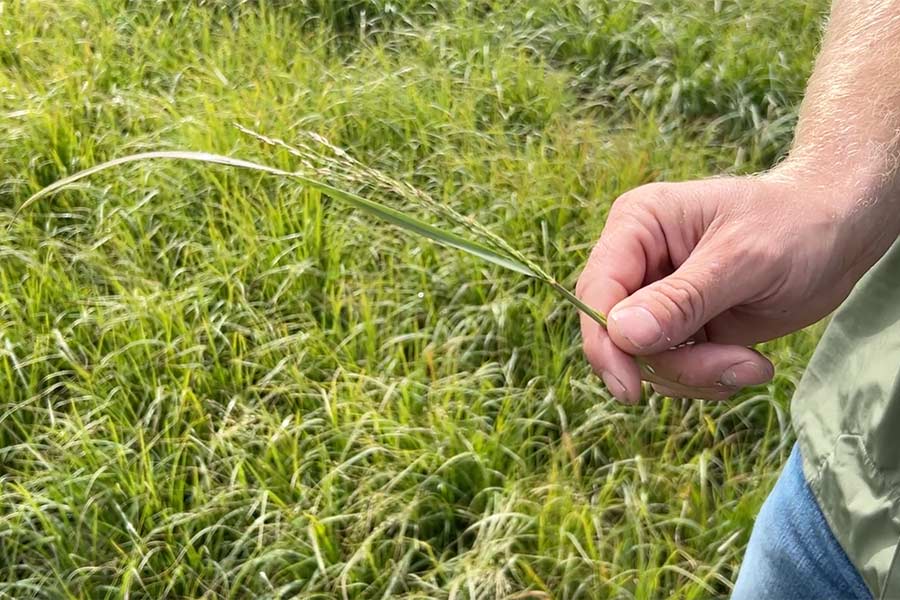
Since its growing season is so short, Sagers says many farmers are leery of growing it, but if you can grow corn — another warm-season crop — you can grow teff.
Sagers says one reason teff is appealing to some farmers is that it’s higher in protein than other annual grasses, such as oats, triticale — a wheat and rye hybrid — winter wheat and forage barley.
Another reason it’s appealing, he says, is that it can be planted a month later than other crops and still get better yields.
“As an emergency crop, teff fits really well,” says Sagers. “You can’t grow alfalfa after growing alfalfa. It has an auto-toxicity issue, which makes it necessary to wait at least a year, preferably two years, before you grow it again. That’s not the case with teff.”
A farmer’s experience
Dyrel Whitby, of Rexburg, works for Larsen Farms in Dubois. He started growing teff about three years ago as horse feed, which they bale like hay and sell to customers back east. He says customers have told him that horses metabolize teff better than hay. It reportedly works well as cattle feed, too. EastIdahoNews.com met him at a field near Rexburg to learn more about teff, which you can watch in the video above.
Whitby’s introduction to teff happened in 2023. He says he’d been looking for a short-term annual crop to bring to market that wasn’t expensive and didn’t require much maintenance. While on a vacation in Florida, he and his wife learned about teff from a customer and decided to give it a try. They planted 60 acres that first year and were surprised at the results.
“The farmers that we grew it with really liked it,” says Whitby. “They put potatoes right behind it, and they found that their yields per acre were greater than any other field behind the teff.
Today, they grow about 500 acres of teff.
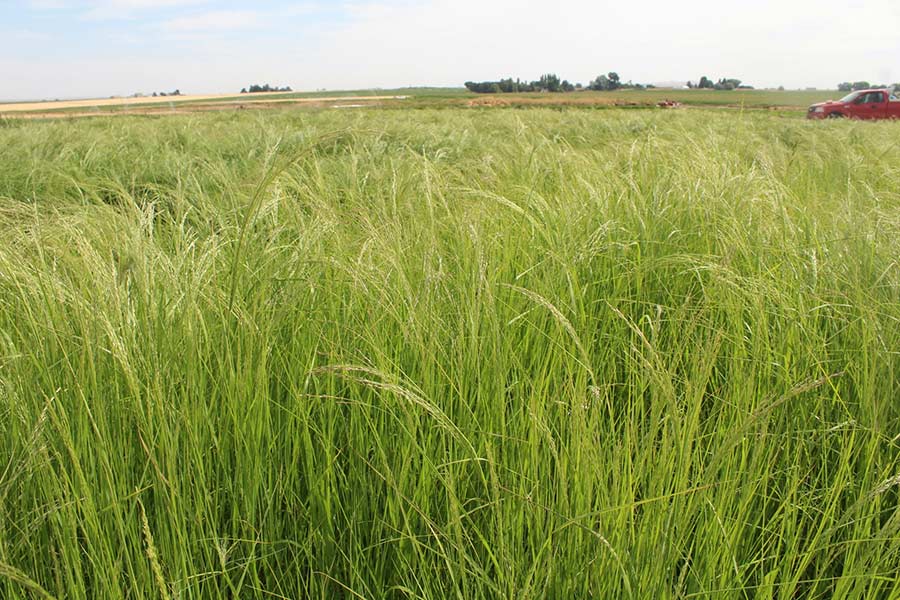
Whitby says it’s cheaper to grow than alfalfa, and the first crop is ready for harvest within 45-60 days of planting. While he likes the quick turnaround, he says the timing of planting it is critical.
“If you plant it too early, it won’t grow,” he says. “The ground’s got to be 65 degrees or warmer to germinate.”
Depending on how long a farmer wants to push the yield, Whitby says that after the first cutting, you can get a second crop in 25 days. He’s planning to experiment next year and push it to three cuttings.
Although frost is a major issue in Idaho and a major downside to growing teff, Whitby says it’s a great option in a state with limited heat-unit days.
“When there is heat, you get a good yield without a lot of inputs,” he says.
RELATED | Iran conflict hits home as high fuel, fertilizer costs squeeze eastern Idaho
Whitby says the fact that it needs little fertilizer or water is another selling point at a time when input prices are high, and the state is dealing with the worst water year on record.
RELATED | Idaho’s reservoirs hit historic low as winter outlook raises more water worries
Sagers expresses a similar sentiment, saying teff is an underutilized crop that farmers should consider as an emergency crop over other cool-season grasses if their main crop fails.
“The right thing to be planting (in that situation) would be teff or another warm-season crop,” Sagers says.
AG AT-A-GLANCE
National Association of Wheat Growers applauds advancement of Farm bill
The following is an excerpt from a news release from the National Association of Wheat Growers.
WASHINGTON, D.C. – The U.S. Senate Committee on Agriculture, Nutrition, and Forestry advanced the Agricultural Act of 2026 last Wednesday, moving a comprehensive, five-year farm bill one step closer to consideration by the full Senate.
The National Association of Wheat Growers applauds the Committee’s action and appreciates Chairman John Boozman and members of the Committee for continuing to move the farm bill process forward.
RELATED | As water crisis deepens, Idaho producers look to farm bill for relief
The legislation includes several priorities important to wheat farmers, including support for agricultural research, risk-management and trade programs, expanded access to agricultural credit, and the permanent transfer of the Food for Peace program to the U.S. Department of Agriculture.
Millions flow into Idaho water projects with $36.7 million in new grants
The following is an excerpt of a news release from the Idaho Dept. of Water Resources.
BOISE – The Idaho Water Resource Board approved 67 Aging Infrastructure Grants, nine Groundwater to Surface Water Conversion grants, and three Water Measurement and Monitoring grants for a total cost of about $36.7 million during its bimonthly meeting on Friday.
The IWRB funded $35.6 million in Aging Infrastructure Grants statewide. Many of the projects will modernize water infrastructure and increase efficiency for a wide variety of eligible water users.
Nine Groundwater-to-Surface Water Conversion grants will provide $616,499 in funding to a variety of groundwater districts in the Eastern Snake Plain Aquifer (ESPA) region. The grants will be used to convert irrigation use from groundwater to surface water with a secure, long-term surface water source. The goal of that program is to reduce the impact of groundwater pumping in the ESPA. Seven of the successful grant applications were awarded to the Bingham Groundwater District.
Read the full story here.
If you have a From the Field story idea, send it to rett@eastidahonews.com. Remember to use ‘From the Field’ in the subject line.
IN CASE YOU MISSED IT…