This Idaho mine supported the WWII effort. Now, it’s back on the national stage
Published at
Sarah Cutler, Idaho Statesman
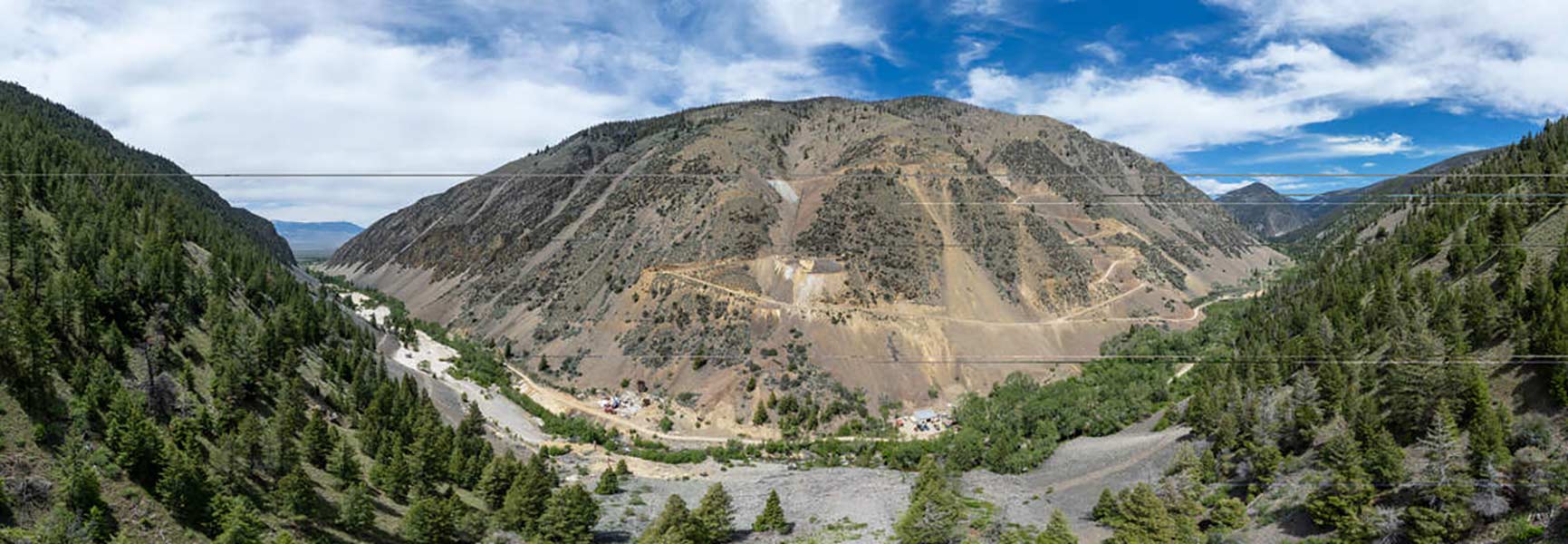
PATTERSON (Idaho Statesman) – You wouldn’t know the importance of Idaho’s Ima Mine from looking at it on a map. It sits just north of Patterson — an unincorporated area so small that some have called it a ghost town.
“Actually, that’s an exaggeration,” said Earl Bennett, Idaho’s former state geologist and the former dean of the University of Idaho’s College of Mines and Earth Resources. “There’s not even a ghost there.”
But the mine’s remote location about 41 miles east of Challis belies its importance these days, amid a nationwide push to increase domestic production of critical minerals.
In that effort, the Ima Mine may be the country’s best bet to produce tungsten, one of the densest, hardest metals on the periodic table. Its properties make it a must-have for many military and industrial purposes, from munitions and armor to wind turbines.
It’s “the closest project to go into production, not just in Idaho, but probably nationally,” said Claudio Berti, the director and state geologist of the Idaho Geological Survey.
The Ima Mine, originally opened in the late 1800s, previously produced tungsten — along with silver and molybdenum, a metal used to strengthen steel. In the late 1930s, the Ima Mine was the second-largest U.S. producer of tungsten. And during World War II, the U.S. government went so far as to subsidize the mine to ensure a steady tungsten supply.
Now, a Canadian company called American Tungsten is betting that the mine has more to give. Compared with competitors, it’s the closest mining project in the country to actually pulling tungsten out of the ground, and the mine’s tungsten is of a higher grade than its competitors’, according to a report from Stifel, an international investment bank that assesses the potential of mining projects.
Once it’s up and running, likely by the end of 2027, the mine has the potential to supply 8% of the U.S. tungsten demand, said Ali Haji, American Tungsten’s CEO.
The U.S. used to produce more of its own minerals, but in recent decades outsourced much of that work to other countries. China has dominated the global supply of minerals used in all kinds of American industries. It has the refining capacity to supply 85% of global tungsten, Haji said.
At times, China has manipulated global markets to hold onto this advantage, he said: When other major mines were close to coming online, it has flooded the market with its own supply to drive down prices and put competitors out of business.
China’s chokehold on these minerals has raised the specter of what it might do in wartime as a U.S. adversary.
“When they flood the market with cheap product, they’ve essentially shown the allied nations that we need to bring our own production profile online,” Haji said, referring to U.S. allies. “I believe that we are moving towards a market in which we’re building two sources of supply: one from China to non-allied nations, and another from allied nations to fellow allied nations.
U.S. government wants ‘resilient’ mineral supply chains
Outsourcing mining and manufacturing capacity to other countries has cost the U.S. leverage, Haji argued. These days, there’s a bipartisan consensus that the country must take back that leverage.
In 2025, tungsten was one of the top 10 most vulnerable critical minerals, according to a U.S. Department of Interior list assessing the likelihood of supply disruptions.
And a July executive order from President Donald Trump requires that, by Jan. 1, U.S. defense contractors source their critical minerals from domestic or allied producers.
“Despite the longstanding prohibition on the use of sensitive materials sourced from geopolitical adversaries, defense contractors have historically under-prioritized domestic production and resilience,” the order reads. It aims to build “resilient domestic and allied supply chains.”
The federal government has sought to streamline permitting and regulation of mining in order to increase U.S. production. And in 2025, Idaho Gov. Brad Little signed the Strategic Permitting, Efficiency, and Economic Development, or “SPEED,” Act to streamline the state’s own permitting on “big projects that promote energy independence, support national security, and drive our economy,” he said in a news release.
Haji said the Ima Mine project has had “nothing but government support,” which he expects will endure, “given the criticality of these minerals.”
Bennett, the former state geologist, isn’t so sure. The history of mining, he said, is littered with examples of fickle, unpredictable government support.
“These are good times. Enjoy ’em while you can,” Bennett said of the Ima Mine. “The whole name of this game is, how long will the federal government support these metals? Because as soon as they drop that — and they’ve always dropped it — all these mines immediately close.”
Ima Mine project aims to help local community
No one has actually extracted anything from the Ima Mine since 1959. But various companies over the years have drilled and explored the site, building evidence that the mine still has lots to offer.
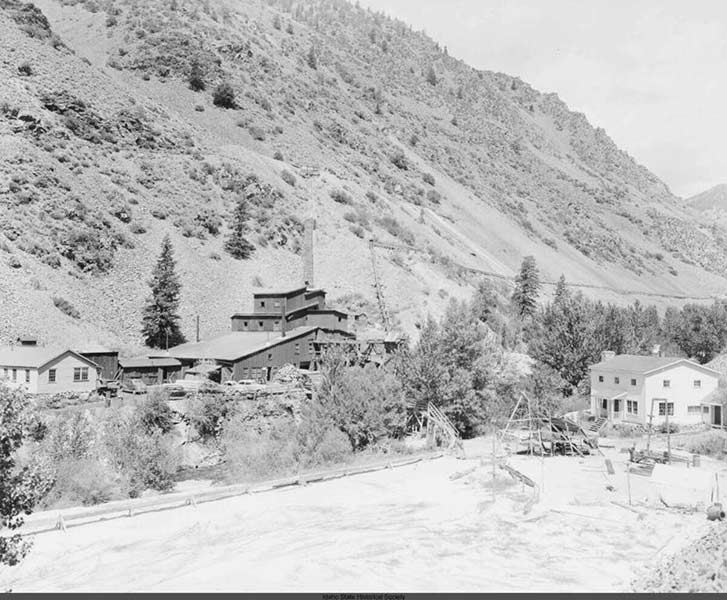
To restart production from this “historic asset,” American Tungsten plans to first extract tungsten from “surface tailings,” the waste material left behind by past mining at the site, Haji said. It’s a long road to get there, with myriad industry requirements to assess the metals’ composition and secure the necessary permits before extraction can begin.
Still, the tungsten from those tailings — in a sense, the mine’s low-hanging fruit — could be ready for sale as soon as early 2027, Haji said. Money from that sale will help the company access the funds to restart full underground production at the Ima Mine.
American Tungsten estimates that the mine could then remain active for 14 years, Haji said.
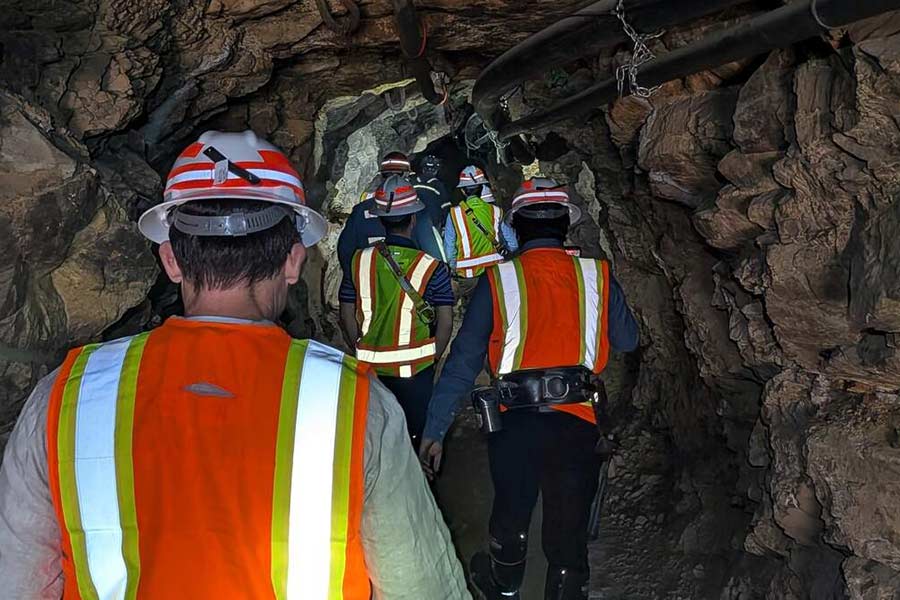
About 50 people work in the mine now, all from Idaho or neighboring states, Haji said. As the project grows, it is set to employ up to about 100 people — and Haji said the company aims to source talent locally as much as possible.
“The purpose and mandate of the company is ‘Made in America,’ ” he said. “What we’re looking to do is ensure that the local community is advancing alongside the mineral extraction.”