



What is cyanobacteria? We asked the experts about the toxin that can invade your favorite swimming hole
Published at | Updated at
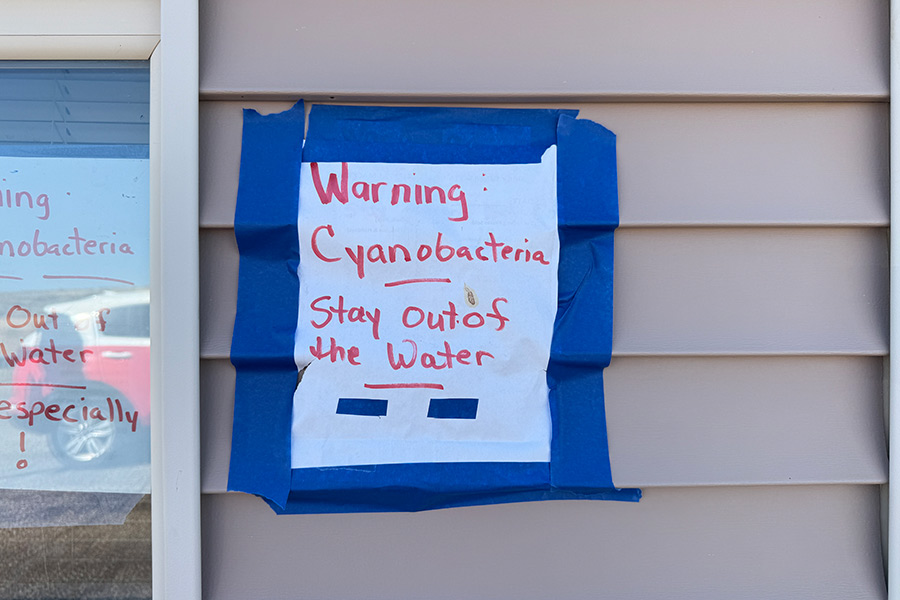
RIRIE — If you’ve ever decided against swimming in a lake that looked a little green, here’s why you made the right decision.
One of the most common reasons for a body of water to be closed to the public is cyanobacteria, a type of bacteria that lives in the water, makes its own food, and can try to trick you by resembling a harmless plant.
“Cyanobacteria occur when toxin-producing bacteria, under the right conditions, can multiply or bloom,” says Kelly Berg, the Health Program Manager for the Idaho Department of Health and Welfare. “And it primarily occurs in warm, stagnant waters with plenty of sun exposure and nutrients like nitrogen and phosphorus.”
As of September, there is only one health advisory for the nearby bodies of water in eastern Idaho, due to cyanobacteria found, tested, and confirmed in Ririe Reservoir.
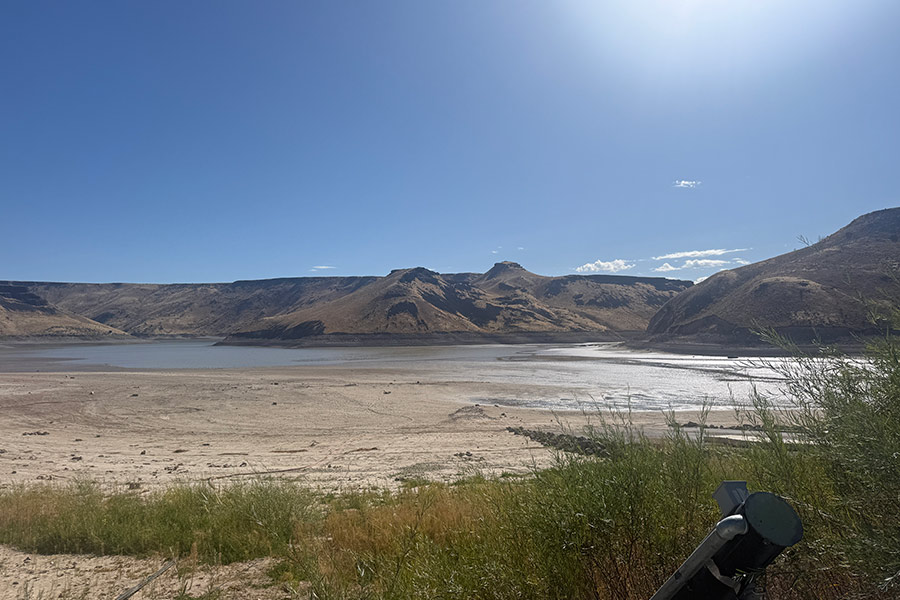
How are they found? By people seeing something that’s usually suspiciously green, and reporting it to officials.
“Usually (reports) come to us from a complaint that has been identified, and then I will follow up with boots on the ground to verify,” says Destiny Locke, a Water Quality Analyst for the Idaho Department of Environmental Quality. “I like to get a picture, and I will do a rapid test strip to see if there could be some toxins, and from that, I will take a water sample and send it off to our lab. And then from there we send out results over to Health and Welfare.”
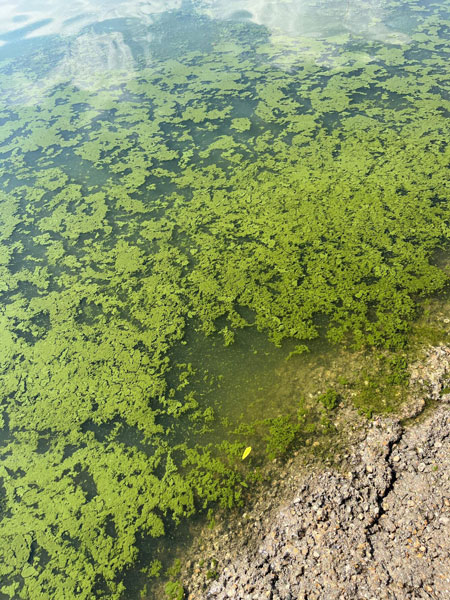
Also referred to as harmful algal blooms, or HABs, cyanobacteria can turn a once-swimmable reservoir into a dangerous area for people and pets.
“A harmful algal bloom, which can often appear on surfaces of water in the form of foam scum and paint-like streaks,” says Berg. “They can give off a strong smell and also appear as mats clinging to rocks and debris beneath the surface, where they can be a little bit more difficult to see.”
Not all cyanobacteria look the same, so it’s important to know how to tell which are dangerous and which aren’t.
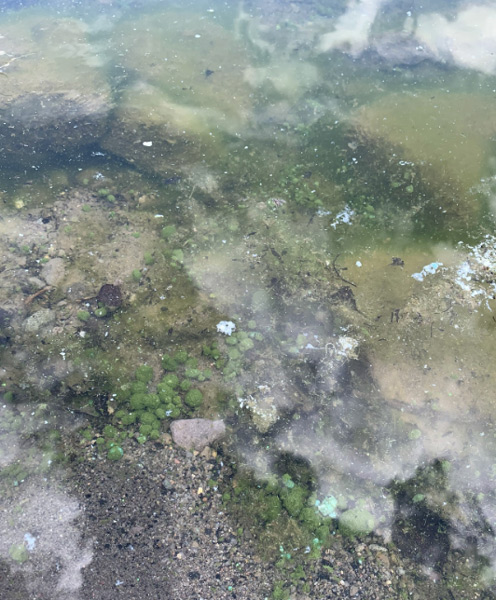
“One of the tests I like to tell the public that I think is pretty good to tell the difference between algae and cyanobacteria, is if you get a stick and go pick it up, if it wraps around the stick, it’s fibrous and more algae plant-like,” says Locke. “If it just disperses, it’s what tends to be more cyanobacteria.”
Because of the toxicity, and depending on the amount of exposure, people can experience numerous kinds of symptoms when they’ve ingested or been too close to cyanobacteria.
“Your level of risk is related to your level of exposure. These cyanotoxins can be pretty bad. Some of them are neurotoxins, so you could have neurological effects,” says Alex Bell, a Surface Water Quality Manager for the Idaho Department of Environmental Quality.
If you’ve been boating or fishing, your risk for illness will be lower than if you were swimming in, or drinking the water.
“But your exposure risk is related to how much contact you have with the water,” says Bell. “So if it gets in your mouth and you’re drinking it, that’s pretty high exposure, pretty high risk. But if you’re wading around, fishing, boating, that level of exposure changes.”
Other symptoms of toxin exposure can include nausea, skin irritation, and, in extreme cases, death.
“Depending on the different species of the toxin, it can affect the different health issues you might experience if you’re exposed to them,” says Locke.
For pets, the toxin is especially dangerous because it can get stuck in fur and be licked off by the dog.
“For dogs, the amount they’re exposed to is a lot less than humans,” says Brigitta Gruenberg, M.Ed., REHS. Environmental Health Section Manager for the Idaho Department of Health and Welfare. “That can cause a lot more harm to animals than humans, because they jump in the water, it gets stuck to their fur, they lick it, and so the risk of illness and even death is a lot higher than it is in humans.”
If you think you’ve seen or been exposed to a toxin in the water, there are a few steps you need to take.
“The first thing to do is take a shower, try to wash off any if it was an exposure,” says Berg. “If you start experiencing symptoms, then I would recommend contacting your medical provider and inquiring about next steps.”
Next, report it to DEQ by calling (866) 671-5385 or by filling out the online form here.
Overall, if it’s green, don’t swim in it.
“What we tell people is like our famous saying, ‘when in doubt, stay out,'” says Gruenberg. “Like, if it looks green, probably don’t want to swim in it, plain and simple.”