




District 32B incumbent fighting to keep seat from Idaho Falls political newcomer
Published at
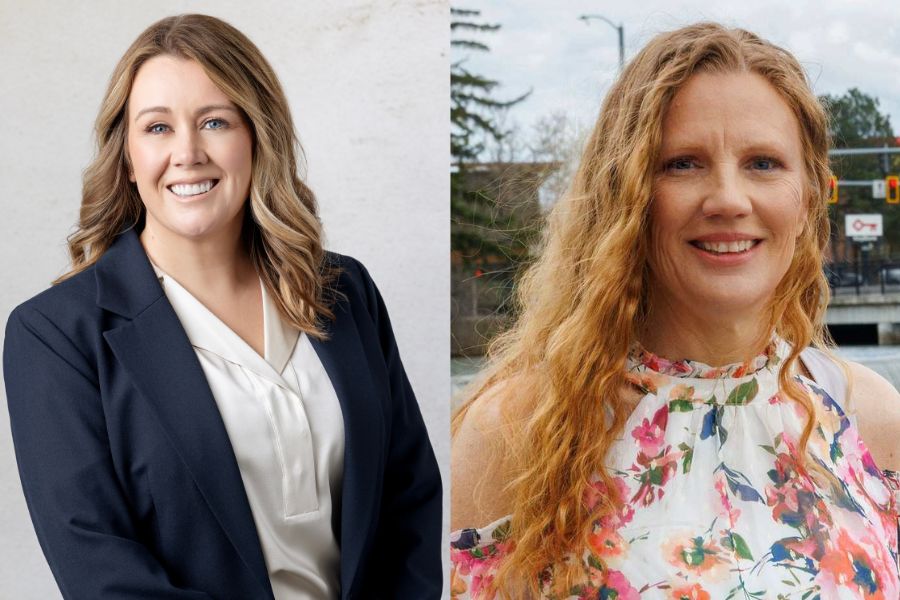
IDAHO FALLS — A current District 32 representative is running to keep her spot from a political newcomer in the 2026 general election.
Incumbent Erin Bingham, R-Idaho Falls, is running against newcomer Democrat Kamber Weninger, who is currently a job coach for disabled adults.
EastIdahoNews.com sent both candidates the same questionnaire. Bingham and Weninger’s unedited responses are listed below.
The general election will be held on Nov. 3. Polls are open from 8 a.m. to 8 p.m.
For more candidate questionnaires and information about the midterm election on Nov. 3, check out East Idaho Elects. To learn where to vote or what’s on your ballot, visit VoteIdaho.gov.
Tell us about yourself — include information about your family, career, education, volunteer work, and any prior experience in public office.
Bingham: My husband, Val, and I have raised our four children in Idaho, and Idaho Falls has been our home since 2006. Being a mom, business owner, and community volunteer has shaped how I approach public service.
I graduated from the University of Texas at San Antonio with a bachelor’s degree in accounting. For more than 20 years, I have worked in accounting, financial management, and business operations, including budgeting, practice management, and real estate development.
Some of my most meaningful volunteer work has been in our schools as a classroom volunteer and PTO president. I have also served on local nonprofit boards.
My Republican Party service includes serving as a precinct committeeman, Bonneville County State Committeewoman, and a member of the Region X Rules Committee.
Since January 2026, I have served as the Idaho House representative for District 32B. My committee assignments are State Affairs; Commerce and Human Resources; and Environment, Energy, and Technology.
I enjoy connecting with people and working through difficult questions. My experience has taught me to listen, ask good questions, and understand the consequences before making a decision. I believe public service means showing up, doing the work, and following through.
Weninger: I was born in Idaho Falls while my father was in the Navy, and moved back to live permanently at the age of 8 years, when my father obtained employment at the INL. I have one sibling and have lived in Idaho Falls most all these years since, with the exception of attending ISU in Pocatello. I am divorced and have 2 adult sons. I currently work as a job coach for disabled adults. I have a Master’s in Training and Development in HRTD and a Bachelors of Arts in Art with a minor in Political Science.
I have volunteered with Eagle Rock Art Guild, Order of the Eastern Star, and now with Bonneville County Democrats. I have no prior experience in public office however I was in public service as a Field Representative (not to be confused with Enumerator) for the US Census for nearly 11 years until DOGE started making cuts in March 2025.
These cuts concerned me not just personally, but from a principled standpoint in relevance to accountability in government practices.
Why are you seeking political office in your community? Briefly explain your political platform.
Weninger: I was asked about my interest in seeking office after participating in a survey. I know change starts locally and have considered seeking office prior to this election. However this time changes were occurring where I had to rebuild and could no longer sidestep the witnessing of misinformation and unaccountability in government practices.
We are all responsible for maintaining safe environments in our community, fair opportunity for growth (personally and professionally) and in maintaining our individual rights and liberties. My platform consists of strengthening public education, affordable living (including housing for those under the median income and lower), and Healthcare for all.
Bingham: I stepped forward because I love this community and want to help shape its future. Bonneville County is where my husband and I have raised our family, built our business, and served alongside people who care about their neighbors.
My priorities are housing and property taxes; education and workforce development; healthcare access; water, energy, and infrastructure; and responsible state budgeting.
Housing costs affect young families, workers, and seniors. I support removing unnecessary barriers to housing while respecting local decisions and planning for the infrastructure growth requires. Tax relief should reduce families’ overall costs without simply shifting expenses onto property taxpayers.
Strong schools prepare our children for the future. I support updating Idaho’s education funding formula and expanding pathways into college, skilled trades, and good jobs here at home.
Healthcare priorities include affordability, physician recruitment, access to care, and an aging population.
Reliable water and energy support agriculture, families, and businesses. Idaho National Laboratory and nuclear energy offer opportunities for investment and good-paying jobs. We should pursue those opportunities with strong water protections and accountability for commitments made to Idaho.
Responsible budgeting guides each priority. We must evaluate spending, protect essential services, and understand the effects of our decisions.
I am seeking to continue this work because these challenges require sustained attention. I bring practical experience, a willingness to listen, and the determination to work through difficult issues for District 32.
With rising housing, fuel, and food costs facing Idahoans, can the state government help bring relief to Idaho citizens? Is it the role of the Idaho Legislature to help deal with these issues?
Bingham: Yes. The Legislature has a role in addressing costs that state policy can influence. Families are making difficult decisions about housing, groceries, and transportation. We should examine whether government is helping or adding to those pressures.
For housing, I support working with local communities to address regulations, permitting delays, and requirements that increase costs without improving safety or meeting infrastructure needs. We should make it easier to meet housing demand while planning for roads, water, and other services.
The state cannot control every factor affecting food and fuel prices. It can review taxes, fees, and unnecessary regulations that raise the cost of producing, transporting, and selling essential goods.
I support tax relief that leaves more money in Idahoans’ pockets. We also need to consider the whole household budget. If a state tax cut shifts the cost of essential services to local property taxes or fees, families see little actual savings.
Government should spend responsibly and remove unnecessary barriers so families and businesses can succeed. Private businesses and local communities often bring practical solutions, and decisions should be made as close as possible to the people affected.
I will evaluate proposals by what they accomplish: lower household costs, opportunities for businesses, and responsible use of taxpayer dollars.
Weninger: Yes, the government and in particular, the legislative body is tasked with how funds from taxation are allocated to departments, policies and program needs within the state. I believe law makers have lost sight of these issues impacting citizens everyday, particularly those with less than the median income or those in poverty.
There are several factors that contribute to rising costs, some of which state and local policy should be considered. The revenue lost from tax breaks to the wealthiest simply does not mean the wealthiest will redistribute it into their community. For instance, property owners and investors typically calculate their taxes and other expenses into rent for the consumers yet they still receive the tax breaks thus increasing their bottom line. The consumer who paid that cost indirectly doesn’t see that benefit.
There are many examples of consumers paying the price, fees, and other relatable expenses that corporations slide off under the radar and reap the benefits for. I am completely dismayed by having to pay $8 and $4 fees to pay bills online (under the guise of security), yet putting my information into these systems means (as the fine print states); corporations can turn around and sell that information making more profits off of the consumer. There has to be strong policies to protect consumers and changes in taxation for relief to those making less than median incomes and those in poverty.
How will you best represent the views of your constituents – even those with differing political views? How do partisan politics play into your role as an elected leader?
Weninger: I am the type of person who seeks out conversations with others and listens to them regardless of their background, their beliefs, views, vocation, education, and other factors. I find differences to be enlightening, not threatening; however I do expect the same respectful and non-violent treatment in any conversation.
Partisan politics plays into my role as a possible elected leader by giving me and others a minimal chance in the game through the support offered. I am more aligned with the Democratic platform but that does not mean that there is only one side to the same coin. I choose not to be persuaded by big money in politics, much like I chose to think for myself.
I question how I perceive values and issues in proportion to the bigger picture, but I will view the bigger picture as any artist would.
Bingham: I represent everyone in District 32, including people who did not vote for me or who disagree with my decisions.
When we disagree, I want to understand why. People bring different experiences to an issue, and those conversations often reveal something I need to consider. Listening does not mean we will always reach the same conclusion, but your concerns should receive serious consideration.
You are welcome to contact me by phone, text, or email. Town halls provide opportunities to ask questions, raise concerns, and discuss legislation. I also seek input from law enforcement, city and county leaders, school districts, and people directly affected by a proposal.
A bill’s stated purpose is only part of the decision. I examine how it would work, who would be affected, and what unintended consequences it might create. I owe constituents an explanation of my votes, especially when we disagree.
I am a Republican. Fiscal responsibility, limited government, local control, and individual responsibility guide my approach. Party affiliation should never determine whose concerns deserve attention. I will consider an idea on its merits and work with others when doing so serves our community.
My responsibility is to listen, weigh the facts, uphold my constitutional obligations, and make the best decision I can for the people I represent.
What parts of the Legislative budget could use more funding? Where are places in the budget where cuts could be made?
Bingham: Education, transportation, and water infrastructure are areas I would prioritize for additional funding. Our children deserve strong schools, and Bonneville County’s growth places increasing demands on roads and public services.
Our role as a regional hub matters. People come here to shop, work, and receive medical care. Funding decisions should recognize those demands so local property taxpayers do not carry a disproportionate share.
For potential savings, I would examine duplicative boards and commissions, overlapping administrative responsibilities, travel spending, and opportunities to improve operations. I would ask agencies to demonstrate whether programs are meeting their goals. Reviews should identify measurable savings before we count on them to fund other priorities.
Idaho must balance its budget. Across-the-board cuts, however, do not distinguish between unnecessary spending and essential services. As an accountant and business owner, I would not reduce every part of a business by the same percentage without examining the consequences.
Mental health care, disability services, Internet Crimes Against Children investigations, Idaho Digital Learning Academy, and transportation require particular attention before reductions. We should understand what service would be lost and whether its cost would simply move to counties, schools, or families.
Fiscal responsibility means setting priorities, identifying genuine savings, and measuring results. I support reviewing budgets agency by agency, with input from the people providing and relying on those services.
Weninger: Public education has needed more funding for decades yet suffers the most cuts. Legislation should be reverted back to the original for funding for public education and then some, in my opinion.
The recent change in legislation for Parent Tax Credit and including funding for private schools benefits higher wage earners over those who can’t afford to stay at home and home school their kids. Also further burdens the public school system whose inclusive policies must accommodate those with disabilities, whereas private schools typically choose the inclusion of students based on merit.
In District 32 the roads and infrastructure could use funding. However I do believe developers and investors should pay their fair share instead of passing that cost to the tax payer. State Legislation should secure an approach from out of state developers and investors for the improvement of infrastructure and development.
I am not entirely privy to the in’s and out of state budget but I am capable of further analysis and synthesizing ideas once given the experience.
In 2026, Idaho suffered a historic drought, leaving eastern Idaho’s reservoirs at an all-time low. As a result, crop yields were significantly impacted. What specific strategy or legislation would you support to protect groundwater and surface water resources, and what is your timeline for measurable Improvements?”
Weninger: Yes, drought this year is scary. I personally cannot control the weather and unfortunately wasn’t able to make it to the water college, so I wasn’t able to hear about cloud seeding among other strategies.
However that does not mean I am without hope, I personally would ask and direct these questions to people who know a lot more than I do and gather more information to make an informed decision. I am capable of doing that and more in order to protect water and valuable resources.
I also know that data centers do not need to use our valuable water. Although I personally do not see any useful contributions to large data centers to begin with, I will still make informed decisions upon further investigations.
Bingham: Water is not optional in Idaho. Our farms, communities, and economy depend on protecting both groundwater and surface water.
I support continuing $30 million annually for water infrastructure and aquifer recharge to replenish groundwater. I also support the long-term goal of adding 750,000 acre-feet of surface-water storage by 2100. We need to capture water when it is available and improve our ability to manage dry years.
Potential projects deserve careful study, including additional storage at American Falls Reservoir, raising Minidoka Dam, and opportunities at Ashton Dam and Jackson Lake. We should also evaluate whether updated operating rules at Ririe Reservoir could safely increase usable storage. Each proposal requires engineering, financial, environmental, and legal review.
In the 2027 legislative session, I would support continued funding and annual public reporting on recharge volumes, aquifer levels, project milestones, and storage added. Within that first year, I would seek clear priorities and schedules for feasibility work so we can identify which projects are practical and ready to advance.
Annual reporting should show measurable progress. Construction and aquifer recovery will take longer, and completion dates must reflect engineering findings and water conditions.
Farmers must be partners in solutions that account for drought, pumping, growth, and reduced recharge. Bonneville County needs a seat at the table to protect senior water rights, agriculture, and growing communities.
One of the biggest issues on the November ballot is Proposition 1, a citizen-led ballot initiative that would repeal Idaho’s abortion ban. Do you support Proposition 1? Why or why not?
Bingham: I am pro-life and believe in the sanctity of life. I do not support Proposition 1.
Idaho’s Defense of Life Act needs clearer guidance for physicians and patients. I understand why people frustrated with the current law see Proposition 1 as a solution. However, I believe its broad approach goes further than necessary to address those concerns.
Opposing Proposition 1 carries a responsibility to address problems in our current law.
I support clarifying the law so women receive timely, appropriate care when their lives or health are in serious jeopardy, with clear protections for physicians acting in good faith. Protecting unborn children and caring for women facing dangerous pregnancies are responsibilities we must take seriously.
I have spoken with East Idaho doctors and OB-GYNs about their concerns. They want to counsel patients and provide necessary care without fear of losing their licenses or facing criminal prosecution. Physician recruitment and access to care must also be part of this discussion.
The Legislature should work with physicians, legal experts, and women who have experienced pregnancy complications to develop clear definitions and workable medical exceptions. Idaho women should be able to receive necessary care here at home.
My position is to protect unborn life, support mothers and families, and do the work necessary to address problems in our current law.
Weninger: I absolutely support Proposition 1, simply because the government should not make medical decisions nor persecute females (alone; because of their biological capabilities) and the doctors for the medical procedure.
If this is about valuing lives then the lives of mothers, children and doctors should all be considered as well as their privacy on such issues. The very issue can open a philosophical debate about morals; the sociological and psychologically adverse conditions that follow; especially regarding rape, incest, and molestation.
Does anyone want the government making decisions about vaccinations and affecting the spread of disease which may lead to death? This is a very private issue and it is packed with weight in all factors; physically, mentally, socially and spiritually.
This issue creates adverse circumstances when stating that ½ of the human species (females) are incapable of making their own decisions and the consequences of that private decision that affect her body, overall health and well being even if that decision is one of compassion and selflessness to the life in question.
Idaho House Joint Resolution 4 (HJR 4) is a constitutional amendment on the November ballot that would give the legislature exclusive authority to legalize or decriminalize marijuana, narcotics, and psychoactive substances. It would also ban citizen initiatives that would allow voters to directly have a say on the issue. Do you support the passage of HJR 4? Why or why not?
Weninger: I do not support HJR4. I believe people should continue to have the ability to petition the government and their elected officials in laws that concern them. Law makers and elected officials should not have exclusive power over any issue or subject matter, that would completely change the definition of our United States government.
The United States government (legislatures are elected officials representing the people) this system is designed with division and balance of power for a reason! Although, the rights of people are quickly eroding because of laws like these.
The people should be able to petition their government with evidence on such issues that directly affect them, and participate in assembling and lobbying the government just like “big pharma”.
Bingham: I support HJR 4. Idaho’s Constitution already gives the Legislature authority to permit, regulate, or prohibit intoxicating liquors. HJR 4 would give the Legislature exclusive authority to legalize marijuana, narcotics, and other psychoactive substances.
These decisions require careful study of their effects on health, children, families, and public safety. Legislators have a duty to examine the evidence, consider unintended consequences, and make decisions that protect Idahoans.
The legislative process provides opportunities for committee review, public testimony, and consideration in both the House and Senate. Citizens can bring forward proposals, share firsthand experiences, and help lawmakers understand how a change would affect their lives. The Legislature can also address enforcement costs and fund responsibilities created by a change in law.
I recognize the tradeoff. Citizens’ ability to bring ballot initiatives is important, and HJR 4 would remove that avenue for legalizing these substances. That is a meaningful limitation. I support it because I believe these decisions warrant legislative review, ongoing oversight, and accountability to voters.
Exclusive authority carries an obligation to listen and act responsibly. Lawmakers must take citizens’ concerns seriously, including those of people who disagree, and explain their decisions.
As your representative, I will remain accessible and work with constituents, medical professionals, law enforcement, and affected families to study these issues carefully.