




District 33 to see race between incumbent and local mental health counselor
Published at | Updated at
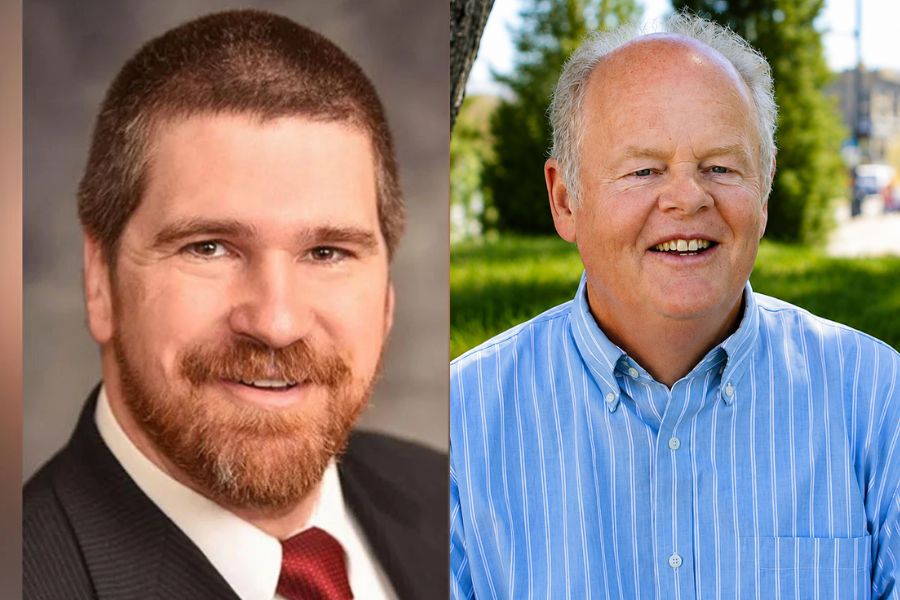
IDAHO FALLS — The incumbent for representative in District 33 will be campaigning to keep his seat from a local mental health counselor.
Incumbent Marco Erickson, R-Idaho Falls, is running against Todd DeVries, D-Idaho Falls.
EastIdahoNews.com sent both candidates the same questionnaire. Erickson and DeVries’ unedited responses are listed below.
The general election will be held on Nov. 3. Polls are open from 8 a.m. to 8 p.m.
For more candidate questionnaires and information about the midterm election on Nov. 3, check out East Idaho Elects. To learn where to vote or what’s on your ballot, visit VoteIdaho.gov.
Tell us about yourself — include information about your family, career, education, volunteer work and any prior experience in public office.
DeVries: I came to Idaho 36 years ago. Most of that time I have worked alongside people with disabilities, first as an independent living advocate and assistive technology trainer, then in disability services at Idaho State University. I earned my Master of Social Work from Northwest Nazarene University, where I now teach clinical social work students. I am a Licensed Master Social Worker, and for the last eight years I have worked as a mental health counselor in Idaho Falls, serving mostly Medicaid-eligible clients.
I have chaired the boards of the Idaho Falls Soup Kitchen and the Development Workshop, and currently serve on the Community Outreach Center board.
I have never held public office. I came to politics in 2018, helping organize the Bonneville County signature drive that put Medicaid expansion on the ballot. I have since served as a precinct captain and as State Committeeman for Bonneville County.
I am blind. That fact does not define who I am, but it does influence how I perceive the world. I know what it feels like to be underestimated, doubted, and defined by stereotypes. I grew up on a lake in Wisconsin, where my best friend was a canoe. I was fortunate to attend schools that believed in educating every student, regardless of income or challenges.
I read braille, use a white cane, and own too many devices that talk. I love kayaking, cross-country skiing, classical music, a good cup of coffee, and rooting for the Chukars.
Erickson: I have been a public servant since I was 10 years old. I love serving people and have been blessed to be on multiple boards, committees, locally and nationally for the past 30 years. I became a public speaker at age 19 touring singing country music and talking about substance use prevention work and building nonprofits.
I have my master’s degree in psychology, and have had roles owning a mental health agency, managing state mental health systems as a bureau manager, and used my experience and skills with people to get elected to the Idaho House of Representatives in 2020. I have focused most of my efforts on mental health system improvements, and the justice system. I have been married for 25 years, and my wife and I have 5 children.
Why are you seeking political office in your community? Briefly explain your political platform.
Erickson: I have been an elected Republican representative for the last 6 years and have passed many important pieces of legislation. My platform aligns with Republicans, and personally I work at uniting people in spaces that we all care about like helping families and individuals improve their quality of life while being responsible with the taxpayers’ money. I work hard to find unity and civility in the work I do.
I have many projects that I am working on that take time and have a large impact. I was asked 2 years ago to serve on a regional capacity as a chairman of a committee that is made up of 13 western states, and have served as the Vice Chairman of Health and Welfare for the past 4 years. I am honored that I get to serve people in so many varied ways and genuinely enjoy the work. Service is what has driven me as a person my entire life. I will continue to serve people until I am no longer capable, even when my legislative time is complete.
DeVries: As a counselor, I don’t just read about the Legislature’s choices in the news. I see what they do to the people I serve.
In December 2025, the state’s Medicaid contractor cut Assertive Community Treatment and peer support programs for thousands of Idahoans living with serious mental illness. Within three months, four people had died. The state reversed course, and the restoration cost about $31 million. Whatever the cut saved, it cost far more. That is governing from scarcity and fear, and it is why I am running for office.
My platform comes down to three words: access, personal choice, and democracy.
Access means health care people can afford. Idahoans voted for Medicaid expansion, and the Legislature keeps trying to undo it. Idaho has the fewest doctors per capita in the country. We should be recruiting doctors, nurses, and counselors, not driving them away.
Access also means fully funded public schools. Our school districts should not have to keep returning to local taxpayers with levies and bonds just to keep the doors open, while $50 million a year goes to private school vouchers.
Personal choice means medical decisions belong to patients, their families, and their doctors, not to the Legislature.
Democracy means protecting your right to vote and your right to put an initiative on the ballot. I was in my 40s when Idaho brought in audio voting machines in 2006. Before that, someone else had to mark my ballot for me. I know what that access is worth.
With rising housing, fuel, and food costs facing Idahoans, can the state government help bring relief to Idaho citizens? Is it the role of the Idaho Legislature to help deal with these issues?
DeVries: Yes. While the Legislature can’t set the price of gasoline or groceries, it makes choices every year that decide whether working families get any breathing room.
In Idaho Falls, 43 percent of households can’t cover the basics of housing, child care, food, transportation, and health care. Most of them are working. Idaho’s minimum wage is still $7.25, where it has been since 2009.
Since 2021 the Legislature has cut roughly $4 billion in income taxes, and most of that relief went to the people who needed it least. Here is what I would do instead.
Create a state Earned Income Tax Credit. Thirty states have one. It puts money back in the pockets of working families, and it rewards work.
Take on housing costs directly. Idahoans have named housing affordability their top priority for the Legislature three years in a row. The state should keep investing in workforce housing and give cities the autonomy and tools to support more starter homes, duplexes, and accessory dwelling units.
Fund child care. For a Bonneville County family with two young children, child care costs more each month than rent. The Idaho Child Care Program helps families stay at work, and it should be strengthened, not cut.
Relieve property taxes by requiring the state to pay its fair share for public schools, so local levies and bonds don’t carry the load.
Government can’t fix every price. It can stop making life more expensive for the people who can least afford it.
Erickson: Solving these complex challenges requires a true, active partnership between state and local governments. Having served on the front lines of homelessness and housing shortages in Nevada, I know firsthand how intricate and vital this collaboration is and ways to address it from varying angles.
Last session, we successfully negotiated with a neighboring state to block a proposed fuel tax, preventing a 20-cent per gallon gasoline price hike at our pumps.
As we head into the upcoming session, tax reform will take center stage. While we explore new avenues for relief, my position remains clear: I will not support policies that gut the local government structures keeping our communities safe and functional. Our police, fire, sewer, ambulance, water, libraries, and auditorium districts must remain fully funded, but also use conservative principles and avoid unnecessary waste.
Since I took office, we have delivered several billion dollars in direct tax relief to citizens. Moving forward, my goal is to build on that legacy—driving down costs for families while firmly protecting the essential local services that make Idaho a great place to live.”
How will you best represent the views of your constituents –- even those with differing political views? How do partisan politics play into your role as an elected leader?
Erickson: While national party platforms and even Idaho highlight deep ideological divides, I choose to work in the space where we unite to save taxpayer money and improve public services. It is a rewarding place to focus because it is driven by results, not rhetoric or political idealism. I consider the work I do to be rational and insightful, and meaningful. There are times I’m with one group and times I stand with another even within my own party there are factions that form.
My commitment to you is simple:
I show up & listen: I provide a realistic, transparent view of what can and cannot be achieved in state government.
I don’t check party lines: When a constituent shares their story with me, I don’t look at their political affiliation. I represent everyone in my district.
I seek common ground: We won’t always agree on every piece of legislation, but through honest, civil discourse, we can find alignment. That is exactly where the real work gets done.
DeVries: As a counselor, my job is to listen carefully and without judgment, especially to people who see the world differently than I do. That is the job of a legislator too. I will represent everyone in District 33, including the people who don’t vote for me. Every voice counts.
I will hold regular office hours during the session and town halls in the district throughout the year, publicized through local media. I will answer my email and return my calls. You don’t have to agree with me to be heard by me.
I didn’t come to politics through a party. I came through a petition drive, standing outside with a clipboard wherever people gathered and talking with anyone who would stop. The 2018 Medicaid expansion vote taught me that most Idahoans agree on more than the Statehouse would suggest. Republicans, Democrats, and independents signed that petition, and it passed with 61 percent of the vote.
Partisanship blocks clear and open conversation. Too often, legislators who vote their conscience face censure from party leadership. That isn’t how representation should work. I will never put a party ahead of the people I represent.
I am a Democrat. My party is a set of shared values, not a set of marching orders. When a good idea comes from across the aisle, I will vote for it. When a bad idea comes from my own side, I will say so.
What parts of the Legislative budget could use more funding? Where are places in the budget where cuts could be made?
DeVries: More funding:
Mental health and disability services. In two years we have lost Family Personal Care Services, temporarily lost assertive community treatment and peer support, and this year cut home and community-based service rates by $21.8 million. Cuts like these don’t save money. They move the cost to emergency rooms, jails, and institutions, which cost far more.
Public schools. The state should fund schools well enough that districts aren’t forced to rely on supplemental levies and bonds for basic operations.
Health care workforce. Idaho has the fewest doctors per capita in the country. We need a real pipeline, from CNA to surgeon, that trains health professionals here and keeps them here.
Where to save:
End the private school voucher program, the Parental Choice Tax Credit. It sent $50 million this year to private and home education, with no academic reporting requirement. That money belongs in public schools that serve every child.
Review Idaho’s tax breaks. The Legislature’s own Office of Performance Evaluations counted at least 166 tax preferences, none of which expire, and Idaho has no process for reviewing whether they work. Thirty-four states already review theirs. Every tax break should be audited and have to prove its value, just like every program does.
Finally, the current budget crisis followed five years of tax cuts weighted toward the wealthiest Idahoans and large corporations. Restoring some of that revenue is the responsible way to balance the budget.
Erickson: As we look toward the upcoming legislative session, my focus is on finding a vital balance: fully funding our state’s most critical infrastructure while ensuring our citizens are not overtaxed.
Stabilizing Idaho Healthcare Providers
I am advocating for a 10% funding increase for healthcare providers despite it not being in any current proposed budgets. Over the last couple of sessions, providers have experienced severe budget cuts. As a former direct service provider, I know firsthand what it costs to operate these facilities and run on very thin margins. Right now, those margins aren’t just thin; they are at breaking points. Through continuous discussions with local providers, I have found that many are being forced to make incredibly difficult financial decisions.
They are facing a dual crisis: their funding has been cut while the basic costs of doing business have rapidly risen. We cannot afford to wait until systems fail and people die before we restore services to full capacity and pay these dedicated professionals what they are worth. Healthcare is expensive, but through targeted efficiency improvements, we can serve everyone and pay well. By aggressively prosecuting anyone committing fraud and frequently evaluating the system for improvements, we can save large amounts of money and shift those vital resources directly to the areas needing support.
Empowering Local Education
Our schools need a system that trusts local leaders. I believe we must equalize education funding and grant more autonomy to our local school districts. Local boards need the flexibility to manage their funding effectively to meet the unique needs of their students, without being tied down by a bunch of state-mandated strings.
In 2026, Idaho suffered a historic drought, leaving eastern Idaho’s reservoirs at an all-time low. As a result, crop yields were significantly impacted. What specific strategy or legislation would you support to protect groundwater and surface water resources, and what is your timeline for measurable Improvements?”
Erickson: In the Idaho Legislature, effective governance relies on mutual respect and leveraging individual expertise. I leave the specific policy improvements and negotiations to the lawmakers who specialize in those fields, and I firmly support the solutions they come up with. Just as my colleagues trust me to take the lead on mental health and other issues where I have direct expertise, I trust them to do the hard work on the issues they know best.
While I have not championed any water legislation myself, I make it a priority to show up to meetings and active discussions. I participate consistently so that I am fully educated on the complexities of the topic. Water is the lifeblood of our state, and my goal is to stay informed to ensure our farmers and ranchers always have the resources and support they need to do their jobs.
DeVries: Our way of life in Eastern Idaho would not exist without our river and aquifer. They irrigate more than a million acres of farmland. The aquifer and the Snake River are one connected system. Over the past year the aquifer lost an estimated 600,000 acre-feet of water. That is what drought does to a limited resource.
Fund aquifer recharge. Putting water back into the aquifer in wet years is the best tool we have. In 2025 the Legislature raised the state’s recharge goal from 250,000 to 350,000 acre-feet a year. That is the right target, but reaching it takes more recharge sites and steady funding for the Idaho Water Resource Board, so the work doesn’t stall in a dry budget year.
Support the groundwater and surface water settlement. Water users on both sides spent years in court before reaching the agreements now in place. The state should help them keep those commitments with measurement, technical support, and cost-share for conservation, not reopen the fight.
Measure and report. The state measures aquifer levels every spring. Legislators should see those results each session, so we know whether our investments are working.
Plan for growth. As cities grow, their water obligations grow too. New development should come with a realistic water plan.
My timeline: in my first session, protect recharge funding and require annual reporting. Within three to five years, spring well measurements should show the aquifer stabilizing. If they don’t, the data will tell us to change course, and I will.
One of the biggest issues on the November ballot is Proposition 1, a citizen-led ballot initiative that would repeal Idaho’s abortion ban. Do you support Proposition 1? Why or why not?
DeVries: Yes. I support Proposition 1.
Idaho’s abortion ban took effect in 2022, and it is bad policy. It has no exception for the health of the mother. Doctors are left guessing how close to death a patient must be before they can act. Since the ban took effect, roughly a third of Idaho’s OB-GYNs have left, and several hospitals have closed their labor and delivery units. The families hit hardest live in rural Idaho, where an hour’s drive to deliver a baby is now normal. Every one of those miles is a risk.
Here is what Proposition 1 does not do. It creates no public funding for abortion. It does not force any doctor or nurse to act against their conscience; that protection is written into the initiative itself. It keeps the state’s authority to regulate abortion later in pregnancy. What it does is protect the decisions Idaho families made for nearly fifty years, including care when a mother’s health is in danger.
I respect that many of my neighbors hold deep moral and religious convictions on this issue. Proposition 1 does not ask anyone to set those convictions aside. It simply settles who decides when a woman’s health is at risk. I believe that decision belongs with the patient, her family, and her doctor at the bedside, not with a Legislature that has neither the training nor any place in the hospital room. Let doctors use their best medical judgment.
I urge you to vote yes.
Erickson: From the very beginning, I have made it clear that I do not support Proposition 1, and I have publicly shared my many concerns. If you read the text fully and understand legal language, it becomes clear that the wording is incredibly vague—to the point where even legal and medical professionals find it difficult to interpret.
I have listened to the arguments on both sides of this issue. My position has always been that if a piece of legislation is so confusing that regular citizens cannot understand its basic semantics, then it needs more work. That is exactly the case with this proposition. It was poorly written, and it creates far too much public confusion about its actual impact. Under these circumstances, I urge Idahoans to vote no.
We should instead continue having engaging conversations with legislators to improve the specific areas people care about that makes them so passionate about their side. When we truly listen to one another, we can find common ground with the caveat that Idaho is a state that deeply values life. We will not budge when it comes to protecting the lives of innocent babies and upholding our foundational values.
Idaho House Joint Resolution 4 (HJR 4) is a constitutional amendment on the November ballot that would give the Legislature exclusive authority to legalize or decriminalize marijuana, narcotics and psychoactive substances. It would also ban citizen initiatives that would allow voters to directly have a say on the issue. Do you support the passage of HJR 4? Why or why not?
Erickson: Idaho already has a representative government. I believe fully that when we allow citizen initiatives on this type of issue, outside big money and influence create a easier pathway to funding their future on the backs of our citizens safety and health. They don’t care about the citizens like I do. I love my community and the people who live here. I do not want to see situations like Las Vegas and Seattle.
I get that people don’t always trust their government to do what they want, or what they think is best which is why we have the initiative process and have elections to get rid of those who don’t align with our values. I love the process of how government works and how you have to convince a majority of lawmakers to make a change. We are elected to do that homework, have those long meetings, hear the testimony of the public, and make decisions on behalf of the people and we do it in front of cameras and have accountability for our votes.
HJR 4 happens to be a topic that many people with big money do not want to see get harder for them, as they want to sell their products and make money from consumers. If we look at how the situations turned out in some of those other states, it is clear Idaho would not want to follow their policies. In the primary election there was almost $20K spent to try and get me out of office from groups in Virginia who have a large desire to make money from policy that supports their industry.
DeVries: No. I will vote no on HJR 4, and I urge you to do the same.
This is not really a question about marijuana. Idahoans hold a wide range of views on marijuana and other drugs, and you don’t have to support legalization to oppose HJR 4. As a counselor, I have seen what addiction does to people and families, and I take that seriously.
HJR 4 is about who holds power. The Idaho Constitution says that all political power is inherent in the people. The citizen initiative is how the people check the power of the Legislature when it won’t listen. HJR 4 would permanently take one subject away from the voters and hand it to the Legislature alone. Once we accept that the Legislature can carve one topic out of the initiative process, there is nothing to stop it from carving out the next one. How much freedom are you willing to lose?
I helped gather signatures for Medicaid expansion in 2018 because the Legislature refused to act for years. Voters passed it with 61 percent. That is the initiative process working exactly as intended, and the Legislature has been trying to limit that process ever since.
Conservatives and progressives alike have warned that HJR 4 shrinks the people’s voice in our government.
Stand up for Idahoans. Vote no on HJR 4 and keep power with the people.