



Fawn euthanized by Fish and Game after being raised by local family
Published at
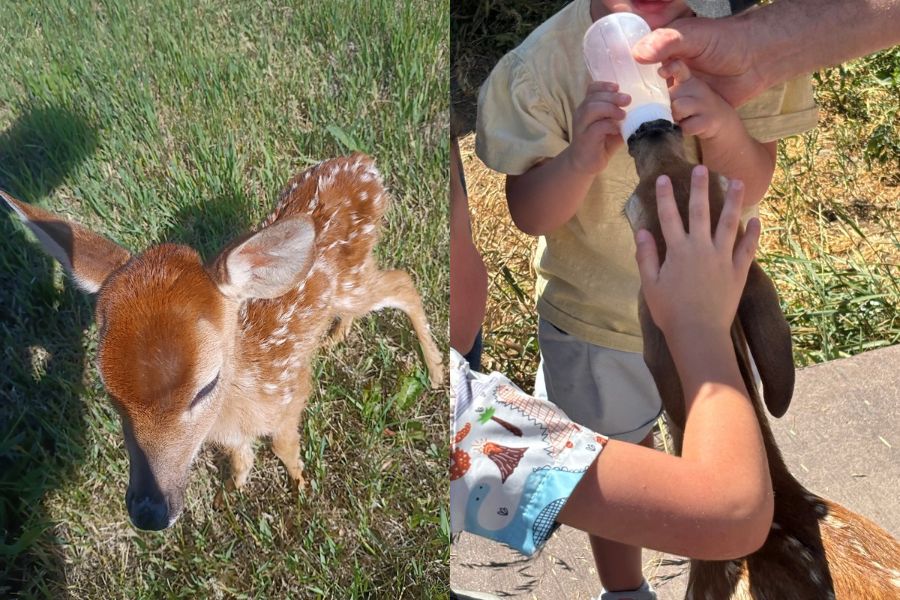
RIGBY — The Idaho Department of Fish and Game recently euthanized a fawn after it was discovered that it had been domesticated by a local family.
It’s easy to have your heartstrings pulled when you see a baby animal alone on the side of the road, and it’s human nature to want to help by taking it home.
But according to Fish and Game, doing so may be dangerous for both you and the animal.
In June, a local man was on his way to work in Rigby when he saw a fawn lying alone on the side of the road.
“He saw something on the side of the road, and he was about to hit it,” says Camille Ramage, the man’s daughter. “It was like a newborn baby deer, like maybe that day or a few days after it was born.”
According to Ramage, her father stayed with the deer for over an hour, hoping its mother would come back for it.
“He even picked up the baby deer so it would make noise to call for its mother,” says Ramamge. “The mom never came, so he brought it home.”
Over the next four months, the family took care of the deer, not realizing that Idaho law prohibits keeping any kind of wild big game animal in your home without an approved license or permit.
“No person shall engage in any propagation or hold in captivity any species of big game animal found wild in this state, unless the person has been issued a license or permit by the director as hereinafter provided,” says Idaho Code.
The family became attached to the animal, playing with it, bottle-feeding it and getting used to having it around.
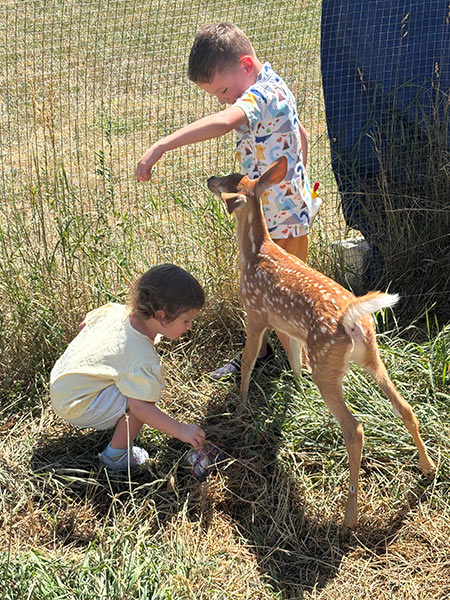
“We had gotten attached to the baby deer, but the end game was to actually bring it into the wild,” says Ramage. “(Her father) has deer on the property 24/7, eating out of his orchard and stuff like that.”
According to Ramage, her father’s goal was to make sure the deer was healthy before releasing it into the wild. Unfortunately, wild animals can become aggressive after becoming domesticated by people and be rejected by other animals, according to Fish and Game.
“The hard thing with habituated deer is they do actually pose a safety threat,” says Spencer Wesche, a regional conservation officer with Idaho Fish and Game. “Especially as they get bigger and start developing. We’ve actually had several incidents, including in Southeast Idaho, where formally domesticated deer have chased or even attacked humans because they just don’t have that normal fear that other deer have.”
Just over a week ago, Fish & Game were dispatched to the home after receiving a tip through their Citizens Against Poaching hotline.
An officer drove by the home, saw the fawn in an enclosure and stopped to speak with the family.
“They were sitting there watching it for a while at my dad’s house,” says Ramage. “I know that we’re not supposed to domesticate wildlife and everything like that, but it was a baby, and I’m not going to let a baby die.”
According to Wesche, this is not an uncommon feeling, but unfortunately, it is often safer to let the animal be and to allow nature to take its course.
“I know it’s tough to see them if there’s no mom around and they’re on the side of the road, that can be really hard, it tugs on your heartstrings,” says Wesche. “But we have to give them the opportunity to develop in the wild.”
If a wild animal is domesticated, it will often become aggressive and unable to cohabit with other animals in the wild after it has gotten used to people.
“When they’re small and little, it doesn’t seem like it’s going to pose any sort of threat to you,” says Wesche. “But deer have really sharp hooves, and if it’s a buck, it will grow antlers. And as they get older, they start seeking out humans and have those interactions. They do start to show signs of aggression and can really do some damage.”
Ramage says her family was traumatized watching Fish and Game take the animal from their home, and initially did not know what was going to happen to it.
According to Wesche, the family was not cited for the incident, and officers were able to speak with them about the circumstances.
Fish and Game officers reportedly considered many different options for how to best handle the situation, but ultimately decided that, due to the length of its domestication and comfort level with people, euthanasia was the safest option.
“We have to make decisions that are in the interest of public safety and resource management, too,” says Wesche. “It’s tough on us as well as obviously the family and members of the public, they get attached to these critters … we value the wildlife. We try to look at other options, but for domesticated or habituated deer, there’s just not a lot of options for them.”
If you do come across a young wild animal that seems to be alone, Wesche says not to touch it, but to take a picture and call your nearest Fish and Game office.
“The sooner that we know about something, where it’s just on the side of the road and could get into traffic, maybe we could come out and relocate it to the river bottoms or something like that,” says Wesche. “Just make sure we’re leaving the wildlife be, and make sure you’re calling the correct agency to chat about that.”