



Goldfinches invade sunflower garden, and they’re not alone
Published at
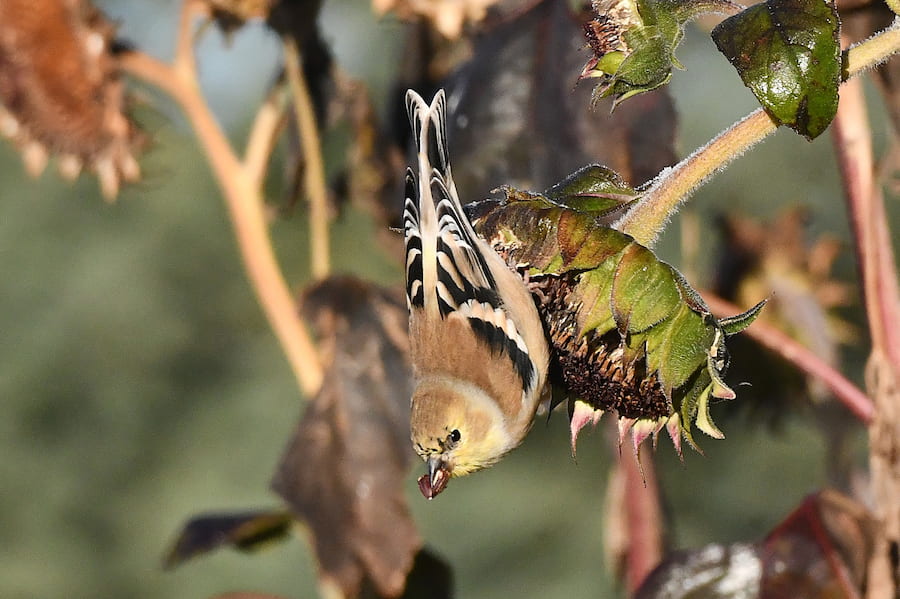
Last spring, with water predictions short for the summer gardens, I decided to only plant half a garden, but I planted a row of regular and giant sunflower seeds. It turned into a haven for birds that love sunflower seeds this fall as the flowers dried into seeds. Dark-eyed juncos, Pine siskins, house finches, black-caped chickadees and several species of sparrows showed up to enjoy them, but the American goldfinches showed up en masse.
All the birds are in their drab fall colors, with the male goldfinches in their dirty yellow or tan feathers instead of their spring brilliant yellow ones. But they are fun to watch as they fight over a sunflower to harvest a seed then break it open to eat the meat inside. I have noticed that the males will often give way to the females when they come to feed.
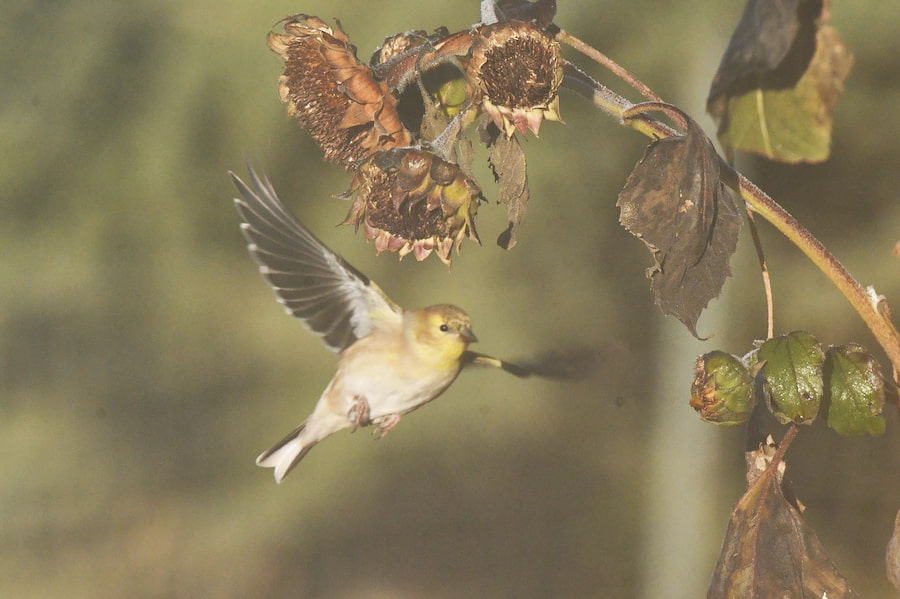
The chickadees will harvest a seed and then fly to another tree to pound the seed against a stout limb to break it open. If their favorite sunflower is occupied by goldfinches or pine siskins, the chickadees will sound an alarm call, and all the other birds will leave the sunflowers. Then they will slip in and grab a seed and head for tree to consume it.
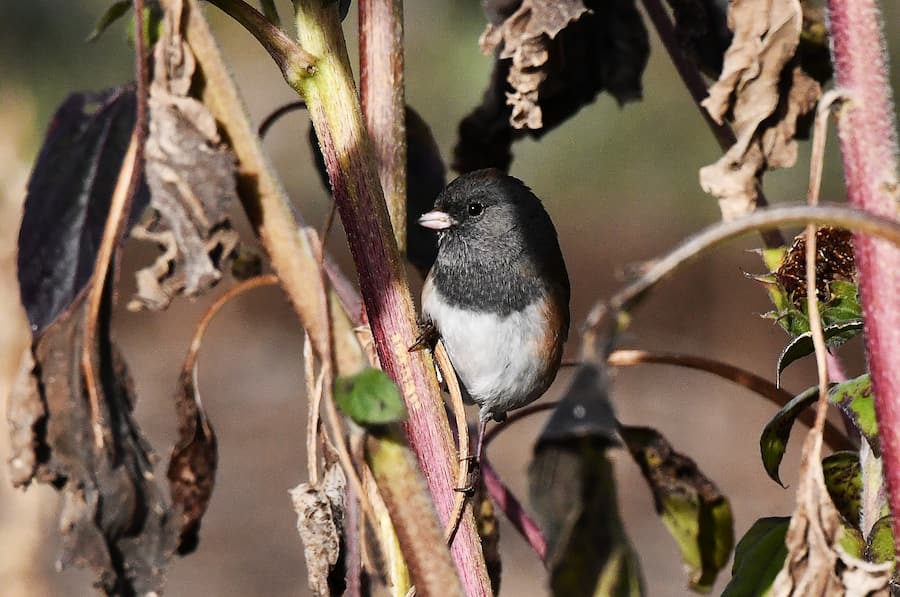
The beautiful dark-eyed juncos feed on the ground on the seeds that have been dropped, so I cut off some of the heads of hardening sunflower seeds, and they pull them out to get their food.
We have already seen some early winter birds show up in many backyards that have put out their feeders. It is time to start putting out Nyjer seed sacks, sunflower seeds and suet cakes for these winter birds. I put out multiple Nyjer seed feeders to guarantee that I will keep some of the goldfinches around to watch the males turn color during the winter. I might even get some of the lesser goldfinches to show up.
Several people who have put out feeders are reporting seeing Steller’s jays and evening grosbeaks at those feeders. I have had both of them visit my yard this fall. The Finch Research Network has sent out some irruption alerts for this winter.
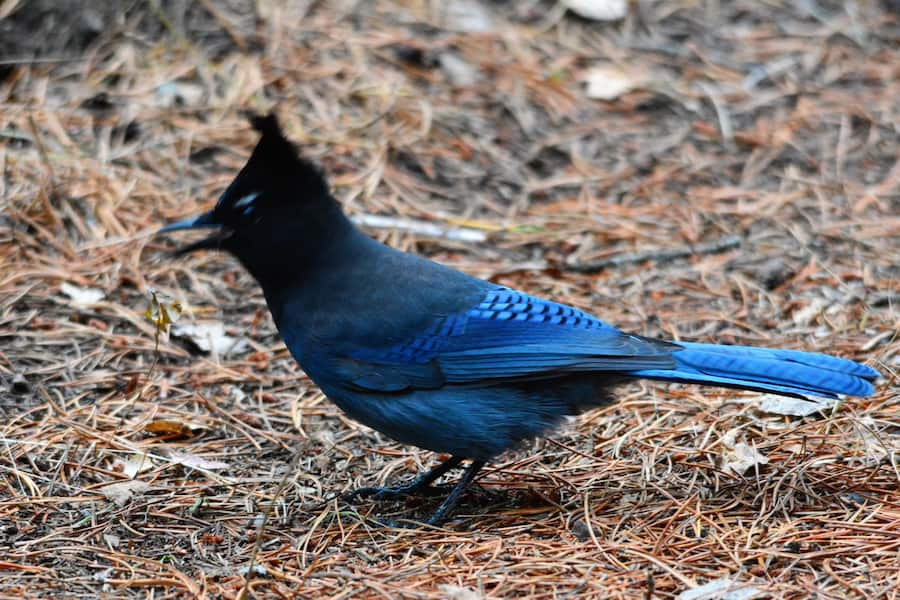
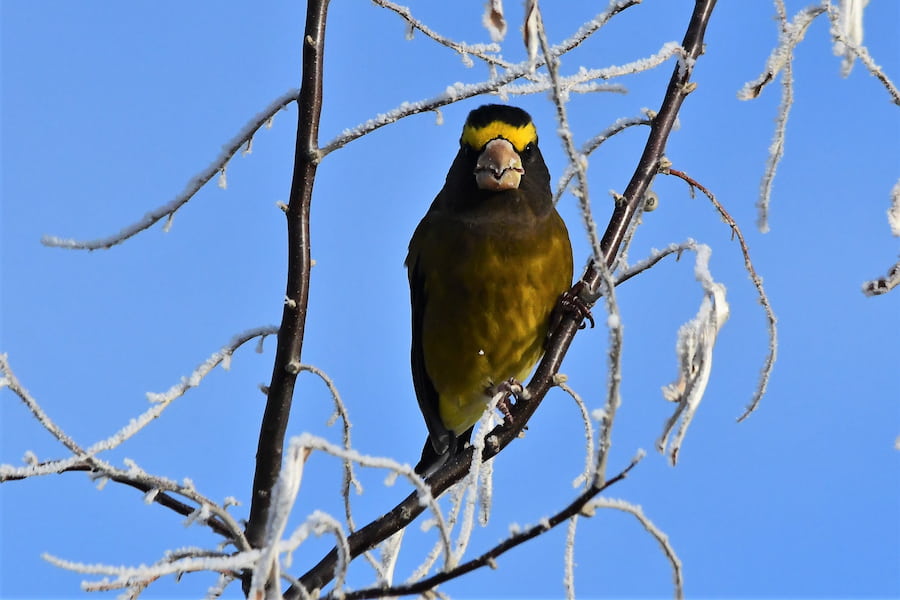
An irruption known as a “Super Flight” year, and will happen when food sources for some species are inadequate to meet the birds’ needs in their traditional wintering areas. This causes birds to “wander” from those areas to look for food in other areas. The birds listed in the irruption alerts are Steller’s jays, grosbeaks, Clark’s nutcrackers, redpolls, pine siskins, red-breasted nuthatches, brown creepers and even pinyon jays. Putting feeders out now may attract some of these wandering species.
We have been blessed with storms the last few weeks, with another one predicted this weekend. The winter birds will ride these storms as they “blow” them off course and may show up in our backyards if we have food and shelter for them. Keep a look out for any strange birds you may find at your feeders or in your backyard.
The sandhill cranes are starting to gather for their migration near Camas National Refuge and Mud Lake. I have not seen any large flocks of tundra or trumpeter swans, but they should soon be coming in, so keep an eye out for them.
I hope you have a safe and enjoyable Halloween!

Living the Wildlife is brought to you by Yellowstone Teton Territory. Experience 7,500 square miles of untamed wilderness in Eastern Idaho's Yellowstone Teton Territory. Where majestic peaks meet endless adventure, your perfect outdoor escape is waiting. Start planning at YellowstoneTeton.com.