



Lecture on ‘ancient Oreos’ is sure to be a treat. Get tickets soon
Published at
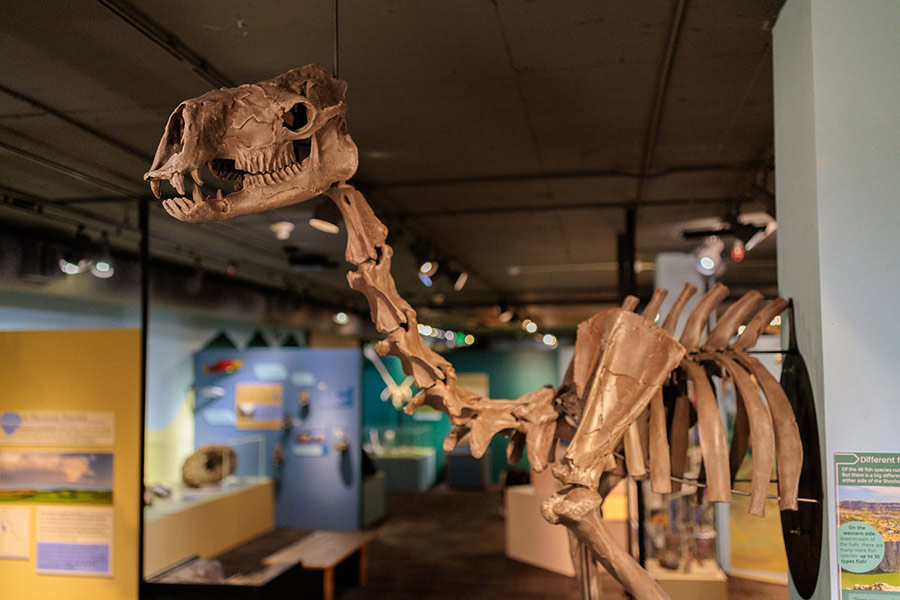
POCATELLO – You have a limited time to buy tickets to a catered dinner about “ancient Oreos.”
On Friday, Nov. 6, the Idaho Museum of Natural History will begin its Fall Fossil Fest with a keynote address by an expert on an ancient mammal called Oreodont, which lived 40 million years ago and was related to camels. And the festivities will continue the next day with an unveiling of a giant camel skeleton replica, as well as more presentations, activities and the chance to learn more about the paleontology research happening at Idaho State University.
“It’s kind of remarkable we’re able to have all this cool paleontology research that’s happening in and around Idaho,” said Robert Gay, the museum’s education manager.
RELATED | Jurassic toe: Idaho State paleontologists investigate possible new dinosaur
RELATED | Prehistoric lobster named after Idaho State University paleontologist
The keynote address, which will go from 6 to 8 p.m., will be delivered by Dr. Meaghan Wetherell, who holds a Ph.D. in geoscience from the University of Oregon with a specialization in paleontology, focusing particularly on the ecology and evolution of hoofed mammals. Gay said that Wetherell has been studying Oreodonts for “pretty much all of her career.”
Because the address will have a catered dinner, which will be a “harvest buffet” type meal, the last day that people have to buy tickets will be Sunday.
All of the proceeds go toward furthering the museum’s education initiatives.
Gay said that people who attend will learn all kinds of interesting facts about the Oreodont, such as evidence showing that the creatures would chew on each other’s faces — hence the title of the address, “Chewing on Ancient Oreos.”
“(There were) just all sorts of weird things happening with these very cute critters,” Gay said.
And Gay said that there’s no clear reason why Oreodonts did this.
“Maybe as some sort of ritualistic combat, or competition for mates. Who knows?” Gay said.
Tickets for the keynote address are $40 and can be bought through a link on the museum’s website.
Then on Saturday, Nov. 7, the museum will unveil a 3D-printed skeleton of a giant, humpless camel called Megatylopus, which lived in Idaho. Gay said that Megatylopus, which lived around 7 million years ago, could grow to be as tall as 12 feet at the shoulder.
Tickets to that event can be purchased at the door and will be priced as follows:
- Adult – $12
- Senior – $8
- Youth (4-17) – $5
- 3 & Under: Free
- ISU Students: Free
The Megatylopus skeleton will be on display at the start of the day’s festivities, starting at 9 a.m.
The day will also see researchers from Idaho, Utah and Oregon who will present about their research at different stations, “where visitors can come and interact with these scientists.”
Additionally, Gay said that attendees will be able to handle replica fossils and view work from paleo-artists, some local to Pocatello.
“Because we’ve got a lot of talent here,” Gay said.