



Review: ‘The Social Reckoning’ may be the scariest movie you’ll watch this Halloween
Published at
October is here, and that means it’s time for scary movies.
Masked killers, haunted houses, possessed children, creepy dolls. Whatever your particular nightmare happens to be, Hollywood has probably made a movie about it.
Personally, I’ve always been a fan of a good horror movie. I love the tension, the suspense, and that feeling when a movie genuinely catches you off guard.
But after watching “The Social Reckoning,” I’m starting to wonder if the scariest movie of the Halloween season might be one that doesn’t have a single ghost, demon, or chainsaw-wielding maniac.
It does, however, have Facebook. And apparently, that’s enough.
A different kind of horror story
I remember watching “The Social Network” in 2010 and being fascinated by the story of how Facebook came to be.
It was a movie about ambition, friendship, betrayal, and a brilliant young man who helped change the world.
I don’t think any of us fully understood just how much that world was going to change.
Now, 16 years later, we have “The Social Reckoning.”
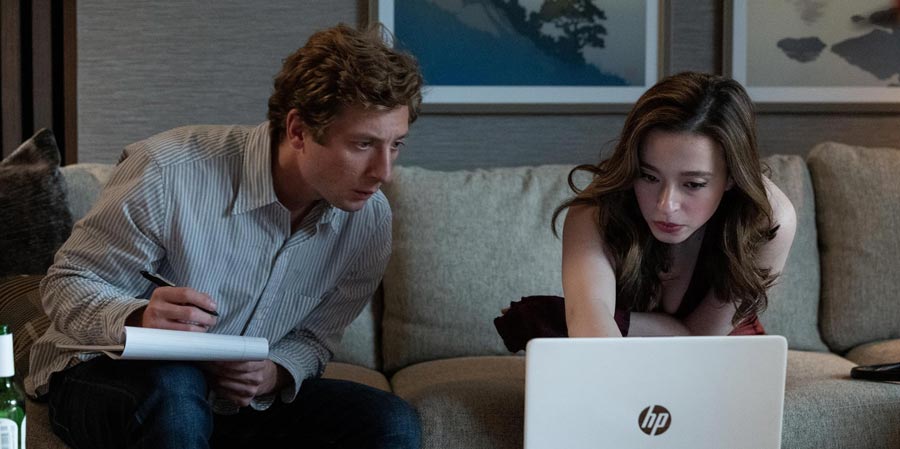
The movie follows Frances Haugen (Mikey Madison), a Facebook employee who becomes increasingly concerned about what the company knows about the harm its platform may be causing.
She eventually connects with Wall Street Journal reporter Jeff Horwitz (Jeremy Allen White), and the two begin working to expose internal company documents.
It’s based on the real-life Facebook whistleblower revelations from 2021, and while it’s being called a sequel to “The Social Network,” I think companion piece is a much better description.
The first movie showed us how Facebook became so powerful. This one asks what happens when that power gets out of hand.
And it’s fascinating.
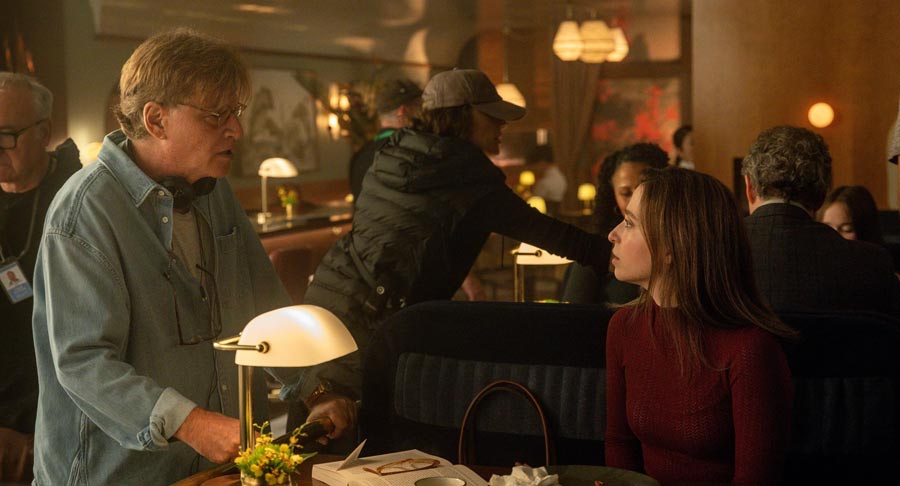
Aaron Sorkin wrote both movies, but this time he’s also directing. David Fincher directed the original, and I think his absence is noticeable. There’s something about Fincher’s style that elevated “The Social Network” from a really good movie to a great one.
“The Social Reckoning” doesn’t quite get there for me.
But Sorkin still knows how to make people sitting in rooms talking feel like the most exciting thing you’ve watched all week.
Madison and White are excellent, and Jeremy Strong delivers a genuinely unsettling performance as Mark Zuckerberg.
The movie is engaging from beginning to end, and while I walked out thinking I’d seen a very good film, I wasn’t ready to call it great.
Then I kept thinking about it… for days.
And the more I thought about it, the more uncomfortable I became.
We know. So why do we keep doing it?
Here’s the interesting thing about “The Social Reckoning.”
It didn’t really teach me anything new.
I’ve heard the concerns about social media and mental health. I’ve read about algorithms designed to keep people engaged. I know about misinformation, online bullying, and the pressure people feel to compare their lives to the carefully selected highlights of everyone else’s.
I think most of us know these things.
And yet, how many of us have picked up our phones to check one little thing, only to realize 25 minutes later that we’re watching a video of a guy restoring a rusty lawn mower?
I don’t own a rusty lawnmower. I don’t need a rusty lawnmower. I have absolutely no intention of restoring a rusty lawnmower.
But apparently, I need to see how this turns out.
We know we’re being encouraged to spend more time on these platforms. We know the content being presented to us isn’t random. We know there are people whose entire jobs revolve around figuring out how to keep our attention.
I’m not suggesting social media is evil. Far from it.
I’ve reconnected with old friends, stayed in touch with family, discovered interesting people, and laughed at more ridiculous videos than I care to admit.
There are some wonderful things about social media. But there’s something a little unsettling about how easily we can lose control of our own attention.
Especially when we know it’s happening.
And then there are our kids
My wife and I have three kids, and we’ve made a decision that hasn’t exactly made us the most popular parents in the house.
We don’t let them use social media. As you might imagine, they haven’t always appreciated our brilliant parenting.
In fact, I’m fairly certain there have been moments when they’ve wondered if we understand what century we’re living in.
Look, I get it. I remember being a kid. I remember how important it felt to be part of what everyone else was doing.
Of course, when I was growing up, being left out meant you might miss a conversation about last night’s episode of “The Simpsons.”
Now, it can mean missing an entire world of conversations and experiences happening on a screen.
There are plenty of parents who approach social media differently, and I respect that. Every kid is different, every family is different, and what works in our house might not work in yours.
But watching “The Social Reckoning” made me think a little more about the decisions we’ve made.
It also made me think about my own habits. Because it’s pretty easy to tell my kids they don’t need to spend their time scrolling through social media. It’s a little harder to explain why Dad has been staring at his phone for the last 20 minutes.
A movie worth talking about
One of the things I appreciate most about movies is their ability to start conversations.
Sometimes those conversations are about the movie itself. Did you like the ending? What did you think of that character? How in the world did they survive that explosion?
Other times, a movie gets us talking about something much bigger.
I think “The Social Reckoning” falls into that second category.
It’s rated R for language, and there’s enough of it that parents should be aware before deciding whether to watch it with their kids.
But I also think this could be a worthwhile movie for parents to watch with their older teenagers.
Not because it has all the answers. It doesn’t.
And not because Sorkin presents a perfectly balanced look at Facebook and Mark Zuckerberg. He certainly has a perspective, and he isn’t particularly shy about sharing it.
But because it raises questions worth discussing.
How much influence should these companies have over our lives? How much responsibility do they have for the consequences of their products? And how much responsibility do we have for the way we use them?
I don’t have simple answers to those questions, but I do know that after watching this movie, I’m a little more interested in asking them.
“The Social Network” was about a group of people who created something that changed the world.
“The Social Reckoning” is about what happened after the rest of us started using it.
I enjoyed the movie. I think it’s well-written, well-acted, and worth seeing. I don’t think it’s quite as good as “The Social Network,” but I also think it may be just as important.
And unlike most of the horror movies I’ll watch this October, this one has me thinking about something I encounter every single day.
Because when the scary movie ends, I can leave the theater, go home, and remind myself that the monster isn’t real.
With “The Social Reckoning,” I’ll probably go home, sit on the couch, and summon that monster from my own pocket.