



The battery in your trash could set a garbage truck on fire. Here’s how
Published at
Harllie Stevenson, Idaho Statesman
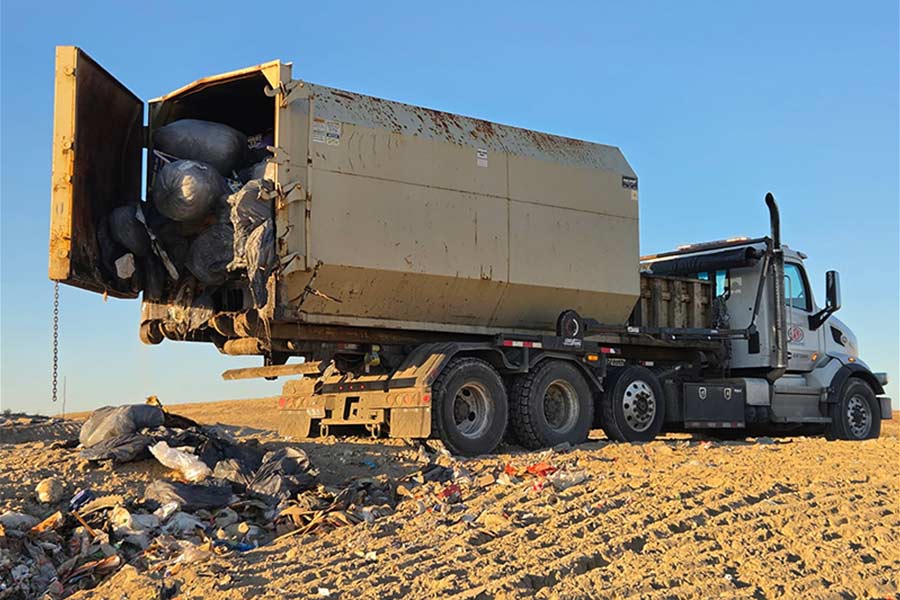
BOISE (Idaho Statesman) — The Boise Fire Department and Republic Services are sounding the alarm on lithium-ion batteries, as improperly discarded batteries have caused increased safety concerns in the Treasure Valley.
Boise Fire and Republic Services held a lithium-ion battery safety event Tuesday to warn residents of improper battery disposal. Roy Mitchell, Boise Fire’s division chief of special operations, said that while there are plenty of batteries used in everyday items that are safe to dispose of, lithium-ion batteries are different due to their reactivity and sensitivity when damaged.
Once a single battery is punctured, overheated or damaged in any way, it has the potential to go into a process called thermal runaway, where it starts to generate heat, produce flammable and toxic gases and become a hazard, Mitchell said.
“Another concern is devices that have a built-in battery that you don’t replace. You just plug it in and you charge it and over time it doesn’t work anymore,” Mitchell said. “It’s really important that these are disposed of properly.”
Rachele Klein with Republic Services said improper disposal of rechargeable batteries is the company’s greatest safety concern. She said the risk of the battery exploding or sparking is not just for residents, but for sanitation workers.
“We’ve had four to six truck fires in the last year,” Klein said. “We’ve had a couple of losses, and every time there’s risk in the community.”
The danger can begin when a battery is placed in a trash or recycling bin, Klein said. Once inside a garbage or recycling truck, batteries can be compressed or damaged, potentially causing them to spark or explode.
“Consider the trash or recycling on a truck like this to be fuel,” Klein said.
Even if a battery makes it through the truck without igniting, the risk continues once it reaches a landfill or recycling center, as heavy equipment can compress or crush the batteries, potentially causing another fire, Klein said.
Mitchell said everyday household items such as laptops and power tools can have a rechargeable lithium battery cell called an 18650, which, when damaged, can quickly erupt into a fire.
To demonstrate this, Boise Fire Capt. Roy Boehm damaged a single 18650 cell by placing it in a wooden device and striking it against an anvil. Within seconds, fire erupted.
“It doesn’t take long from the moment it gets damaged to the point where it goes into thermal runaway,” Mitchell said. “This kind of illustrates how, when a garbage truck is compressing the garbage, if there’s a lithium-ion battery and it gets destroyed, this is exactly what you would see inside the garbage can.”
While just one 18650 cell was used in the demonstration, Mitchell said a typical scooter or e-bike could have 30 to 40 and an electric vehicle could have as many as 7,000.
Klein told reporters after the event that some parents will give their children an e-bike and throw it away a year later when the battery stops working, not knowing the battery still has enough potential for significant damage.
Klein said that Treasure Valley residents have options when it comes to properly disposing of these batteries, including the Ada County Landfill, which is open Fridays and Saturdays from 8 a.m. to 6 p.m., along with mobile collection sites.
Along with proper disposal, homeowners can take other safety measures to ensure low risk of fire by avoiding leaving batteries charging overnight, keeping batteries at room temperature, storing batteries away from anything flammable, and avoiding charging devices under a pillow.