



‘Brilliant fireballs:’ meteors to shoot across Idaho night sky. Here’s when to watch
Published at
Hali Smith, Idaho Statesman
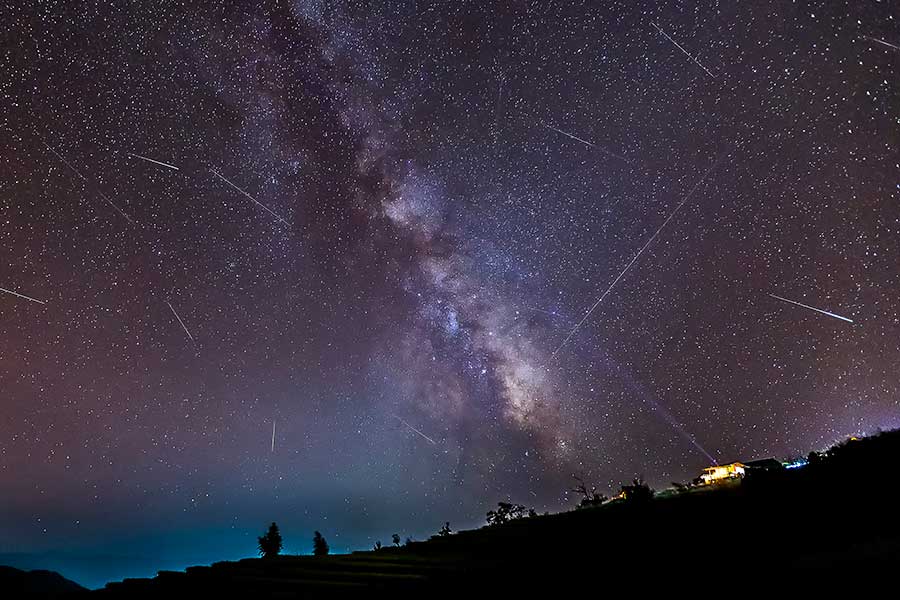
BOISE (Idaho Statesman) — Make a wish, Boise.
The Northern Taurid meteor shower will soon light up the Idaho night sky.
Here’s when to watch for shooting stars:
When does Taurid meteor shower peak in Idaho?
The Northern Taurid meteor shower will bring “slow-moving shooting stars and occasional brilliant fireballs to the night sky,” Space.com said.
Sky watchers will have a chance to “spot some spectacularly bright shooting stars, often nicknamed ‘Halloween fireballs,’ ” Space.com said.
The Northern Taurids peak on Wednesday, Nov. 11, and Thursday, Nov. 12.
The meteor shower is best viewed after midnight.
Will there be more meteor showers in the Idaho?
A total of three meteor showers will fly through the November night sky in Idaho, according to National Geographic.
The Leonid meteor shower hits its stride in mid- to late November, Sea and Sky said, producing up to 15 meteors per hour at its peak.
The meteor shower reaches its height on the nights of Tuesday, Nov. 17, and Wednesday, Nov. 18.
“The Leonids are pretty mild,” National Geographic said. “Expect around a dozen or fewer meteors per hour under dark skies.”
“While the meteors appear to originate from the radiant constellation Leo, they can shoot in any direction,” the publication said.
Will the meteor shower be visible in Boise?
Wishing on shooting stars requires clear skies and low light pollution.
Fortunately, Treasure Valley stargazers will only have to compete with partly cloudy conditions during the peak of the Northern Taurids, according to the National Weather Service’s current forecast for Boise.
However, you’ll still need to leave the bright lights behind to get the best views.
What is the best way to watch shooting stars?
Meteor showers can be observed without any special equipment.
“Lie flat on your back with your feet facing east and look up, taking in as much of the sky as possible,” NASA said. “After about 30 minutes in the dark, your eyes will adapt and you will begin to see meteors.”
Where should I go to look at the night sky in Idaho?
For the best view, stargazers should head to a high-elevation spot away from city lights.
The ideal stargazing locations offer “unobstructed views of the horizon,” National Geographic said. “Mountains, moorlands, deserts and remote islands are good choices, thanks to their isolation, clear conditions and lack of light pollution.”
“Idaho is home to a dark sky reserve and three dark sky parks,” the state travel guide Visit Idaho said. “Craters of the Moon National Monument & Preserve, Bruneau Dunes State Park and City of Rocks National Reserve offer stargazers an opportunity to see lunar-like landscapes while enjoying star parties and ranger-led full moon hikes.”
A light pollution map shows exactly where you can escape city lights.