



Idaho mother seeks answers about daughter’s care at state psychiatric hospital
Published at
LEWISTON — Once a promising engineering student on the dean’s list at the University of Idaho, Jenny Madsen has spent much of her adult life struggling with severe mental illness.
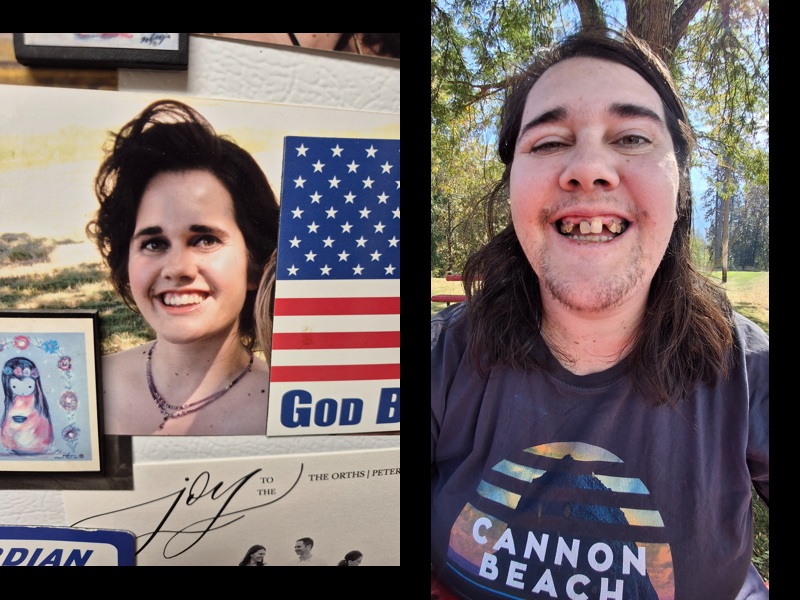
Now 38, Jenny spent 5-and-a-half years as a patient at State Hospital North (SHN) in Orofino before recently transferring to a care facility in Washington state. During her time at SHN, her mother, Bonnie Henrickson of Lewiston, says Jenny’s physical health deteriorated dramatically.
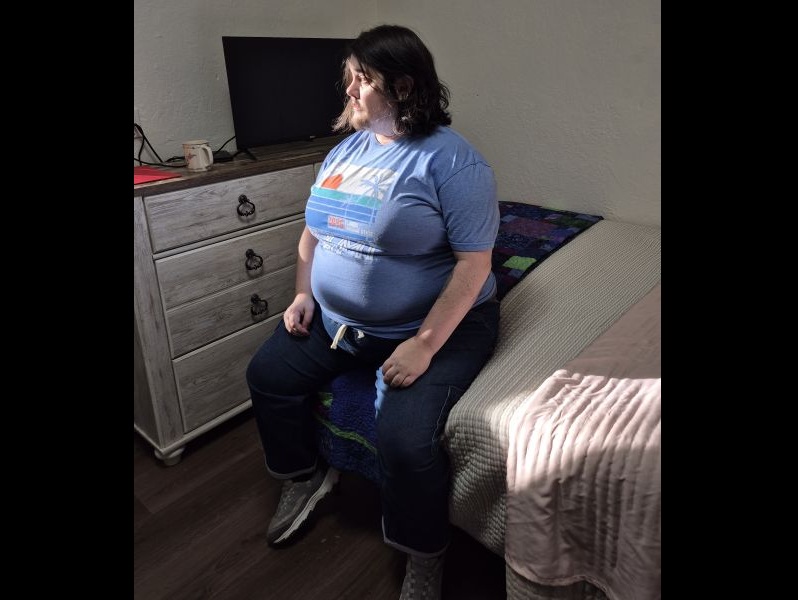
Jenny gained approximately 100 pounds, lost all her natural teeth and experienced other medical complications that Henrickson believes were not properly addressed.
“Jenny was a beautiful 160-pound athlete. Now she’s almost unrecognizable,” Henrickson said. “She gets winded walking down the hall, and her blood counts have been dangerously low. She has become obese and quiet. She’s at risk for cardiac disease and diabetes.”
Diagnosed with schizophrenia at 21, Jenny has been hospitalized numerous times over the past 17 years. Her mother says she has also spent time in jail for offenses such as disturbing the peace, sometimes being held in isolation.
“My daughter is not a criminal. She has a mental illness and needs help,” Henrickson said.
While Henrickson does not dispute her daughter’s need for psychiatric treatment, she questions how Jenny’s physical health could have declined so significantly while receiving care at a state facility.
After a lengthy effort that she says cost approximately $8,000, Henrickson became Jenny’s legal guardian in August 2025, taking over guardianship previously held by the Nez Perce Board of Guardians.
Now, she is speaking publicly about what she believes are serious shortcomings in Idaho’s mental health care system, hoping to bring greater attention to the treatment of vulnerable patients in state care.
A troubling physical decline
Among Henrickson’s greatest concerns are Jenny’s dental health and other medical conditions she believes required more timely attention.
According to Henrickson, Jenny entered SHN with healthy teeth but eventually underwent extensive dental procedures that resulted in the loss of all her natural teeth.
“Jenny’s teeth were beautiful upon admission to SHN. So many young adults experience tooth loss related to drug use. Not the case with Jenny,” Henrickson said.
Henrickson says she repeatedly requested dental care for her daughter and believes the hospital failed to arrange timely treatment.
She estimates approximately $13,000 of Jenny’s money was spent on dental care, including $2,600 for oral surgery.
Henrickson questions whether all the procedures were medically necessary, whether appropriate financial oversight was provided and who was advocating for Jenny throughout the process.
Her concerns extend beyond dental care.
Henrickson says Jenny also has polycystic ovary syndrome (PCOS), a hormonal disorder that can cause irregular or heavy menstrual periods and excessive facial hair growth.
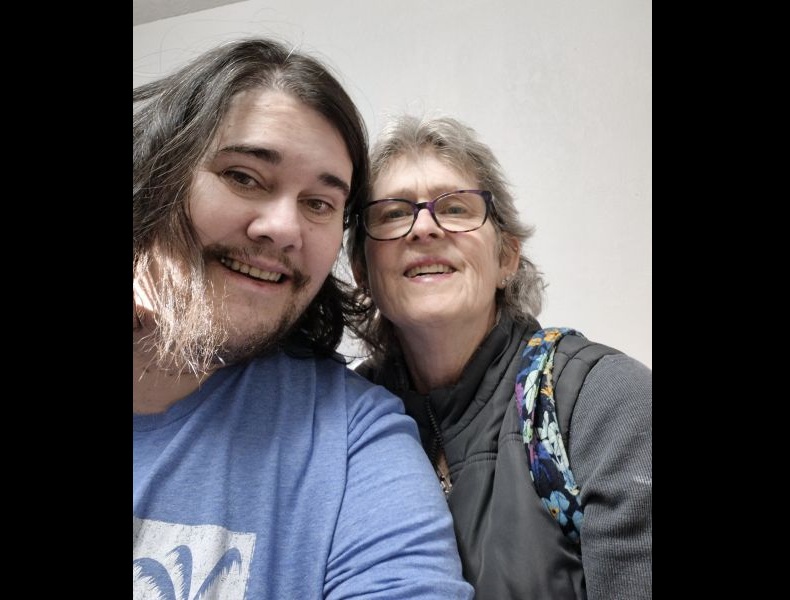
She believes her daughter needs specialized medical attention for the condition and questions whether her symptoms were adequately monitored.
Henrickson described one incident in which Jenny experienced prolonged, heavy menstrual bleeding while already having low blood counts.
“I informed her care coordinator of Jenny’s concern in regard to a very long and heavy menstrual cycle,” she said. “Jenny’s counts were low prior to this event, and yet her RBC count was not checked for another week. Jenny was rushed to Clearwater Medical Center for a transfusion of two units of packed red blood cells.”
Henrickson believes the incident raises questions about how medical decisions are made and whether patients with complex physical health needs receive appropriate care.
She also questions whether State Hospital North is equipped to provide the long-term treatment Jenny requires.
According to Henrickson, State Hospital North Administrator Jennifer Shuffield told her the facility was not suited to providing that level of long-term care.
Henrickson wants to know why alternative arrangements were not made sooner if the hospital recognized those limitations. She contends that Jenny did not receive the individualized care necessary to protect both her physical and mental health.
State responds to concerns
EastIdahoNews.com reached out to State Hospital North’s administrator seeking comment on Jenny’s case and Henrickson’s allegations.
In response, AJ McWhorter, public information officer for the Idaho Department of Health and Welfare, said federal patient privacy laws prevent officials from discussing specific cases or confirming whether an individual is receiving care at a state facility.
McWhorter explained that Idaho law allows patients in state psychiatric hospitals to participate in decisions about their medical care, including the right to decline recommended medical or hygiene-related treatments.
He also said patients are under a physician’s care and receive routine medical evaluations, ongoing monitoring and individualized recommendations intended to support their health and safety.
The department’s response did not address Henrickson’s specific allegations, citing patient privacy protections.
Henrickson was dissatisfied with the explanation.
“Like everything at SHN, generic, one-size-fits-all,” she said.
A mother’s fight for answers
Henrickson’s concerns about her daughter’s treatment extend well beyond her current hospitalization.
She describes a 17-year struggle to obtain appropriate mental health care for Jenny, including periods of hospitalization, incarceration and involvement with the legal system.
In 2019, Jenny spent approximately two months in jail. Henrickson alleges her daughter received no mental health treatment during that time and was “treated like an animal.”
She also claims Jenny’s court-appointed guardian ad litem, who was responsible for advocating for her interests during legal proceedings, did not visit her in jail for approximately a month.
Jenny’s circumstances received public attention in May 2019, when the Lewiston Tribune published an article titled “Failing Jenny” examining the challenges surrounding her mental health treatment.
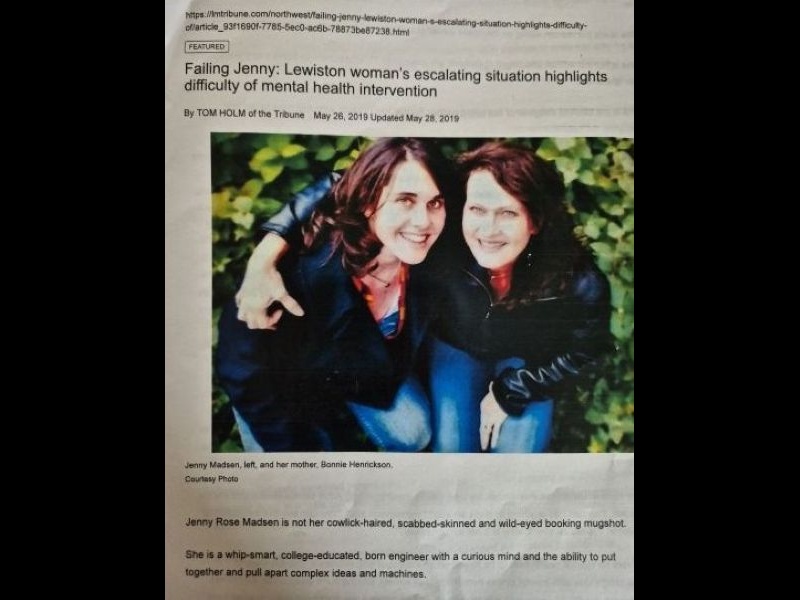
Seven years after the “Failing Jenny” article ran, Henrickson believes most of those problems still remain unresolved.
Frustrated by what she describes as a lack of accountability, she says she has contacted state lawmakers, the governor’s office, Disability Rights Idaho, the American Civil Liberties Union and other organizations seeking assistance.
She has also raised concerns about the legal oversight of Jenny’s continued commitment and whether those responsible for representing her daughter have sufficiently advocated for her well-being.
Henrickson says navigating the system has often left her feeling powerless.
“Our lawmakers and department heads, public defenders, assistant attorneys general and governors are insulated by layers of assistants, answering machines and websites. Ignore them till they go away,” she said.
Safeguards for vulnerable patients
Amy Cunningham, executive director of Disability Rights Idaho, said laws are in place to protect vulnerable patients such as Jenny. The organization works to protect the rights of people with disabilities, including those receiving treatment in state psychiatric hospitals.
The nonprofit serves as Idaho’s federally designated protection and advocacy agency, monitoring facilities, investigating allegations of abuse and neglect, and providing legal assistance and advocacy to people with disabilities.
Cunningham pointed to three Idaho laws designed to protect psychiatric patients.
Idaho Code 66-344 guarantees patients the right to humane care and treatment, while 66-345 restricts the use of restraints and seclusion to situations involving patient or public safety.
Idaho Code 66-346 establishes additional protections, including patients’ rights to communicate with others, receive visitors, access their records and meet with legal representatives or disability advocates.
The laws establish safeguards for people receiving psychiatric treatment, including those in state-operated facilities.
“While we can’t comment on any cases, we monitor the state’s facilities for abuse and neglect,” Cunningham said.
Hope for a new beginning
Despite her frustrations, Henrickson remains determined to seek answers, not only for Jenny but for other families facing similar challenges.
Behind the medical concerns and legal battles, Henrickson wants people to remember who her daughter is. She describes Jenny as brilliant, funny, creative, artistic, athletic, intuitive and kind.
“She is a national treasure. What’s happened to her has been a heartbreak,” Henrickson said.
Henrickson says that after searching for an alternative care facility, she hopes Jenny’s recent move into a Certified Family Home will mark the beginning of a new, healthier chapter in her treatment.
“The damage done to Jenny will take years to rectify,” she said. “The harm my daughter experienced within Idaho’s systems needs to be brought to the public’s attention.”
Henrickson acknowledges that years of advocating for her daughter have taken an emotional toll, but says the struggle has also led her to rediscover a source of strength and hope.
“I was losing hope. I kept hitting dead ends and very unhelpful people,” she said. “In desperation, I went where I knew there were answers, where I knew my hope would be renewed. I returned to my Catholic faith.”
Today, she remains hopeful about Jenny’s future and determined to advocate for improvements in Idaho’s mental health care system.
“We have many more adventures ahead. I want to bring mental illness to the forefront. It’s not going away,” she said.
Henrickson acknowledges that sharing photographs of her daughter’s physical decline is difficult, but she believes the images tell an important story.
“As much as I hate using Jenny’s unflattering pictures, I believe in the old adage, ‘a picture speaks a thousand words,’ ” she said.
She also hopes other families experiencing similar struggles will come forward, believing their collective voices could help bring about change.
“Alone I am a nuisance. However, I know there are hundreds of family members and friends that are struggling right along with me right here in the state of Idaho. They cannot ignore all of us if we are one voice.”
Henrickson encourages others who have experienced similar challenges navigating Idaho’s mental health care system to reach out to her at bonniesventure247@gmail.com to share their stories and help advocate for change.